Cholera: killer of the poor / Photo: Richard Pierrin - AFP/File

 US warns of rapid escalation in Mideast war

 Iran 'put hearts on the court' to win Asian Games basketball bronze

 School girl Yu helps China dominate in Asian Games swimming openers

 Myanmar win first Asian Games teqball gold as Spain great Puyol watches

 China's 13-year-old Yu scorches to first major gold at Asian Games

 Russians vote on last day of parliamentary elections

 Hong Kong pays final respects to former city leader Tung

 Typhoon put people off Asian Games opening ceremony, official says

 China's 13-year-old Yu cruises as Asian Games swimming begins

 AI 'warning shots' focus Beijing on national security risks

 Philippine tribe in limbo over US-led tech hub

 Leo XIV, first US pope transcends his restrained style

 Singer Ed Sheeran says Gaza situation 'unjustifiable' following controversy

 In 'Tenzing', a Sherpa mountaineer gets his due

 Ed Sheeran set to return to stage after Palestinian controversy

 Toulouse edge Vannes, Lyon beat Pau to take Top 14 summit

 Germans arrested for Louvre stunt in Mona Lisa hall

 Saudi-led coalition says Houthis fired ballistic missile at Riyadh

 France's debt climbs to highest since 1978: ministry

 McIlroy two shots off the lead at Wentworth after eagle on 18

 Martinez brace saves Inter in Serie A top-two clash with Roma

 Rosenior abused but guides Paris FC past old club Strasbourg

 Seven-try Lyon beat Pau, climb to Top 14 summit

 Brighton defeat a 'big lesson' against complacency for Arsenal, says Arteta

 Thousands protest inaction over climate crisis in Switzerland

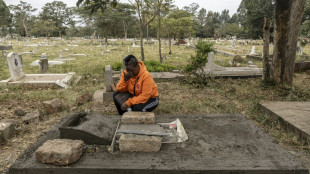
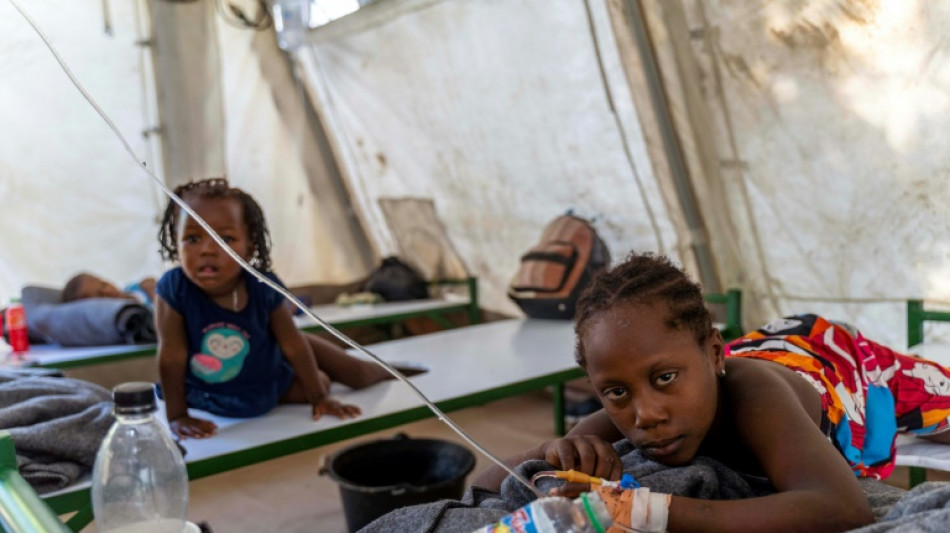
Cholera, which has made a comeback in Haiti three years after a devastating outbreak, is a highly contagious waterborne bacterial disease that can kill in a matter of hours.
The illness mainly affects poverty-stricken people and after years of decline, it is spreading once more.
The World Health Organization warned last month of a "worrying upsurge" in the number of cholera outbreaks and noted that they were increasingly deadly.
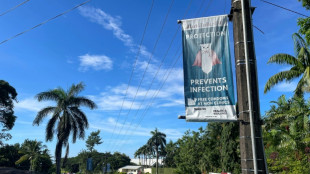
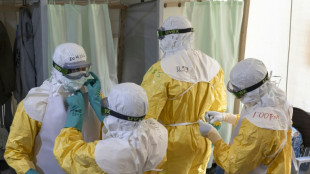
Here are five things to know about a killer that can be easily stopped in its tracks with proper sanitation and medicine.
- What causes it? -
Cholera is an acute diarrhoeal infection caused by a comma-shaped bacterium called vibrio cholerae, transmitted through water or food that is contaminated by human faecal matter.
It mainly affects people living in extreme poverty or in conflict zones, with little or no access to clean water and sanitation.
Climate change is fuelling a resurgence, with growing numbers of floods, cyclones, droughts and other extreme weather events reducing access to clean water, creating an ideal environment for cholera to thrive.
The World Health Organisation estimates that there are between 1.3 and 4.0 million cases of cholera worldwide each year, causing up to 143,000 deaths.
Three-quarters of people infected show no symptoms but in 10-20 percent of cases it causes severe diarrhoea and dehydration which can kill within hours if left untreated.
It is usually treatable with oral rehydration solutions (sachets dissolved in water) but in more severe cases patients require intravenous fluids and antibiotics.
- Where does it come from? -
Up until the 19th century, cholera only existed in the Ganges delta in India.
Then in 1817, it spread to other parts of Asia, as well as the Middle East and east Africa, marking the start of the first cholera pandemic.
Millions of people have been killed in six subsequent pandemics, all of which began in Asia and then spread to the four corners of the globe.
So far this year, 29 countries have reported outbreaks, up from under 20 for the previous five years combined, according to the WHO.
Apart from Haiti, where 33 cholera deaths have been recorded since the start of October, the disease is also spreading quickly in war-scarred Syria and neighbouring crisis-hit Lebanon.
The war in Yemen produced one of the biggest cholera outbreaks in modern history, with aid agencies in December 2017 estimating the caseload at one million.
- Who is at risk? -
The people most likely to contract cholera live in urban slums or refugee camps.
In Haiti, the outbreak has been linked to fuel shortages caused by a gang blockade of the country's main oil terminal that has made it difficult for the sick to reach hospitals.
At least 33 people have died and 960 suspected cases have been logged by the health ministry.
The return of cholera has revived memories of the epidemic introduced by UN peacekeepers in 2010, after a major earthquake ravaged the country. The disease claimed more than 10,000 lives from then until 2019.
- Is there a vaccine? -
The WHO has approved two oral vaccines, which provide protection against cholera for 2-3 years and are destined for use in humanitarian emergencies.
Full protection requires two doses of a vaccine but with demand currently outstripping supply, the WHO has recommended a temporary shift to a one-dose strategy to make stocks go further.
J.Pereira--PC