Probe accuses Swiss mining firm of hiding Guatemala pollution

 Hong Kong court set to sentence activist Joshua Wong in security case
 Australia raises benchmark rate to highest level in 18 years

 'The Remarried Empress' Cast Discusses Bringing Fantasy Royal Drama to Life

 Asian stocks retreat as AI worries outweigh steep oil-price drop

 Hamad International Airport stages emergency drills during WATAN 2026

 Global failure to punish attacks leaves journalists at continuing risk

 Researchers Warn 'Bookkeeping Trick' Masks Beef Industry's Methane Emissions

 Climate Change Intensified Atlantic Hurricanes, Study Finds

 Qatar solar expansion opens scope for technical performance gains

 IXOPAY Announces IXO One, a Modular Payments Platform Built for an Era of Fluid Commerce
Two subsidiaries of Swiss mining company Solway Investment Group hid reports of pollution in an indigenous area of northeastern Guatemala, an international consortium of media companies said Sunday.
The "Mining Secrets" investigation -- in which 65 journalists from 15 countries participated -- also accused Solway subsidiaries Guatemalan Nickel Company (CGN) and PRONICO of intimidation and influence peddling.
The investigation run by the Forbidden Stories NGO "reveals the strategies that Solway has used to hide, in collusion with authorities, any element that could infer its responsibility in serious cases of environmental pollution."
Solway has rejected the accusations, telling AFP in a statement it had reviewed the research in the investigation and found it to be "false."
According to the investigation, one of those cases was the appearance of a large red slick in Lake Izabal, the largest in Guatemala and which adjoins the company's nickel processing plant in Izabal department.
Both the company and the state blamed algae for the patch.
That sparked a protest from local fishermen, who blamed the miner for the slick. One protester, Carlos Maaz, was shot dead during a clash with police.
But investigators said documents and emails obtained by Guatemalan hackers "disprove official statements and confirm the fishermen's intuition."
According to the investigation, an internal PRONICO communication acknowledged that some mining deposits reached the lake "following heavy rainfall."
The consortium of journalists, including some from Spain's El Pais and Le Monde in France, said they had evidence that reporters were spied on, local community leaders were intimidated and manipulated, and the company had relations with a judge and "paid the police to end the protests."
In October, a group of indigenous people blocked off the town of El Estor, where the processing plant is located, for several days, alleging that the company was failing to comply with a court ruling to cease mining.
The government and the company both insisted that the court ruling only prevented PRONICO from extracting from its Fenix mine but not from continuing to process minerals mined from other plants.
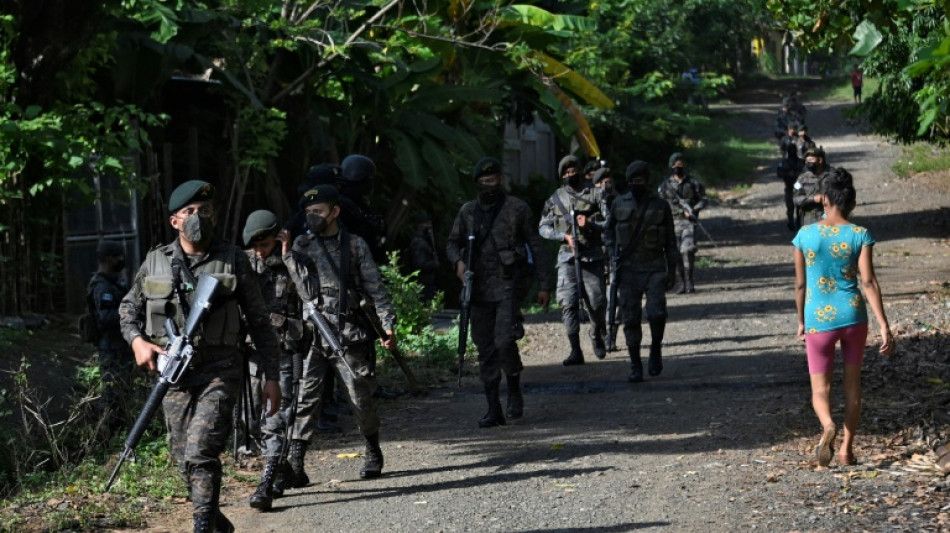
Guatemalan President Alejandro Giammattei sent military personnel to the area, while police used tear gas to clear protesters.
Local activists accused security forces of intimidation and carrying out raids.
F.Moura--PC