
51 pilot whales dead after beaching in Western Australia / Photo: - - WA Department of Biodiversity, Conservation and Attractions/AFP

 Manchester United rallies past Roma as PSG dominates in Champions League

 Qatar sees tentative opening for renewed regional diplomacy

 Qatar Tourism joins Pacific Asia Travel Association at London travel market

 Abdul El-Sayed Wins Michigan Senate Seat in Historic Election

 Qatar media bodies discuss support for humanitarian initiatives

 No. 22 UCLA defeats No. 5 Arizona 84-75 despite Kharchenkov's 38 points

 Vessel operator seeks witnesses after Vancouver grounding

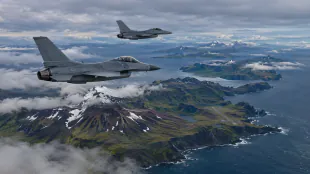 US Air Force deploys F-16 fighters to remote Aleutian base for readiness drill

 Bezos grant helps Seattle nonprofit move thousands of families toward housing

 Shrini Srivastava joins crew of Varanasi-Delhi Vande Bharat Sleeper service

 Nearly Half of Australian Workers Overqualified, Survey Finds

More than 50 pilot whales have died hours after stranding themselves on a beach in Western Australia, with authorities saying Wednesday they are scrambling to save dozens more.
A pod of almost 100 long-finned pilot whales was spotted off Cheynes Beach near Albany, about 400 kilometres (250 miles) southeast of Perth on Tuesday evening.
Experts from the state's Parks and Wildlife Service were joined by volunteers, who worked through the night, braving cold temperatures to monitor the whales.
The service confirmed on Wednesday morning that 51 of the animals had died.
The organisation said it is now working with volunteers to try and save the remaining 46 whales, with plans to guide them to deeper water during the course of the day.
Footage from the scene showed volunteers, many of them wearing wetsuits, working busily to help the thrashing mammals on the shores of the beach.
A spokesperson for the Parks and Wildlife Service said it had been "overwhelmed with hundreds of offers of help" but that it had enough volunteers and the public should "stay away" from the beach "for safety reasons".
"The priority focus of the Incident Management Team is to ensure the safety of staff and volunteers and the welfare of the whales," they said.
"The response zone has a range of hazards, including large, distressed and potentially sick whales, sharks, waves, heavy machinery and vessels."
Mass strandings of pilot whales are not uncommon in Australia and New Zealand.
Last October, around 500 pilot whales died when they beached on the remote Chatham Islands in New Zealand.
Scientists do not fully understand why mass strandings occur, but pilot whales -- which can grow to more than six metres (20 feet) long -- are highly sociable, so they may follow pod-mates who stray into danger.
Bec Wellard, a marine mammal scientist at Project Orca, said the reasons for whale strandings were still not known for sure.
She told AFP: "We still don't know why -- if we did, we could perhaps do more to prevent it.
"But with pilot whales, they frequently strand en masse - an individual might be ill or in trouble and the rest of the pod follows them -- that can lead them to strand."
She said that, because of the pilot whales' "strong family bonds", it was important to try to re-float them together.
But she added that, if the surviving whales' health is compromised, an assessment needs to be made as to whether efforts to refloat them "could just be prolonging their suffering".
M.Gameiro--PC



