
Mediterranean nations fight heat and deadly fires / Photo: Angelos Tzortzinis - AFP

 Manchester United rallies past Roma as PSG dominates in Champions League

 Qatar sees tentative opening for renewed regional diplomacy

 Qatar Tourism joins Pacific Asia Travel Association at London travel market

 Abdul El-Sayed Wins Michigan Senate Seat in Historic Election

 Qatar media bodies discuss support for humanitarian initiatives

 No. 22 UCLA defeats No. 5 Arizona 84-75 despite Kharchenkov's 38 points

 Vessel operator seeks witnesses after Vancouver grounding

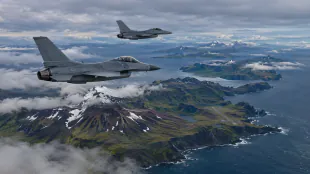 US Air Force deploys F-16 fighters to remote Aleutian base for readiness drill

 Bezos grant helps Seattle nonprofit move thousands of families toward housing

 Shrini Srivastava joins crew of Varanasi-Delhi Vande Bharat Sleeper service

 Nearly Half of Australian Workers Overqualified, Survey Finds

Greece was expecting scorching heat on Wednesday as crews scrambled to douse deadly wildfires that have also struck nations around the Mediterranean.
Thousands of people have evacuated as Greek authorities struggle against flames on three major fronts, including the tourist islands of Rhodes and Corfu.
Fires have also flared in Croatia and Italy and flames killed dozens of people in Algeria earlier in the week, with scorching heat leaving landscapes tinder dry.
Scientists from the World Weather Attribution group said this week the heatwaves that have hit parts of Europe and North America this month would have been almost impossible without human-caused climate change.
Greece is used to summer heatwaves, but is experiencing one of the longest ones in recent years, according to experts.
The civil protection ministry has warned of an extreme danger of fire in six of the country's 13 regions on Wednesday.
Wildfires, which have been burning in several parts of the country for more than 10 days, were ravaging the tourist islands of Rhodes, Corfu and Evia.
At least 100 firefighters were working to contain the flames on Evia, where on Tuesday two pilots were killed when their water bomber aircraft crashed.
The body of a third victim was also found on Evia.
- Fires around the Mediterranean -
Authorities have evacuated tens of thousands of people from fire areas in Greece, including many tourists.
The severe heatwave in Greece has also been reflected across much of southern Europe and northern Africa.
In Algeria at least 34 people have died as wildfires tore through residential areas, forcing mass evacuations.
Witnesses described fleeing walls of flames that raged "like a blowtorch", and TV footage showed charred cars, burnt-out shops and smouldering scrubland.
In Italy, firefighters spent the night battling wildfires in Sicily, one of which approached so close to Palermo airport that it shut down for several hours Tuesday morning.
Italy's civil protection department on Tuesday reported "extensive fires" across the south.
In the north, a 16-year-old girl on a camping trip was among two people killed by falling trees during violent storms.
Dozens of firefighters were battling a wildfire near Croatia's picturesque southern city of Dubrovnik, authorities said Wednesday, with water-bombing planes dispatched to help contain the blaze.
Around 130 firefighters were working to contain the flames that had been spread by strong winds on Tuesday.
Local media reported the fire also triggered landmines to explode in the area.
During the bloody break-up of Yugoslavia in the 1990s, Dubrovnik was besieged and shelled by Serb forces, leading several areas in the city to be damaged while swaths of its outskirts are still contaminated by landmines.
S.Caetano--PC



