
Serbia's capital Belgrade to make public transport free / Photo: Andrej ISAKOVIC - AFP

 Equitas Small Finance Bank rebounds after naming interim chief executive
 Titan quarterly profit seen rising as jewellery business drives growth
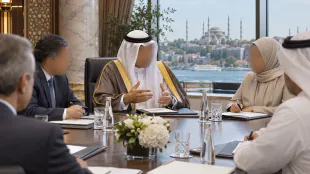 Kuwait finance minister holds economic cooperation talks at COMCEC

 Abdul El-Sayed declares victory in Michigan Senate contest

 Democrats capture US Congress in sweeping midterm victory

 Manchester United rallies past Roma as PSG dominates in Champions League

 Qatar sees tentative opening for renewed regional diplomacy

 Qatar Tourism joins Pacific Asia Travel Association at London travel market

 Abdul El-Sayed Wins Michigan Senate Seat in Historic Election

 Qatar media bodies discuss support for humanitarian initiatives

All public transport in Serbia's capital Belgrade will be free from next month -- the latest European city to adopt the radical measure to counter gridlocked roads.
"This means no one will have to pay for a ticket anymore," mayor Aleksandar Sapic said Wednesday, with the city following the example of Luxembourg, the Estonian capital Tallinn and the French city of Montpellier.
Belgrade -- which has a population of nearly 1.7 million --- struggles with terrible traffic jams, with the number of cars on its roads increasing by 250,000 over the past decade, according to Sapic.
The Serbian capital is one of the few major European capitals without an underground mass transit system.
A metro system has been promised for 2030, although ground has yet to be broken on the project amid numerous delays.
Sapic also vowed that the city's entire fleet of buses, trams and trolley buses would be replaced by 2027.
Last month the mayor's plans to demolish a major World War II-era bridge triggered protests and criticism that the removal of the river crossing would only exacerbate the city's traffic problems.
The measure announced Wednesday was the latest in a series of handouts greenlit by Belgrade's municipal government backed by the ruling Serbian Progressive Party. Over the past year kindergartens have been made free and students in the capital have also been given financial aid.
A.S.Diogo--PC



