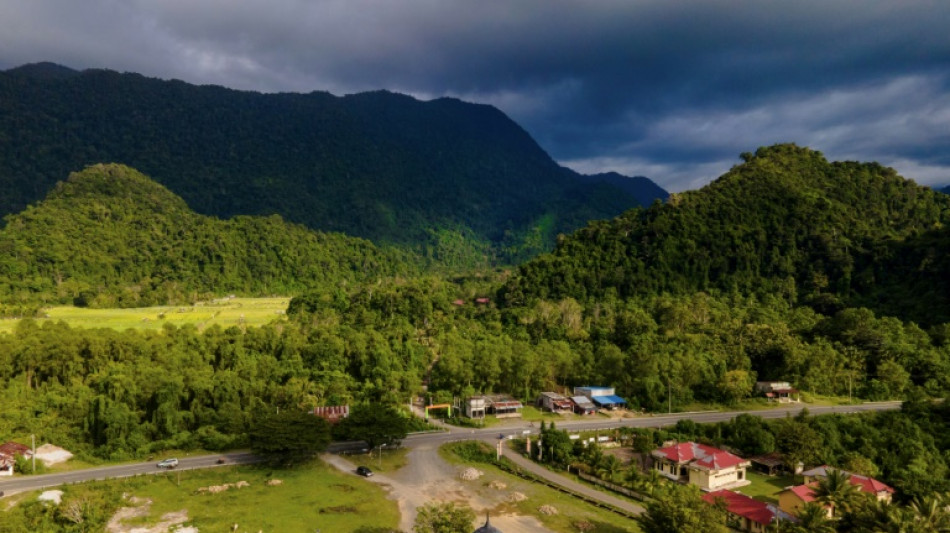
Activists slam 'destructive' Indonesia forest conversion plan / Photo: CHAIDEER MAHYUDDIN - AFP/File

 Indian crude-sensitive shares gain after 13% oil-price decline

 Stocks and dollar fall as Democratic election gains reshape markets

 Kuwait marks key events and anniversaries from national history

 Trump congratulates Democrats and signals willingness to cooperate

 Qatar prime minister advances mediation through diplomatic calls

 Greenland parliament approves security agreement with United States

 Qatar envoy meets incoming UN General Assembly president

 Trump Signals Willingness to Work With Democrats After Midterm Defeat

 Pitches and Keynote Speakers Are Confirmed for Blue Magic Netherlands on November 17
Indonesia's plan to convert millions of hectares of forests for food and energy use is "environmentally illogical and destructive," and risks irreversible environmental and biodiversity loss, activists warned Monday.
The Indonesian government wants to turn 20 million hectares (49 million acres) of forest into areas for food and energy production and water reserves, Forestry Minister Raja Juli Antoni recently said in a statement.
The government has identified 1.1 million hectares of land that could produce up to 3.5 million tonnes of rice annually, equal to Indonesia's total rice imports in 2023, he said, adding that the government also plans to plant sugar palm trees as a source for bioethanol.
President Prabowo Subianto, who assumed office in October, has pledged to boost food and energy self-sufficiency in the country, including by expanding bio-based fuels to lower fuel imports.
But the plan, which will affect an area nearly twice the size of Indonesia's main Java island, contradicts the government's food and energy security goals, the Clean Transition Coalition of environmental NGOs said in a statement.
The proposal has raised concerns that more forest areas would be cleared to pave ways for oil palm plantations –- Indonesia's top export commodity and one of the key deforestation drivers in the archipelago –- said activists.
"The plan to open 20 million hectares of land significantly increases the risk of palm oil expansion," said executive director of Sawit Watch Achmad Surambo.
Environmental NGO Satya Bumi's research showed that existing oil palm plantations already cover 17.77 million hectares throughout the archipelago.
Indonesia's forestry ministry and a presidential spokesman did not immediately respond to AFP's request for comment.
Minister Raja last week dismissed deforestation concerns, insisting that the proposal would not clear forest but "maximise" its function through agroforestry systems, local media reported.
Indonesia's government has also said it will target land that has already been granted in concessions rather than virgin forest.
But environmentalists warned even mass conversion of agricultural land for export crops would be detrimental.
"Instead of clearing forests, the government should focus on optimising existing agricultural land, respecting indigenous rights, and implementing genuine agrarian reform," the coalition said.
M.Carneiro--PC



