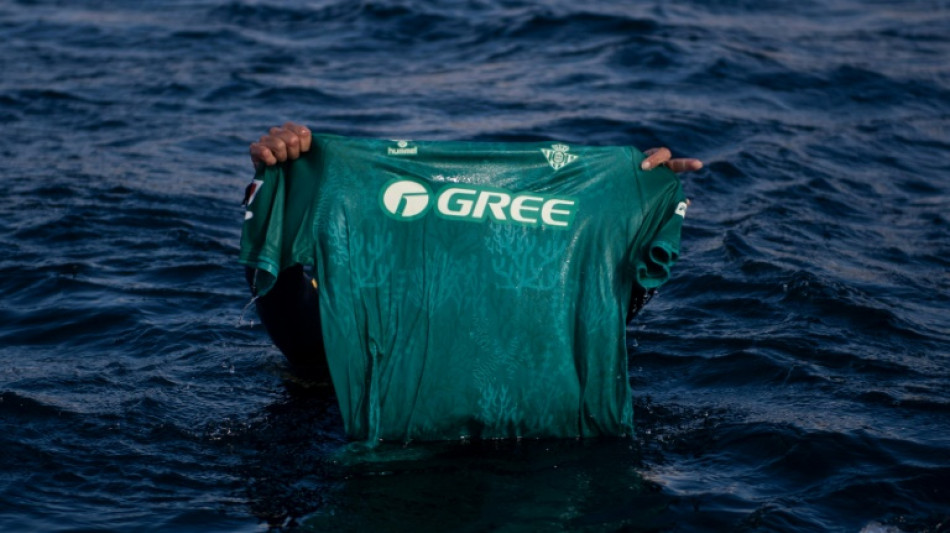
Real Betis don new shirt to raise environmental concerns / Photo: JORGE GUERRERO - AFP

 Abdul El-Sayed declares victory in Michigan Senate contest

 Democrats capture US Congress in sweeping midterm victory

 Manchester United rallies past Roma as PSG dominates in Champions League

 Qatar sees tentative opening for renewed regional diplomacy

 Qatar Tourism joins Pacific Asia Travel Association at London travel market

 Abdul El-Sayed Wins Michigan Senate Seat in Historic Election

 Qatar media bodies discuss support for humanitarian initiatives

 Galloway accuser could not foresee publishing-sector fallout, lawyer argues

 New York City Center revives In the Heights as a timely community story

 Godzilla Minus Zero shifts focus toward postwar human drama
Spanish La Liga club Real Betis launched a new kit made out of an invasive algae on Thursday to raise awareness of an ecological crisis on the Andalucian coast.
The shirt is made with recycled plastic from the ocean as well as a textile fabric created from the brown algae.
Named Rugulopteryx okamurae, the algae has spread rapidly in the Mediterranean impacting biodiversity, fishing and tourism, as well as proving expensive to remove.
Betis, who presented the shirt in Tarifa, a town particularly affected by the issue, will wear it on February 16 against Real Sociedad in La Liga.
"The presence of invasive algae on our coasts is destroying our ecosystem," wrote Betis in a post on social media.
"To confront them, the first kit made with fibres created from these algae was born."
Marine biologist Candela Sanchez Atienzar told AFP the algae, native to the North Pacific, most likely arrived in Spanish waters in 2015 "through the ballast waters of merchant ships".
"When it arrived it started to spread out of control, there's no invasion in the history of science described on this scale," she said.
Rafael Muela Pastor, the director of Betis' social foundation, said it was a good opportunity to raise awareness of the problem.
"News was reaching us that the invasive Asian algae was causing many problems in all sectors in the area," he told AFP.
"We wanted to take advantage of this situation in some way to draw attention to the importance of caring for our oceans and seas."
M.Gameiro--PC



