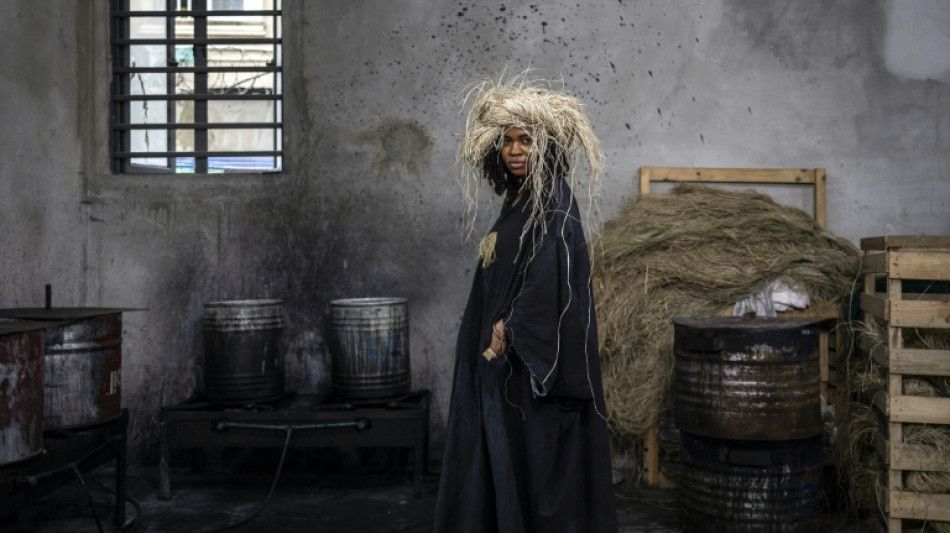
Local fabrics, fibres shine at eco-centred Lagos Fashion Week / Photo: OLYMPIA DE MAISMONT - AFP

 Drone owners rush to offload devices ahead of Beijing ban

 Trump's beef policies irk Texas ranchers, testing their loyalty

 Nvidia, OpenAI CEOs to attend Xi dinner at White House

 Anthropic picks Accenture for in-house AI safety evaluation

 Balogun returns as Monaco beat Lens to continue strong Ligue 1 start

 'Pause' on overt repression in Venezuela, but reforms still needed: HRW

 Global stocks mixed as yen falls despite Bank of Japan rate hike

 Cuba hit with seventh major blackout of the year

 Murray out with concussion so Wentz will start for Vikings

 UN chief 'deeply regrets' US visa refusal to Abbas for annual meeting

 England quick Carse to face no charges over alleged nightclub assault

 Mancini brings nine newcomers into the first squad of his Italy comeback

 Czechs level Davis Cup tie against USA as South Korea eye Finals

 New France boss Zidane confirms Mbappe as captain after naming first squad

 California governor signs order to explore AI 'kill switch'

 Head leads run spree as Australia win Zimbabwe ODI series

 In-form Raphinha wants to finish career at Barcelona

 Warren Buffett steps down as Berkshire Hathaway chairman

 Carrick confident Man Utd can 'work through' tough time

 Mbappe ends Nike partnership to join Swiss brand On

 Liverpool boss Iraola puts Bournemouth love affair on hold

 'A disaster' if Man City do not win says Maresca after flawless start

 Kerry James Marshall: American 'blackness' painter celebrated in Europe

 Spain coach De la Fuente offers 'full support' to people of Ceuta

 Russia seizes assets of Nestle, French firms over West's Ukraine support

Four days ahead of her show at Lagos Fashion Week, the sewing machines at Abasiekeme Ukanireh's workshop were still buzzing.
Ukanireh, the founder of the popular Nigerian brand Eki Kere, met with models and tailors for the final preparations ahead of one of Africa's biggest fashion events, which ran through Sunday.
On the agenda: local materials, upcycling and African craftsmanship.
"Every single year for a brand, for me, as a designer, I always try to take it a step further in terms of being sustainable," Ukanireh, 35, told AFP.
Sustainability -- long both a bugbear and a buzzword in the fashion industry -- was a key feature of this year's Lagos Fashion Week, with designers from across the continent tapping into everything from traditional fabrics to banana fibre and coffee grounds.
Launched in 2020, Ukanireh's brand is known for its use of raffia, a grassy fibre from palm trees used in everything from thatched roofs to trendy bags.
This year, she played up the use of indigo and dyes made from kola nuts -- though she hadn't forgotten her raffia roots.
During her show Sunday, dozens of models walked the runway wearing outfits inspired by traditional wedding ceremonies in Ikot Ekpene, a historic town popularly known as "Raffia City" in southern Akwa Ibom state, where Ukanireh hails from.
The traditional wedding lace was swapped for cardboard, linen and raffia -- which is 100 percent biodegradable and compostable.
- Training the next generation -
In 2018, the Lagos Fashion Week founder Omoyeni Akerele and her team launched Green Access, an incubator programme that identifies, trains and supports young African designers.
"Even though sustainability is at the core of their design practice, it is to encourage them to even be more sustainable by rethinking their choices at every stage of the creative process, and understanding that it begins with materials," Akerele said.
Lagos Fashion Week also hosts what it calls "Swapshop" events, which allow people to exchange clothes they no longer wear for new ones.
"We all have clothes at home that we no longer wear," said 43-year-old businesswoman Danielle Chukwuma, who has attended several editions of the show.
"It's great to be able to swap them with people as stylish as those attending this kind of event."
- Designers versus consumerism -
Apart from Nigerian brands, Chukwuma has also discovered other African talents, including the Indian-Kenyan designer Ria Ana Sejpa of the brand LilaBare.
This year was Sejpa's third appearance at Lagos Fashion Week.
"Lagos is the fashion capital of Africa," she told AFP. "Fashion is a part of the culture here. People take pride in the way they dress, they love to stand out, and they aren't afraid to be fearless or glamorous."
The 34-year-old designer is known for making clothes from pineapple fibre, banana fibre and coffee grounds.
"It is essential to take into consideration your ecosystem, the strengths of the environment and the people around you, and to make conscious decisions at every step of the fashion creation process," Sejpa said.
31-year-old Florentina Hertunba, who is making waves with her brand Hertunba, shared the same view.
She said she incorporates traditional Nigerian fabrics such as aso oke and akwete as well as other locally available materials into her designs and uses biodegradable packaging to cut down waste.
"This piece is recycled," the young designer explained, pointing to a patterned black dress in her Lagos studio. "An old fabric was transformed into sewing thread and then reused to create it."
But for her, sustainability is only sustainable if consumers join the movement.
"One of the greatest dangers is this culture of overconsumption, where we constantly buy new clothes for every occasion," she told AFP. "Sustainable fashion is making progress, but overconsumption is too."
L.Carrico--PC



