UK unveils sanctions on Russian banks and oligarchs

 Meta meets its own 'tobacco' moment in court
 Art or medicine? Japan's cosmetic tattoo artists in limbo
 Rybakina ousts Osaka to book Toronto semi-final against Gauff
 Colombia rescuers find woman alive as quake death toll passes 240
 Charges dropped against Bondi Beach attack hero
 Parched and desperate for rain, Kazakhstan turns to cloud-seeding
 The perfect storm that turbocharged Venezuela's twin quakes
 2.4 million girls banned from Afghan schools since Taliban return: UNESCO
 Colombians dig through rubble as quake death toll surpasses 240
 New Zealand's ruling party meets to decide PM Luxon's fate

 Total solar eclipse to spellbind Europe
 Jodar, Nakashima to make Masters semis debuts in Montreal
 Chilean veteran Sanchez signs with MLS club Montreal
 Cristiano Ronaldo marries long-term partner Georgina Rodriguez

 Oil prices higher, stocks mixed ahead of inflation report
 Jacobs into 100m final with eye on third title
 Eight-try New Zealand cruise to tour victory over Sharks
 Trump's secret plane swap triggers questions and confusion
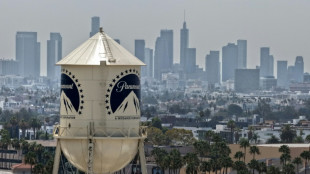 California calls Paramount's threat to leave state 'blackmail'
 PSG 'want to win everything', says Luis Enrique
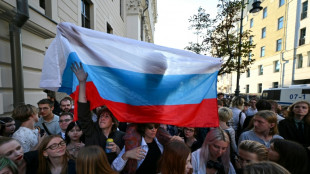 Barred from elections, Russia's anti-war party vows to fight on
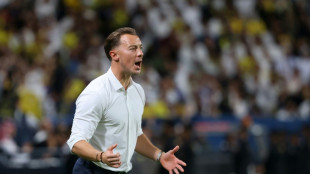 Jaissle states Newcastle ambition but urges patience
 NBA star Cooper Flagg trading card a slam dunk for lucky buyer
 ForumPay Expands Payment Infrastructure with New Card and Bank Transfer Acceptance Solution
 Oil prices higher, stocks flat ahead of inflation report
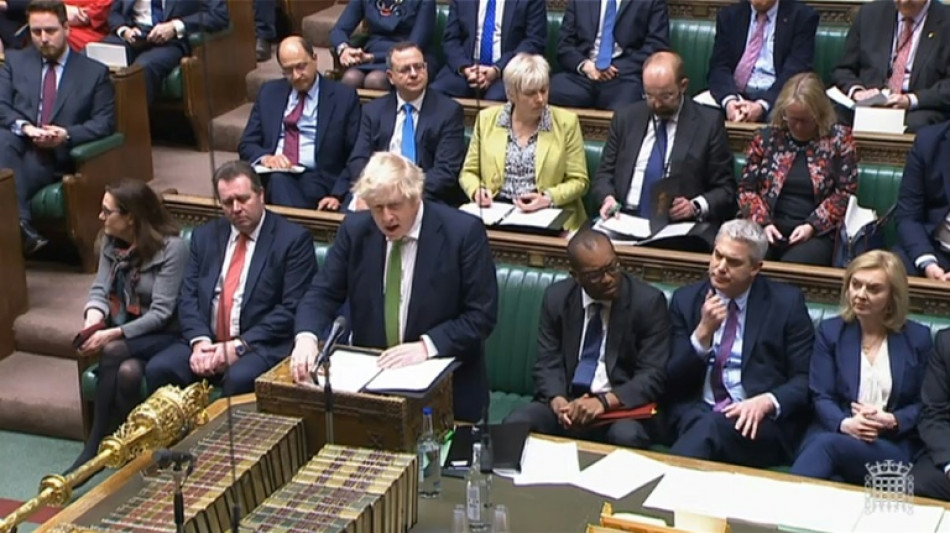
Britain on Tuesday slapped sanctions on five Russian banks and three billionaires, in what Prime Minister Boris Johnson called "the first barrage" of measures in response to the Kremlin's actions in Ukraine.
Addressing the UK parliament hours after Russia ordered troops into two Moscow-backed Ukrainian rebel regions, Johnson described the move as "a renewed invasion" of its western neighbour and "pretext for a full-scale offensive".
"The UK and our allies will begin to impose the sanctions on Russia that we have already prepared... to sanction Russian individuals and entities of strategic importance to the Kremlin," he told MPs.
The five banks targeted -- Rossiya, IS Bank, General Bank, Promsvyazbank and the Black Sea Bank -- and three people sanctioned will see any UK assets frozen.
The individuals concerned -- Gennady Timchenko, Boris Rotenberg and Igor Rotenberg -- will be barred from entering Britain and all UK individuals and entities will be banned from dealing with them and the banks.
"We cannot tell what will happen in the days ahead," Johnson added in the House of Commons, amid cross-party condemnation of Moscow's actions.
"But... we should steel ourselves for a protracted crisis."
The announcement came after Russia's ambassador to Britain was called into the foreign ministry in London "to explain" its action, the ministry said.
"We made clear to the Russian Ambassador that Russia would pay the price for its actions through further sanctions if it did not withdraw its troops," a ministry spokesperson added.
- 'Need to do better' -
Earlier Tuesday, Johnson chaired a meeting with security chiefs, after which he vowed measures to hit Moscow "very hard".
Weeks ago, he also pledged sanctions will "come down like a steel trap in the event of the first Russian toecap crossing into more sovereign Ukrainian territory".
However numerous British lawmakers, including from within his ruling Conservative party, were left underwhelmed by the steps outlined, and urged him to go further.
Labour MP Ben Bradshaw noted the three oligarchs had been sanctioned in the United States four years ago.
"We need to do better than that, prime minister," Bradshaw said, urging more use of so-called unexplained wealth orders against Russians in Britain as well as reviews of high-net-worth UK visas granted to them.
Johnson insisted further sanctions were "at readiness to be deployed" if the Kremlin continued its aggression.
Russian President Vladimir Putin on Monday recognised the independence of the rebel-held Donetsk and Lugansk regions of Ukraine and instructed the defence ministry to assume "the function of peacekeeping" in the separatist-held regions.
Its foreign ministry insisted Tuesday it was not planning to send troops to other parts of eastern Ukraine beyond the separatist areas "for now".
However, Monday's move ratcheted up weeks of tensions and punctured Western diplomatic efforts to de-escalate the situation, after a massive build-up of troops on Ukraine's border.
Successive governments in London, however, have faced sustained pressure to act against illicit Russian money circulating through the city's financial markets in recent decades.
A.S.Diogo--PC