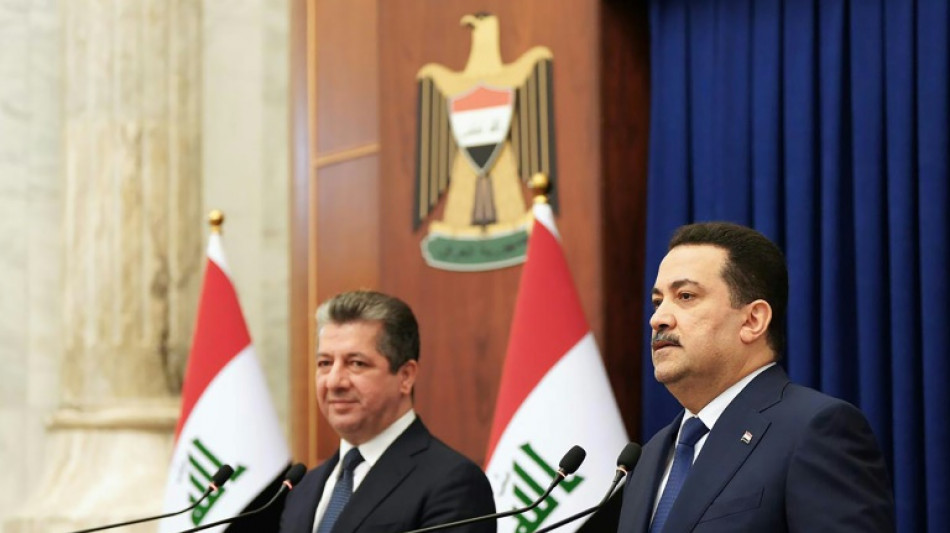
Iraq, Kurdish region sign accord to resume oil exports / Photo: - - IRAQI PRIME MINISTER'S PRESS OFFICE/AFP

 8.3 mn refugees at risk due to 'severe' funding cuts: UN
 Stocks drop and oil rises as Hormuz hopes fade
 OpenAI cancels release of newest model due to safety concerns

 AI bosses head to White House as safety pressure builds

 Batista sacked as Costa Rica coach after six months
 Flooding, power cuts and evacuations as Hurricane Polo slams Mexico

 Dodgers eye three-peat, Red Sox face Yankees as MLB playoffs begin

 Certification of Boeing 737 MAX delayed by software bug

 Celine Dion wows Paris Fashion Week with surprise gig

 AMD buys firm founded by AI 'godmother' Fei-Fei Li
 Italy rebound in Turkey as France win late in Belgium

 Pope says concerns about AI 'should be taken seriously'
 Hurricanes to hoist title banner as NHL season begins
 Justice Alito steps aside from major US climate case

 Willis happy with England exile after retains Top 14 player award

 Spain housing protests keep heat on government as PM seeks new law

 Wissa spoils Zimbabwe homecoming as DR Congo win AFCON qualifier

 UK police release on bail five men held over airbase incident

 Ex-All Black Plummer 'sure' New Zealand will find Super Rugby solution

 Shein sees 1% revenue growth in first half of 2026

 Netherlands regrets Israel retaliation in settlements row
 Moscow seizes Russian assets of German food retailer Metro
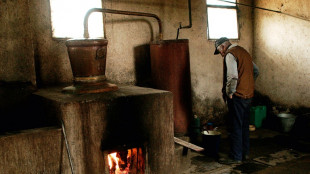 Bulgarian spirits inflamed by new rakia rules

 Documentary turns camera on architect Peter Zumthor
 UK police say releasing on bail five men held over airbase incident
Iraq's federal government and the Kurdistan autonomous region signed an accord Tuesday to allow Kurdish oil exports to resume through Turkey after they were halted 10 days earlier.
The agreement, signed in Baghdad in the presence of Prime Minister Mohamed Shia al-Sudani and Kurdish premier Masrour Barzani, was to be implemented "today", a Kurdish regional government official told AFP.
The deal was described as temporary but signals the end of independent oil exports by northern Iraq's Kurdish regional government and marks a clear limit to its autonomy.
The agreement comes two days after Iraq, Saudi Arabia and several other major oil exporters announced a sharp reduction in their production from May that sent up global energy prices.
Barzani said on Twitter that the deal is "temporary" until Iraq's parliament agrees a new oil and gas law, but he called it "a crucial step towards ending the long-standing dispute" between Arbil and Baghdad.
Ankara had stopped handling Iraqi Kurdish oil last month after an international tribunal ruled in a nine-year-old dispute that Baghdad was right to insist on overseeing all Iraqi oil exports.
Oil exports are the key revenue source for both the federal and regional governments and their management has long been a sensitive topic in relations.
The government of war-scarred Iraq is betting on earning around $70 per barrel in its budget calculations for the next three years and has been irritated to see the autonomous region go it alone by exporting its oil via Turkey.
The Kurdistan government sees Baghdad as trying to profit from the region's resources while dragging its feet on paying the salaries of Kurdish civil servants and other funds for its regional public sector.
- 'Breakthrough deal' -
Gulf Analyst Yesar Al-Maleki, of the Middle East Economic Survey (MEES), said the deal aimed "first and foremost" at quickly re-starting exports to Turkey.
"But it also presents an opportunity for Baghdad to finally be involved in Iraqi Kurdistan's oil sector" and should also allow Kurdistan "to accrue higher revenues" in future.
Maleki hailed the deal as a "breakthrough for the two PMs" that could help both sides draft the new energy law and "resolve the existing historic disputes once and for all".
Sales of Kurdistan crude will be managed from now by the State Oil Marketing Organization, a federal government official and a Kurdish official told AFP.
A joint committee formed by the federal and regional governments will supervise the export process, they added.
Revenues will be paid into an account under the control of the Kurdish government which will be overseen by Baghdad, they said.
The halt to exports through a pipeline to the Turkish Mediterranean port of Ceyhan had left foreign oil firms with nowhere to pump Kurdish oil.
Norway's DNO, one of the main firms operating in Iraqi Kurdistan, announced it was halting production at its wells.
Prior to Ankara's action on March 25, the autonomous region was exporting roughly 450,000 barrels per day of crude.
Iraq, the second largest producer within the Organization of the Petroleum Exporting Countries, exports an average of 3.3 million bpd.
J.V.Jacinto--PC