
-
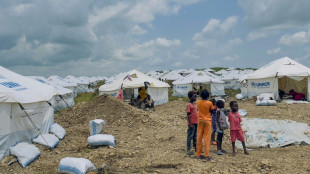 8.3 mn refugees at risk due to 'severe' funding cuts: UN
-
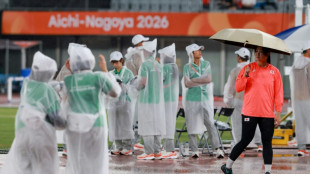
Race against time as Asian Games cricket quarter-finals washed out
-
 Stocks drop and oil rises as Hormuz hopes fade
-
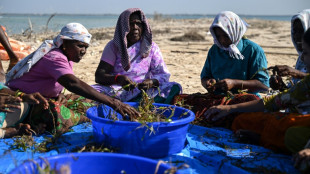
India turns to corals and seagrass to shield against rising seas
-
 OpenAI cancels release of newest model due to safety concerns
-
Manchester City's Premier League charges: What comes next?

-
 AI bosses head to White House as safety pressure builds
-
Brazil's cellphone crime: a security nightmare in every pocket

-
 Batista sacked as Costa Rica coach after six months
-
Russia pummels Kyiv in latest deadly attack
-
 Flooding, power cuts and evacuations as Hurricane Polo slams Mexico
-
NFL Giants obtain QB McCarthy from Vikings

-
 Dodgers eye three-peat, Red Sox face Yankees as MLB playoffs begin
-
Deal for evicted Spanish pensioner as PM seeks new housing law

-
 Certification of Boeing 737 MAX delayed by software bug
-
Clippers apologize, warn fans of 'challenges' after Leonard scandal
-
 Celine Dion wows Paris Fashion Week with surprise gig
-
Turkish comedian convicted for Erdogan 'insult' freed pending appeal
-
 AMD buys firm founded by AI 'godmother' Fei-Fei Li
-
Trump announces 'biggest' US steel plant in battleground Iowa
-
 Italy rebound in Turkey as France win late in Belgium
-
Olise wonder strike gives Zidane's France win in Belgium
-
 Pope says concerns about AI 'should be taken seriously'
-
US stocks fall, bond yields rise as Middle East war drags on
-
 Hurricanes to hoist title banner as NHL season begins
-
Trump denies offering to sell arms to China's Xi
-
 Justice Alito steps aside from major US climate case
-
Wemby ready for NBA Spurs to move rivals in climb to top
-
 Willis happy with England exile after retains Top 14 player award
-
Ukraine to postpone some spending amid delays in aid: PM
-
 Spain housing protests keep heat on government as PM seeks new law
-
Tuchel says Czech Republic game 'not yet a must-win'
-
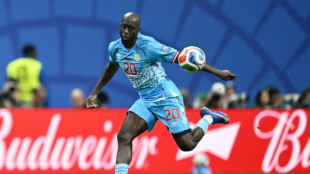 Wissa spoils Zimbabwe homecoming as DR Congo win AFCON qualifier
-
MaXhosa puts South Africa on the Paris fashion map

-
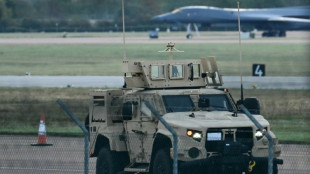 UK police release on bail five men held over airbase incident
-
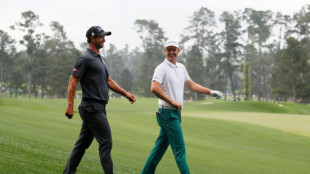
Rose, Scott among 2027 World Golf Hall of Fame finalists
-
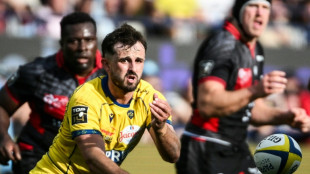 Ex-All Black Plummer 'sure' New Zealand will find Super Rugby solution
-
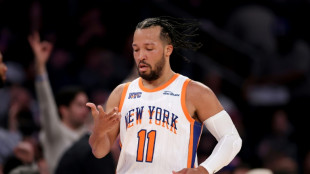
Brunson says NBA champion Knicks can't get satisfaction
-
 Shein sees 1% revenue growth in first half of 2026
-
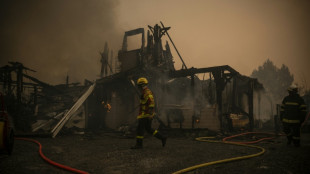
France puts out largest wildfire since 1949
-
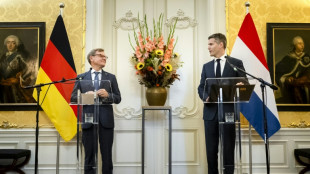 Netherlands regrets Israel retaliation in settlements row
-
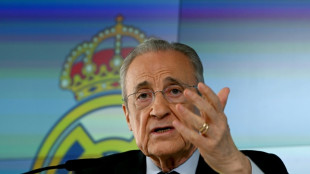
Real Madrid's Perez summoned over Barcelona referee payments comments
-
 Moscow seizes Russian assets of German food retailer Metro
-
Oil takes off again, Wall Street dips after Trump rejects Iran truce offer
-
 Bulgarian spirits inflamed by new rakia rules
-
AlgoQuant Asset Management Selects Liquid Mercury to Enhance Digital Asset Trading Infrastructure

-
 Documentary turns camera on architect Peter Zumthor
-
UK to reopen refugee resettlement scheme to push 'safe' migration
-
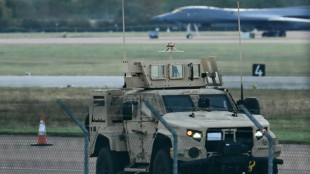 UK police say releasing on bail five men held over airbase incident
-
Pope urges Europe to help combat 'lies and deceit' in world affairs
Finland in NATO: strategic shift with material gain
Finland on Tuesday becoming the 31st member of NATO is a strategic step that doubles the military alliance's border with Russia and provides the coalition with additional military capacity.
Here are the key facts:
- Russia 'more vulnerable' -
Finland broke with decades of non-alignment to ask to join the North Atlantic Treaty Organization after Russia invaded its pro-Western neighbour Ukraine in February last year.
For Moscow, which has repeatedly warned NATO against expanding, Finland's accession extends the bloc's presence right on its western doorstep.
Russia -- which shares a 1,300-kilometre (800-mile) border with Finland -- said on Monday it would boost its military presence in its west and northwest in response.
With Finland joining NATO, "Russia's northwestern flank becomes more vulnerable", security experts Nicholas Lokker and Heli Hautala wrote on Friday on defence-focused website War on the Rocks.
"Its border with the alliance will then extend from the Arctic Ocean to the Baltic Sea."
- More NATO border to defend -
As a NATO member, Finland is bound by the alliance's mutual defence clause, Article 5.
It will benefit not only from its allies' conventional military assistance but also from their nuclear deterrence.
In return, the Nordic nation, which intends to boost its defence budget by 40 percent by 2026, could contribute some of its military resources to defend the alliance.
The country of 5.5 million people counts just 12,000 professional soldiers.
But it trains more that 20,000 each year through its conscription service programme, giving the army a pool of 900,000 Finns as potential reserves.
This means that in case of war, the army can deploy 280,000 Finnish citizens at any one time.
It has a fleet of 55 F-18 US combat aircraft, which it plans to replace with more advanced F-35s from 2025 onwards, as well as 200 tanks and more than 700 artillery guns.
But the country joining NATO also means hundreds of extra kilometres of border to defend for the alliance.
- Allied forces -
The only military equipment that NATO actually owns are a fleet of Airborne Warning and Control System planes (AWACS) -- which can monitor an area almost as big as Poland -- and five Global Hawk high-altitude surveillance drones.
For all other military gear, each NATO member chooses what to contribute, though all have promised to reinforce the alliance's eastern flank.
France dispatched 500 troops to join US soldiers in Romania last year right after Russia invaded Ukraine. Dutch and Belgian soldiers soon joined them.
As of December, some 5,000 foreign troops were stationed in Romania -- the largest contingent of allied forces on the bloc's southeastern flank.
NATO conducted nine joint exercises last year, from the eastern Mediterranean to the Baltic Sea, the International Institute for Strategic Studies (IISS) says.
- The troops -
"Together NATO allies represent 50 percent of the world's military might," NATO chief Jens Stoltenberg said on Tuesday welcoming Finland into the alliance. "As long as we stand together and protect each other... there will be no military attack against a NATO ally."
According to the Supreme Headquarters of Allied Powers in Europe (SHAPE), NATO can count on up to 3.5 million soldiers and personnel.
The three nations providing most military staff are the United States with 1.47 million active troops plus 800,000 reservists, Turkey with 425,000 soldiers and 200,000 reservists, and France with 210,000 troops and 40,000 reservists.
NATO has since 2004 had a multinational response force of some 40,000 soldiers on top of the 100,000 US troops already on European soil. It says it hopes to increase this to 300,000 soldiers.
It has also set up a "spearhead force" within it, dubbed the "Very High Readiness Joint Task Force" or VJTF, able to deploy 5,000 personnel in two to three days.
- 'Renewed unity' -
NATO had in recent years faced an existential crisis.
French President Emmanuel Macron in 2019 famously said that NATO was experiencing "brain death" after it failed to respond to Turkey's unilateral invasion of northeast Syria.
But Russian President Vladimir Putin's "re-invasion of Ukraine has provided the fuel for the alliance's renewed unity and recommitment to cooperative security, crisis management, and collective defence," retired general Philip M. Breedlove, who used to head US European Command, wrote in February.
According to IISS, the alliance has since doubled its deployment from four battle groups –- in Estonia, Latvia, Lithuania and Poland –- to eight, including Bulgaria, Hungary, Romania and Slovakia.
But "it is likely that most of the high-readiness forces will need to be European", it said in an annual assessment for 2023.
G.M.Castelo--PC