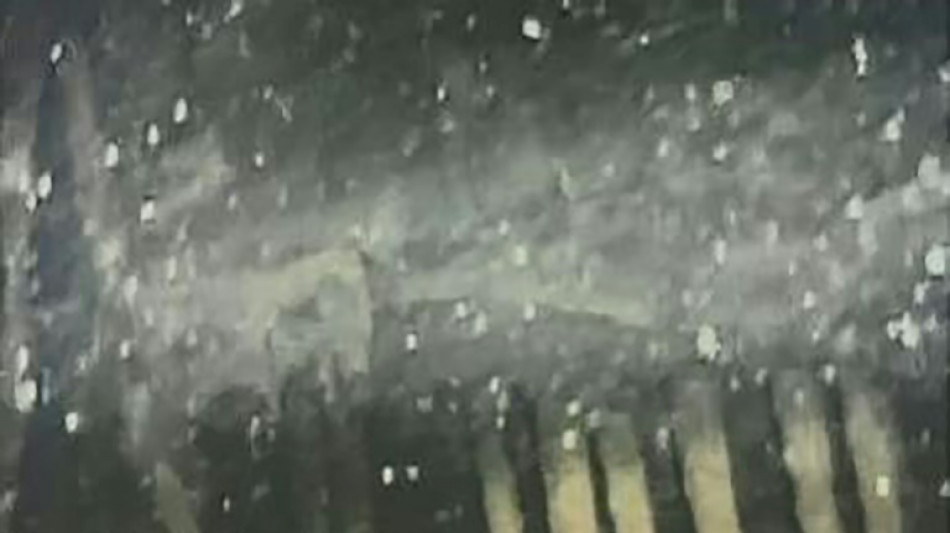
Video probe shows internal damage to Fukushima reactor / Photo: Handout - Tokyo Electric Power Company (TEPCO)/AFP

 IFFI Opening Film 'Fatherland' Addresses Global Divisions Through Post-War Lens

 Texas Sports Betting Status: No Legal Options Amid Legislative Push for 2027 Referendum

 Geri Halliwell-Horner Embraces Queen Camilla at Commonwealth Writing Competition

 Meta Quest 3 and 3S Gain Access to Over 150 3D Movies

 Sarah Bajada Shares Message on Pregnancy Loss
Fresh images from inside a crippled reactor at Japan's Fukushima nuclear plant revealed heavy damage to its foundation and significant debris, its operator said.
Tokyo Electric Power (TEPCO) on Tuesday released a series of video clips from a robotic survey inside Fukushima Daiichi plant's Reactor 1, one of three that suffered core meltdowns in 2011.
"There were areas that we could not see. But we believe (damage) is spread across large areas," a TEPCO official told a briefing.
The video showed damaged concrete walls exposing steel rods embedded inside, with debris piled roughly 50 centimetres (20 inches) high.
The video illustrated the daunting task ahead to decommission the plant after it was hit by a huge tsunami triggered by a 9.0-magnitude earthquake.
TEPCO and the government expect to spend 30 to 40 years removing molten fuel from the facility and cleaning the area.
Similar video surveys have been conducted in the two other reactors that went into meltdown.
The new video comes as local residents voice worries about the safety of the precarious structure in an earthquake-prone region.
Fukushima governor Masao Uchibori pressed TEPCO to conduct an earthquake resistance evaluation for the facility to ensure the safety of the project to dismantle the plant.
"Because of the high radiation levels inside the reactors, I understand that robots that use semiconductors do not function as well as they are designed," he told his regular press conference on Monday.
"The biggest and most difficult task is the removal of the debris (molten fuel). We demand TEPCO and the government carry out the decommissioning project safely and steadily."
TEPCO has said it will conduct a seismic resistance survey in a few months, but previous surveys have indicated that the facility remains relatively stable.
E.Paulino--PC

