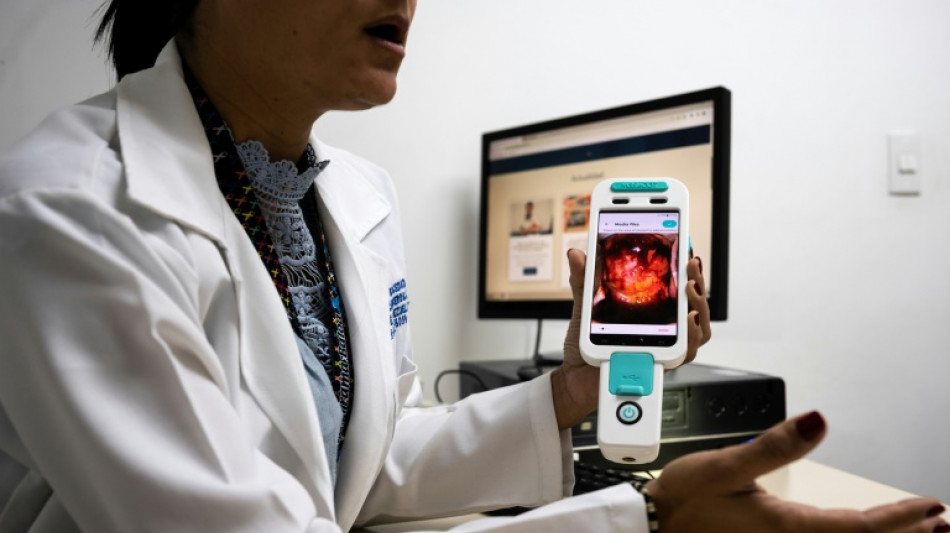
Vaccine battle against cancer-causing HPV thwarted by cost, stigma in Venezuela / Photo: Yuri CORTEZ - AFP

 Brazil football clubs face massive sponsorship blow from betting ban
 ChatGPT maker wants to be the App Store for AI as safety concerns grow
 Women fight fires and sexism in Indonesian Borneo

 Forsling's OT blast lifts Florida over Carolina in NHL opener

 Hurricane Polo sweeps over Mexico's Pacific coast, heads inland
 Grynspan pulls ahead in race to lead UN: diplomat

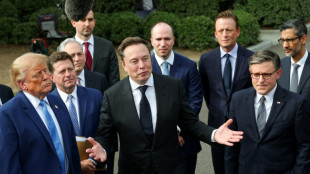 Trump touts AI boss pledge to self-regulate
 Oil down, but stocks lower as bond yields rise
 England break down stubborn Czechs to claim first Nations League win
 UN Security Council extends Haiti anti-gang force by 6 months

 Manchester City guilty of Premier League charges: What comes next?
 Man City chief Soriano slams Premier League 'conspiracy theory'

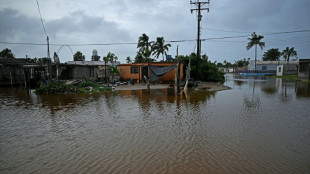 Hurricane Polo sweeps over Mexico's Pacific coast

 Man City must be relegated after guilty verdict says club's former chairman

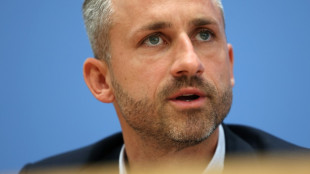 German far-right aims to lead Saxony-Anhalt govt in December
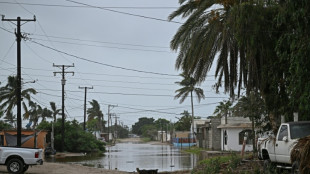 Little damage as Hurricane Polo sweeps over Mexico's Pacific coast
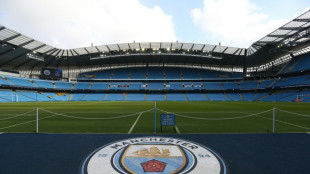 Manchester City guilty of breaking financial rules - Premier League

 FIFA boss Infantino blasted as would-be 'emperor' by UEFA's Ceferin
 Stocks move lower despite oil prices dropping

 AI driving up innovation investment: UN

 UN Security Council extends Haiti mission by 6 months

 Man Utd do not deserve medals if Man City stripped of titles: Rooney

 Vana Completes Expanded Staking as Part of the Vega Upgrade, Publishes Expanded VANA Token Economics

 Spain to cap gas price hikes, extend fuel discounts
 'We just need rain': Germany's Rhine river hits new low

Venezuelan Glorimar Montano saved up for months to pay the $120 for a single dose of the vaccine that protects against the cancer-causing HPV virus -- a shot that is free and compulsory in most other countries.
She is one of relatively few in the South American country to have been inoculated against the sexually-transmitted Human papillomavirus that the World Health Organization (WHO) says causes 95 percent of cervical cancer.
In Venezuela, people have to pay for the shot themselves.
"To get vaccinated was not easy," Montano, a 26-year-old business administrator told AFP after sitting for her third and final dose of the Gardasil 4 vaccine, which protects against four HPV types.
"I saved up for a few months to be able to do it," Montano added.
There is no official data on HPV infection -- which can also cause penile, anal and other cancers -- in Venezuela, a country of about 30 million people.
According to the country's non-profit Anti-Cancer Society (SAC) there were more than 5,900 cases of cervical cancer registered in the country in 2021.
The rate of mortality for cervical cancer in Venezuela jumped from 10.45 per 100,000 inhabitants in 2019 to 11.82 per 100,000 two years later, according to the SAC, which did not provide a reason for the increase.
The incidence rate over the same period grew from 23.82 to 32.16 per 100,000.
Breast cancer, which has not been linked to HPV, remains the main cause of death for women in Venezuela.
- 'Not talked about' -
The government had promised years ago to include the HPV vaccine in its free inoculation schedule, but Venezuela remains one of the few Latin American countries not to have done so.
The WHO recommends vaccination for girls from the age of nine, though it can also be administered to adults. In Venezuela, as in many countries, HPV vaccines are also given to boys.
"Averting the development of cervical cancer by increasing access to effective vaccines is a highly significant step in alleviating unnecessary illness and death," the UN's health agency said in a report last year.
As HPV vaccination is done privately in Venezuela, there is no official data on how many people have received one or more shots.
Tests and screens for cervical cancer are also hard to come by in public hospitals, meaning patients have to pay for a private consultation or wait for help from an NGO.
Making matters worse, sex is a taboo topic in the conservative, Catholic country where people known to carry a sexually transmitted infection (STI) are stigmatized.
STIs are "not talked about," university student Corina Garcia, 27, told AFP as she received her third dose in the capital Caracas, thanks to her mother who is a doctor.
Garcia told AFP she was trying to get her partner to follow suit.
"One never knows" about the disease risk people could be exposed to from their sexual partners, she said.
- Unaffordable -
Gynecologist Ana Teresa Serrao told AFP a single dose of Gardasil 4 can cost as much as $140 or $150, while Gardasil 9, which acts against nine HPV types, can cost up to $350 per dose.
The WHO recommends at least one or two doses. But in Venezuela, given there is no herd immunity from widespread vaccination, doctors suggest three.
"Prices are rather high and unaffordable for the population," said Serrao, in a country where the minimum monthly income is about $75 and a basket of basic household goods for a month costs more than $500.
For Suzany Gonzalez, director of the non-governmental Centre for Studies on Sexual and Reproductive Rights (Cedesex), the absence of a free HPV vaccine is a violation of sexual rights.
"Sexual and reproductive health is not prioritized," she said.
In December 2022, the WHO said first-dose HPV vaccination coverage declined by 25 percent to 15 percent between 2019 and 2021 worldwide, meaning 3.5 million more girls missed out.
"It’s vital that countries strengthen their HPV vaccination programs, expedite implementation and reverse the declines in coverage," said its report.
L.E.Campos--PC