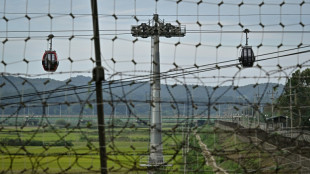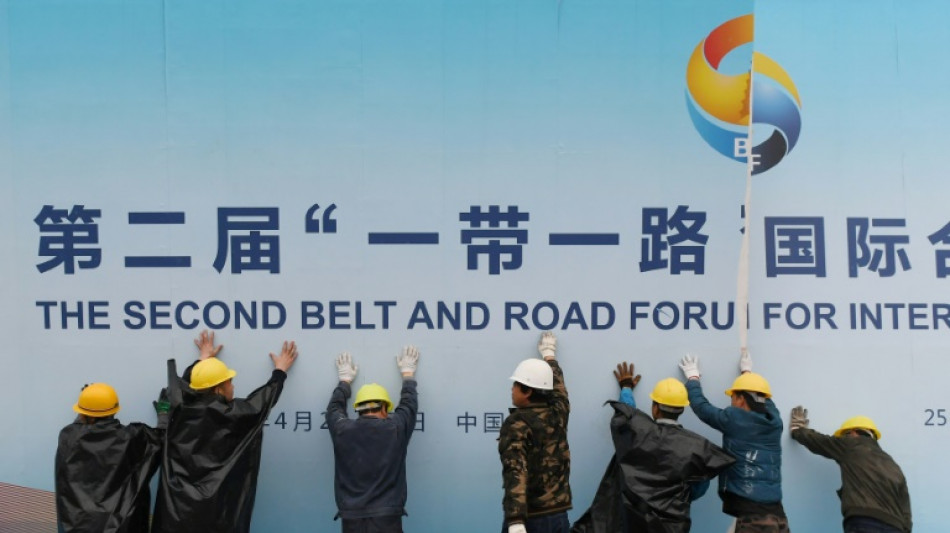
Italy treading carefully on China's Belt and Road / Photo: GREG BAKER - AFP/File

 Most equities rise after oil price plunge, US data in focus
 Polar oceans transformed as warming melts ice habitats: research

 Lost shark becomes viral star in South Korea

 Dangote to launch $16bn refinery in Kenya

 North Korean leader 'extremely obese': Seoul spy agency

 Yankees and pope-backed White Sox start MLB playoffs with wins

 Malaysia's ex-PM Mahathir in hospital for observation
 'No limits': Marathon world record holder Sawe chasing history

 Countdown begins to biggest-ever Rugby World Cup

 Bangladesh women lose ground after quota reform

 Vietnam admits 'differing opinions' on Hanoi development

 Stocks temper gains as oil pares heavy losses, US data in focus

 New Zealand denies breaching climate commitments to EU
 Albert becomes youngest US scorer in 4-2 win over Chile
 Pirate island's plunging population shows Greece's demographic decline
 With elections ahead, Latvia's Russian-speakers reject Moscow's help

 Brazil football clubs face massive sponsorship blow from betting ban
 ChatGPT maker wants to be the App Store for AI as safety concerns grow

 Women fight fires and sexism in Indonesian Borneo

 Forsling's OT blast lifts Florida over Carolina in NHL opener

 Hurricane Polo sweeps over Mexico's Pacific coast, heads inland

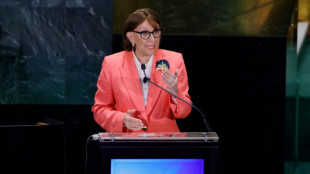 Grynspan pulls ahead in race to lead UN: diplomat

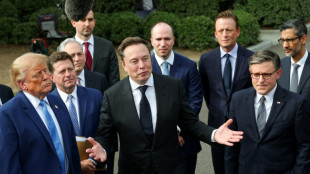 Trump touts AI boss pledge to self-regulate
 Oil down, but stocks lower as bond yields rise
 England break down stubborn Czechs to claim first Nations League win
When Italian Prime Minister Giorgia Meloni meets fellow G7 leaders this week, her allies will be looking for reassurances that Rome is ready to quit Beijing's Belt and Road (BRI) initiative.
Debt-ridden Italy in 2019 became the only one of the group of leading developed democracies to sign up to China's trillion-dollar investment scheme, which critics denounce as a predatory "Trojan horse" aimed at buying political influence.
The agreement automatically renews in March 2024 unless Italy opts out by the end of this year -- but leaving is no simple matter.
Meloni, whose far-right Brothers of Italy party won September elections, is keen to demonstrate Rome's loyalty to the United States, NATO and the European Union.
She is also under domestic pressure to secure her first invitation to the White House, with the highly symbolic BRI accord with China seen by political observers as a potential hitch.
During the election campaign, Meloni said the China deal was a "serious mistake", and her defence minister has also said its renewal is "unlikely".
Rome is wary, however, of provoking Beijing and risking retaliation against Italian companies already weakened by the coronavirus pandemic and suffering from sanctions on Russia over the Ukraine war.
Meloni said last week that no decision had been taken and that it was a situation "which must be handled very carefully".
A government source told AFP that Italy would not be making an announcement at the G7 summit in Japan, where leaders will look to agree a united line on China's growing military and economic power.
But closed-door discussions on how to distance from China without inflaming tensions are expected.
- 'Big promises' -
"Meloni has to be Yin and Yang at the same time," Giuliano Noci, a China expert at the Milan Polytechnic business school, told AFP.
"There's the North Atlantic Treaty and Western countries to consider... (but) she cannot leave (the BRI) to please the Americans while penalising Italian businesses, she would never be forgiven," he said.
But Philippe Le Corre, senior fellow at the Asia Society Policy Institute, said China's actions in recent years -- particularly its handling of the Covid-19 pandemic -- had affected its image in Italy "pretty badly".
"Politically I think Meloni's electorate would not understand it if she decided to stay in... unless China makes a big promise to her when she visits," he said, in reference to a trip to Beijing mooted for this summer.
Through the BRI, around 150 countries have received Chinese funds and loans to build infrastructure including roads, ports, railways and hydroelectric dams.
Italy's non-binding memorandum of understanding with China contained broad undertakings for cooperation in logistics, infrastructure, financial and environmental sectors.
But details were scarce and the lack of transparency has fuelled distrust among Italy's allies.
"The MOU was seen as Xi Jinping's top achievement during his 2019 European tour, and this 'success story' was used and reused in the Chinese media," Le Corre said, referring to China's president.
"The problem is that China did not deliver," he said.
- Disappointing -
When Meloni's predecessor Mario Draghi took office in February 2021, he essentially froze the accord and used the government's so-called "golden powers" to stop high-level investments in Italy by Chinese companies.
Lorenzo Codogno, a former chief economist at the Italian Treasury, said the BRI "seems to have had a limited impact" in Italy and "has disappointed in terms of new joint initiatives".
Other big European economies, such as Germany and France, have not joined the BRI, but have nonetheless secured important trade and investment deals.
"In 2021 (the latest available figures), the Netherlands received the most Chinese investment, followed by Germany, France and the UK," Codogno said in a note.
Not only is Italy not profiting greatly from the BRI, an abrupt exit could penalise key sectors like the luxury industry, and see countries like France nip into the vacuum, Noci warned.
Meloni could "rethink some parts of the memorandum", or opt out but "revitalise" an existing framework known as the Italy-China governmental committee, he said.
"The key thing is to not cause China to lose face, because that would be very problematic," he said.
E.Raimundo--PC