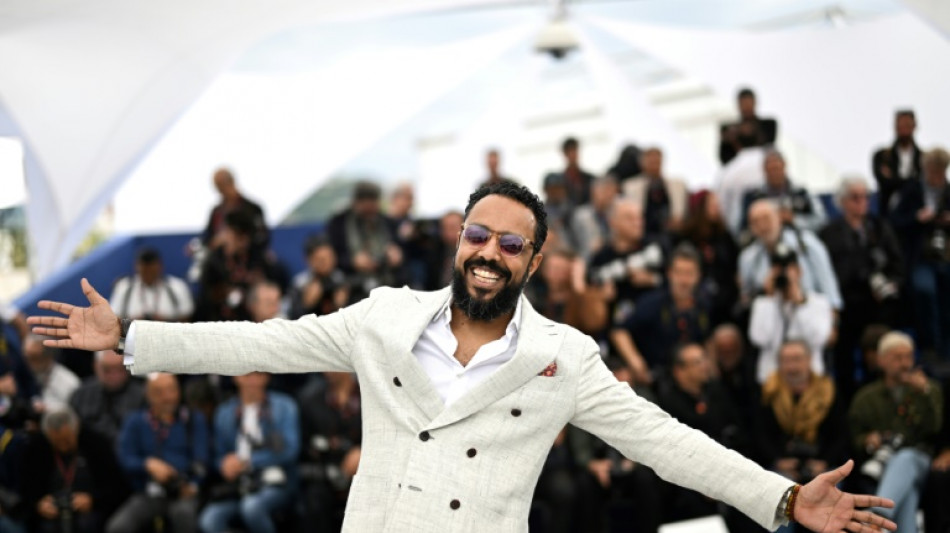
First Sudan director at Cannes 'heartbroken' by new war

 South Korea break China hearts to reach Asian Games football final

 Eala storms into Asian Games semi-finals to thrill adoring fans

 Turkey freezes ex-minister's assets as fund crisis grows

 What we know about the North Korean POW dispute

 Most equities rise after oil price plunge, US data in focus

 Polar oceans transformed as warming melts ice habitats: research

 Lost shark becomes viral star in South Korea
 Dangote to launch $16bn refinery in Kenya

 North Korean leader 'extremely obese': Seoul spy agency

 Yankees and pope-backed White Sox start MLB playoffs with wins

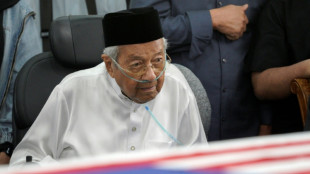 Malaysia's ex-PM Mahathir in hospital for observation

 'No limits': Marathon world record holder Sawe chasing history

 Countdown begins to biggest-ever Rugby World Cup

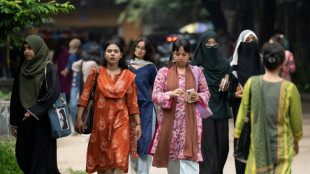 Bangladesh women lose ground after quota reform
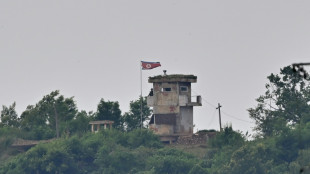
 Vietnam admits 'differing opinions' on Hanoi development
 Stocks temper gains as oil pares heavy losses, US data in focus
 New Zealand denies breaching climate commitments to EU

 Albert becomes youngest US scorer in 4-2 win over Chile

 Pirate island's plunging population shows Greece's demographic decline

 With elections ahead, Latvia's Russian-speakers reject Moscow's help
 Brazil football clubs face massive sponsorship blow from betting ban
 ChatGPT maker wants to be the App Store for AI as safety concerns grow

 Women fight fires and sexism in Indonesian Borneo

 Forsling's OT blast lifts Florida over Carolina in NHL opener

 Hurricane Polo sweeps over Mexico's Pacific coast, heads inland
"The war never ends. Tomorrow it will start again," remarks a character in "Goodbye Julia", the first Sudanese film ever selected for Cannes.
It explores the racism fueling decades of conflict in the country, and director Mohamed Kordofani admitted to "contradictory feelings" about walking the glitzy red carpet of the Cannes Film Festival while his fellow Sudanese are cowering from bombs.
The irony is not lost on Kordofani, who did not expect his debut feature to coincide with the breakout of a new conflict in Sudan.
"Right now I am stranded in Cannes," he joked in an interview with AFP on a seaside terrace overlooking a flotilla of yachts, before adding on a serious note that he was "heartbroken" by the conflict and the fact he could not go home.
"The bombing needs to stop," said the former aircraft engineer, who packed in his career to start a film production company.
"Goodbye Julia" is playing in the Un Certain Regard category in Cannes, a segment focusing on young, innovative talent.
The film starts in 2005 after the end of an earlier bout of fighting, between Khartoum and the separatist south, and ends as South Sudan gains independence in 2011.
It tells the story of how a covered-up murder brings a southern Sudanese woman, Julia, into contact with a northern Sudanese woman, Mona, and her overbearing conservative husband.
- 'My own transformation' -
The two women's friendship is complex, and the racist undercurrent between Arabs and black Africans that stalks the Middle East and North Africa is on stark display.
Mona's husband refers to the southerners as "slaves" and "savages", and she is forced to confront her own ingrained racism, while gender roles are also explored.
Kordofani said he was inspired by how his own views had changed over the past decade.
"I started to review how I was behaving in my previous relationships. I reviewed my own racism."
He said discrimination was so deeply ingrained in Sudan that "to this day, I don't know if I'm completely not racist."
While racism is not at the heart of Sudan's current conflict, Kordifani said the film's message was still relevant, as the country lurches from one broken ceasefire to the next, and residents hunker down with barely any food or supplies.
"I don't think the war will end unless we change. We the people, not the government. We need to be equal and we need to be inclusive, and we need to learn to coexist."
Critics have warmly received "Goodbye Julia", with Screen calling it "a gut-wrenching and emotionally rewarding tale".
The Hollywood Reporter said it had "shades of a thriller" and praised Kordofani's "fine direction."
T.Batista--PC