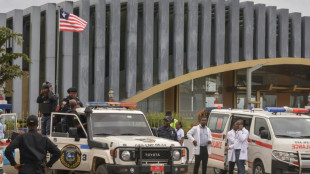
Host of challenges for Sudan refugees seeking safety in Egypt / Photo: Khaled DESOUKI - AFP/File

 In Manchester, people say City scandal is 'shame for football'
 Stocks lacklustre as inflation data weighs on sentiment
 Israel-bound plane rerouted, pilots wounded in reported fight

 Truth commission on Sweden's Sami people seeks redress

 Energy costs spark inflation surges in France, Italy

 South Korea break China hearts to reach Asian Games football final
 Eala storms into Asian Games semi-finals to thrill adoring fans

 Turkey freezes ex-minister's assets as fund crisis grows

 What we know about the North Korean POW dispute
 Most equities rise after oil price plunge, US data in focus

 Polar oceans transformed as warming melts ice habitats: research
 Lost shark becomes viral star in South Korea
 Dangote to launch $16bn refinery in Kenya
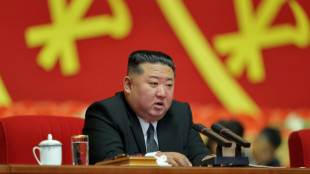 North Korean leader 'extremely obese': Seoul spy agency

 Yankees and pope-backed White Sox start MLB playoffs with wins
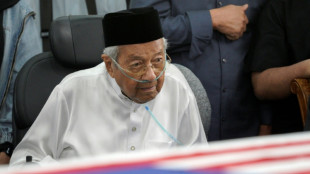 Malaysia's ex-PM Mahathir in hospital for observation
 'No limits': Marathon world record holder Sawe chasing history
 Countdown begins to biggest-ever Rugby World Cup
 Bangladesh women lose ground after quota reform
 Vietnam admits 'differing opinions' on Hanoi development
 Stocks temper gains as oil pares heavy losses, US data in focus
 New Zealand denies breaching climate commitments to EU

 Albert becomes youngest US scorer in 4-2 win over Chile
 Pirate island's plunging population shows Greece's demographic decline
 With elections ahead, Latvia's Russian-speakers reject Moscow's help
From the scorching summer heat to war profiteers and bureaucratic foot-dragging, Sudanese fleeing battles at home have encountered many obstacles -- but also help from strangers -- on the long road to safety in Egypt.
Among the hundreds of refugee families waiting at the border, some had no passports.
Others would not go further until their husband, brother or son was granted a visa -- which women and children are exempt from.
One woman was "sleeping sometimes on the ground, sometimes on a bus" for several days, she told AFP, waiting for her cousin to be issued a visa by the Egyptian consulate in the border city of Wadi Halfa.
She eventually crossed together with a few of her aunts, but "my cousin, he's still waiting", a month after fleeing their home in Khartoum, said the woman, who asked not to be identified.
Stuck in Wadi Halfa, "everything is overpriced because of war profiteers", said a Sudanese man who finally made it to Cairo after a two-week wait.
Others prefer to try their luck at another Egyptian consulate, in the Red Sea city of Port Sudan, more than 650 kilometres (400 miles) away from Wadi Halfa.
But they are not guaranteed relief there either. Youssef al-Bashir said he had been waiting "for five days" along with hundreds of others to submit his application.
Since fighting began on April 15 between the forces of two rival generals, more than 132,000 refugees have arrived in Egypt, the International Organization for Migration (IOM) said on Wednesday.
More than a million others have been displaced internally in Sudan, and across the borders of other countries.
Many of those who could not flee have hunkered down in their homes without basic supplies.
For those who make it across the border to Egypt, the Egyptian Red Crescent provides care for the sick and hands out water and biscuits.
- 'Our second country' -
Unlike in other neighbouring countries that have been taking in Sudanese refugees, humanitarian operations in Egypt are limited.
Cairo refuses to set up refugee camps and instead says the new arrivals are given the right to work and move freely.
President Abdel Fattah al-Sisi has repeatedly said his country is hosting "not war refugees" but "guests".
Sudanese who cross into Egypt's south must then buy a bus ticket to take them to the nearest major city, Aswan, around 200 kilometres north of the border.
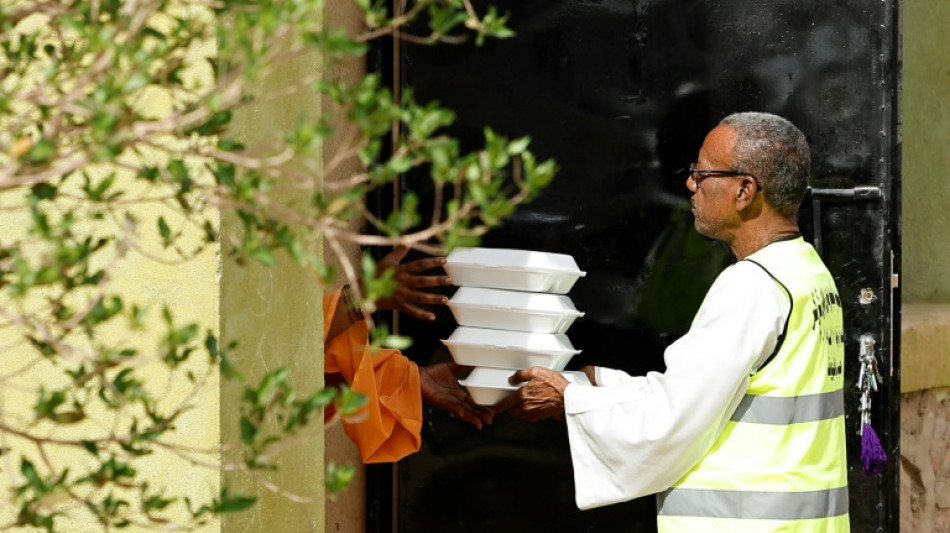
They are greeted there by volunteers who offer a hot meal -- the first for many since embarking on the perilous desert journey.
"We serve three meals a day. For lunch there is chicken, pasta and beans," said Mansour Jomaa, one of about 60 volunteers.
"We also deliver meals to a dozen houses," where "sometimes eight families are crammed together", he told AFP.
More than four million Sudanese were living in Egypt before the war, according to the United Nations. The neighbouring countries share the Arabic language, cultural ties, and fabled history dating back to the Pharaonic era.
Egypt was an "obvious" destination, said Walid Ahmed, a refugee who left Wadi Halfa and headed north. "It's our second country."
- Long-term needs -
"The number of people waiting to cross into Egypt is increasing," said Carlos Cruz, head of the IOM mission in Egypt.
The UN agency needs $19.9 million to provide them with "water, food, hygiene kits and medicines", specifically for diabetes and other chronic illnesses, he told AFP.
"In the longer term, there will also be other needs including education and livelihoods," Cruz added.
Many of the Sudanese refugees AFP spoke to believe it would take a long time, perhaps decades, before they can return home.
They carried with them their savings in dollars, a precious asset in Egypt where an economic downturn has boosted the purchasing power of foreign currency.
A Sudanese official, who asked that her name be withheld, said she had only meant to spend the holy month of Ramadan in Cairo, but the war broke out days before its end, forcing a change of plans.
She had to "negotiate an extension with the landlord for an apartment rented only for 30 days and for five people", she told AFP.
"When my family came to join me from Sudan, I had them enter in the middle of the night once the concierge was asleep, because there are 12 of us and the owner doesn't know."
The woman said she has no idea what the future holds, and in the meantime goes out only from time to time with her cousins.
"But always in small groups so that people wouldn't notice us."
V.F.Barreira--PC