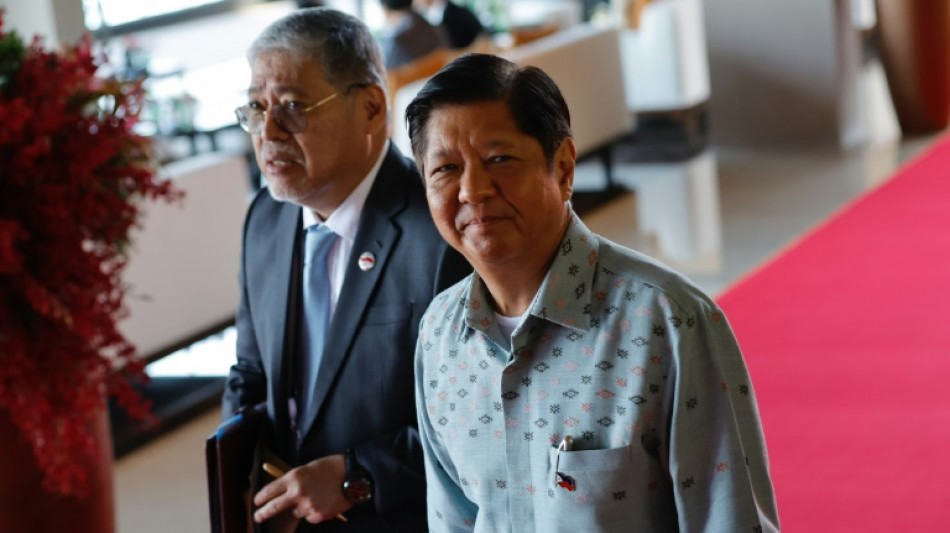
What's the state of Philippine human rights under Marcos? / Photo: WILLY KURNIAWAN - POOL/AFP

 Fury, Joshua kick off 'battle of Britain' in good spirits

 Ronaldo leaves Portugal training camp after coach says he is dropped

 Florence Pugh stars in 'East of Eden' adaption on Netflix

 Watchdog finds no criminal misconduct over US Fed renovations despite Trump probe

 In Manchester, City fans 'devastated' while rival fans call for relegation

 UK-France Channel migrant exchange deal scrapped: London

 Portugal boss denies 'incident' with Ronaldo

 Israel PM says one of the pilots of rerouted flight tried to crash plane

 Manchester City: Main points of damning judgement and possible sanctions

 Italy looking for 'identity' under Mancini says Scalvini
 The voices of Spain's housing camp protesters

 Romanian parliament rejects pro-EU PM candidate

 Court halts Tennessee's first execution of woman in 200 years

 Israelis march between once-closed West Bank settlements
 'Welcome back,' says Macron, as UK PM opens door to EU return
 Israel PM says pilot of rerouted flight tried to crash plane

 Demuro hopes to deliver Japan a 'magical' Arc victory

 'Devastated' AI scandal author Orelien returns to Quebec
 US reports firm Q2 economic growth, inflation steady

 Energy costs spark inflation surge across Europe
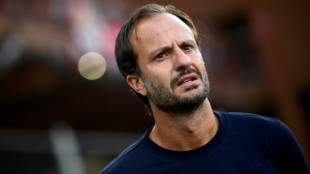 Parma appoint Italy World Cup winner Gilardino

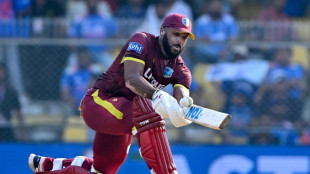 West Indies pile up record 405-7 in second ODI against India

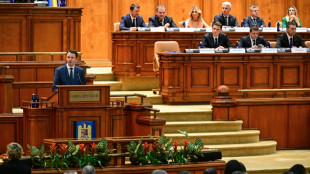 Romanian parliament rejects pro-EU PM candidate amid political deadlock
 Passenger on rerouted flydubai flight says pilot tried to crash plane

 Russia targets Kyiv power supply as freezing winter approaches

When Philippine President Ferdinand Marcos was swept to power in 2022, human rights activists feared the worst.
Marcos had been a vocal supporter of his predecessor Rodrigo Duterte's drug war that killed thousands of people, and publicly praised his dictator father's rule.
But, as he seeks to strengthen ties with Washington and attract foreign investment, Marcos has presented himself as more moderate than Duterte, who threatened to kill people and repeatedly disparaged human rights.
In reality, nearly a year into Marcos's term, activists say little has changed on the ground.
After a judge's decision on Wednesday to reject jailed Duterte critic Leila de Lima's bail application, AFP looks at the state of human rights under Marcos.
- Is there still a drug war? -
During Duterte's six-year drug war, thousands of mostly poor men were killed and an international investigation was launched into a possible crime against humanity.
Marcos has continued the crackdown but has pushed for more focus on prevention and rehabilitation.
He told police to go after major drug dealers and not "the kid who makes 100 pesos ($2) a week selling weed".
Yet the bodies keep piling up.
More than 300 drug-related killings have been recorded since Marcos took office last June, according to figures compiled by Dahas, a University of the Philippines-backed research project that keeps count of drug-related killings.
That includes 175 in the first six months of Marcos's presidency.
In November, police acknowledged that 46 drug suspects had been killed since he took office.
- Does Marcos oppose ICC probe? -
Duterte withdrew the Philippines from the International Criminal Court in 2019 after the Hague-based tribunal started probing allegations of human rights abuses committed during his anti-narcotics campaign.
Marcos, who has been careful to avoid explicitly criticising his predecessor's policies, has ruled out rejoining the court.
His government has opposed the ICC's investigation, insisting it has no jurisdiction and that the Philippine justice system is capable of investigating the alleged crimes.
Under pressure from the UN Human Rights Council, the Duterte government began examining hundreds of cases of drug operations that led to deaths.
That probe has continued under Marcos, but there has been little progress.
Only four police officers have been convicted for killing drug suspects in two separate cases since the start of the crackdown in 2016.
Rights groups estimate tens of thousands of people were killed during Duterte's drug war.
Marcos told a democracy summit hosted by US President Joe Biden in March that Manila was committed to "fight impunity" and prosecute crimes, including those allegedly committed in the drug war.
But activists accuse Marcos of paying lip service to human rights during meetings with foreign diplomats, pointing out that he has not explicitly ordered police to end the violence.
- Does 'red-tagging' still happen? -
A decades-old strategy to smear or silence critics in the Philippines has been to link the person or group to communist rebels trying to overthrow the government.
The practice, known as "red-tagging", can result in the arrest, detention or even death of the person targeted, and it exploded under Duterte.
A multi-agency task force set up by Duterte to end the insurgency frequently accused government critics of being communist sympathisers, without providing any evidence.
Hundreds of activists, journalists and lawyers were killed during Duterte's term, many of them after being red-tagged, rights groups say.
Red-tagging has continued under Marcos, who has "not said anything explicit" against the practice, said Carlos Conde of Human Rights Watch in the Philippines.
Vice President Sara Duterte, daughter of the former president and an alleged red-tagger, was recently appointed co-vice chair of the anti-communist task force.
- Is it still dangerous for journalists? -
The Philippines remains one of the world's most dangerous countries for journalists and scored below Mexico and Thailand on Reporters Without Borders' latest press freedom index.
Three journalists have been killed since Marcos took power, including a popular radio broadcaster in Manila that drew international concern and unusually quick action by authorities to find the culprits.
During his term, Duterte went after local broadcaster ABS-CBN and online news site Rappler over perceived slights and alleged "fake" news.
ABS-CBN lost its free-to-air licence after Congress refused to renew its franchise, while Rappler and its co-founder Maria Ressa have been fighting charges of tax evasion and cyber libel.
Many journalists feared Marcos would adopt Duterte's hostility towards them after he largely shunned mainstream media on the campaign trail.
Since taking office, however, he has been more open to answering questions from reporters, though one-on-one interviews are still rare.
Ressa, meanwhile, was cleared of tax evasion in January, her first acquittal since Duterte's government began filing charges against her.
She still faces potential prison for a cyber libel conviction, while the future of Rappler, which she co-founded in 2012, remains uncertain.
R.J.Fidalgo--PC