
-
 Panic, anger, tears: Evan Gershkovich's uneasy journey after Russian jail
-
Bohm's blast keeps Phillies alive in MLB playoffs

-
 UK PM says 'strong indications' Iran involved in airbase incident
-
US judge accepts Paramount's Warner Bros. buyout settlement

-
 Google restricts access to new AI model over safety concerns
-
Global stocks mixed as markets weigh higher oil prices, bond yields

-
 Watchdog clears former US Fed chief Powell in renovation probe
-
Marsh hails improvements after Australia win final one-day international

-
 Israel PM hails Indian pilot of rerouted flight for averting disaster
-
Hegseth says US cut number of generals, admirals by 20%

-
 Fury, Joshua kick off 'battle of Britain' in good spirits
-
Kanye West's Russian concerts have been cancelled, organisers say

-
 Ronaldo leaves Portugal training camp after coach says he is dropped
-
First Hollywood, now Fat Bear Week: nepobaby wins Alaska contest

-
 Florence Pugh stars in 'East of Eden' adaption on Netflix
-
Barcelona lay down marker in Women's Champions League, Arsenal slip up

-
 Watchdog finds no criminal misconduct over US Fed renovations despite Trump probe
-
US pushes against overproduction with eye on China at G20 meeting

-
 In Manchester, City fans 'devastated' while rival fans call for relegation
-
Swiss FA withdraws support for FIFA chief Infantino

-
 UK-France Channel migrant exchange deal scrapped: London
-
Man City's meteoric rise clouded by financial scandal

-
 Portugal boss denies 'incident' with Ronaldo
-
Polish activists open first abortion pill locker in Warsaw

-
 Israel PM says one of the pilots of rerouted flight tried to crash plane
-
NHL Avalanche ink Bednar to four-year coaching deal

-
 Manchester City: Main points of damning judgement and possible sanctions
-
Polish activists opens first abortion pill locker in Warsaw

-
 Italy looking for 'identity' under Mancini says Scalvini
-
Turkey says news site closed for 'LGBTQ propaganda'

-
 The voices of Spain's housing camp protesters
-
Oil companies close in on Venezuela despite hurdles

-
 Romanian parliament rejects pro-EU PM candidate
-
Turkey freezes ex-minister's assets as fund scandal grows

-
 Court halts Tennessee's first execution of woman in 200 years
-
Guardiola backs Man City after bombshell guilty verdicts

-
 Israelis march between once-closed West Bank settlements
-
G20 trade ministers open talks under strain of Trump tariffs
-
 'Welcome back,' says Macron, as UK PM opens door to EU return
-
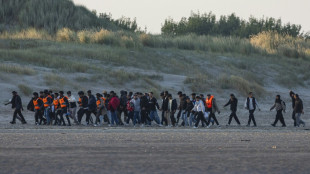
France in talks with UK to end 2025 migrant accord: ministry
-
 Israel PM says pilot of rerouted flight tried to crash plane
-
Europe's surging inflation spreads gloom in stock markets

-
 Demuro hopes to deliver Japan a 'magical' Arc victory
-
Truth commission demands compensation for Sweden's Sami people

-
 'Devastated' AI scandal author Orelien returns to Quebec
-
Japan win marathon penalty shootout to set up South Korea gold-medal clash

-
 US reports firm Q2 economic growth, inflation steady
-
Djokovic grinds out opening-round win at China Open
-
 Energy costs spark inflation surge across Europe
-
Northern Ireland police probe blockade of disputed parade

EU lawmakers approve plan on bloc's future AI rules
EU lawmakers voted Wednesday to adopt a key text forming the basis of a future law regulating artificial intelligence systems like ChatGPT, while aiming to foster innovation in the technology.
Negotiations on the final law will begin later Wednesday between the European Parliament and the EU's 27 member countries.
If Brussels hits its ambitious target of reaching an agreement by the end of the year, it would be the world's first law regulating AI.
Although the EU's plans date back to 2021, the draft rules took on greater urgency when ChatGPT exploded onto the scene last year, showing off AI's dizzying advances and possible risks.
There is also growing clamour to regulate AI across the Atlantic, as pressure grows on Western governments to act fast in what some describe as a battle to protect humanity.
While AI proponents hail the technology for how it will transform society, including work, healthcare and creative pursuits, others are worried by its potential to undermine democracy.
There have been a slew of awe-inspiring examples of AI's uses including a "final Beatles record" created using the technology, while US-based OpenAI's chatbot ChatGPT has passed business, law and medical exams.
Even if the EU's ambitious legislative target is achieved, the law would not come into force until 2026 at the earliest, forcing the EU to push for a voluntary interim pact with tech companies.
- Accelerate implementation -
The law would regulate AI according to the level of risk: the higher the risk to individuals' rights or health, for example, the greater the systems' obligations.
The EU's proposed high-risk list includes AI in critical infrastructure, education, human resources, public order and migration management.
The parliament has added extra conditions to that, before the high-risk classification would be met, including the potential to harm people's health, safety, rights or the environment.
There are also special requirements for generative AI systems -- those such as ChatGPT and DALL-E capable of producing text, images, code, audio and other media -- that include informing users that a machine, not a human, produced the content.
Lawmakers also proposed bans on AI systems that use biometric surveillance, emotion recognition and so-called predictive policing.
An MEP spearheading the law in parliament, Brando Benifei, told journalists on Tuesday there are talks to consider whether to accelerate the law's implementation or to bring in rules earlier for generative AI.
"We could also consider some reduced timing for some of the AI, for example foundation models and generative AI," Benifei said.
In his reasoning, he pointed to plans by Brussels and the United States to release a common code of conduct on AI to develop standards among democracies.
Lawmakers have hailed their draft law as "historic" and pushed back against critics who say the EU's plans could harm rather than encourage innovation.
EU internal market commissioner, Thierry Breton, welcomed the vote and insisted "there is no time to lose".
"AI raises a lot of questions -– socially, ethically, economically. But now is not the time to hit any 'pause button'," Breton said. "On the contrary, it is about acting fast and taking responsibility."
G.Teles--PC