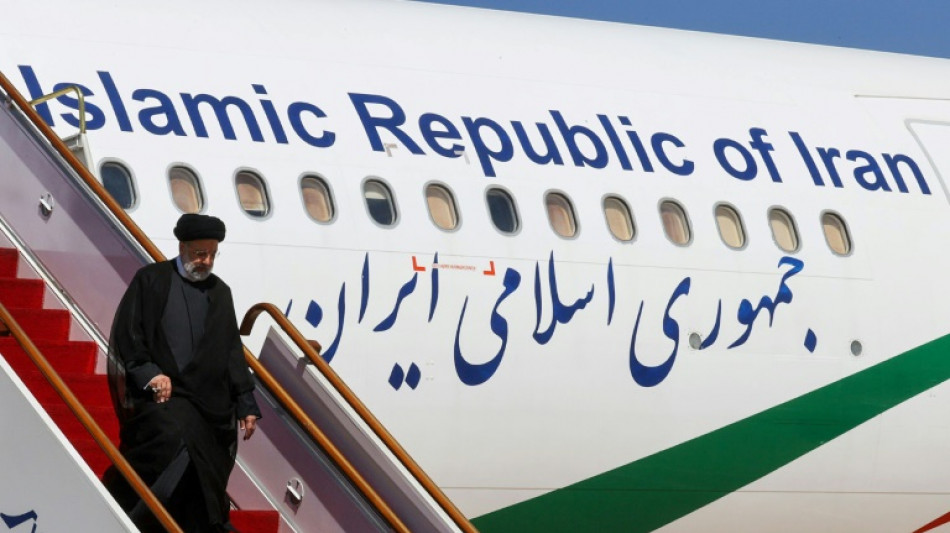
Iran ups diplomacy to ease isolation and project strength / Photo: - - Iranian Presidency/AFP

 Cable car offers small hope for Mongolia's gridlocked capital

 Man City scandal risks damage to Premier League's booming brand
 First-time Sepang F1 racers will master track 'from opening lap'
 Japan tightens rules for foreigners wanting permanent residency

 'Happiest moment': China's Mu first woman to win eSports Games gold
 EU talks deportations as five nations seek migrant centre in Africa
 Kenneth Branagh examines the scars of Iraq war in 'Atonement'
 Hundreds held, dozens wounded as French school protests escalate
 US government's new AI chatbot pulls back from debunking Trump

 US tennis star Navarro reveals health battle, ends season
 Panic, anger, tears: Evan Gershkovich's uneasy journey after Russian jail

 UK PM says 'strong indications' Iran involved in airbase incident
 Google restricts access to new AI model over safety concerns

 Watchdog clears former US Fed chief Powell in renovation probe
 Israel PM hails Indian pilot of rerouted flight for averting disaster
 Fury, Joshua kick off 'battle of Britain' in good spirits
 Ronaldo leaves Portugal training camp after coach says he is dropped
 Florence Pugh stars in 'East of Eden' adaption on Netflix

 Watchdog finds no criminal misconduct over US Fed renovations despite Trump probe

 In Manchester, City fans 'devastated' while rival fans call for relegation
 UK-France Channel migrant exchange deal scrapped: London
 Portugal boss denies 'incident' with Ronaldo

 Israel PM says one of the pilots of rerouted flight tried to crash plane

 Manchester City: Main points of damning judgement and possible sanctions

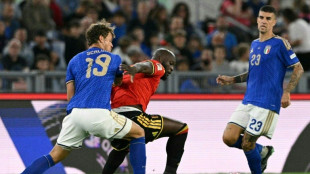 Italy looking for 'identity' under Mancini says Scalvini
Since the start of the year, Iran has intensified its diplomatic activity, engaging with friends and foes alike as it seeks to reduce its isolation, improve its economy and project strength.
Iran's ultraconservative President Ebrahim Raisi has led the way, swinging through China, Syria and Venezuela, hosting Saudi Arabia's top diplomat, and reaching out to other long-time regional rivals such as Egypt.
And this week his foreign minister, Hossein Amir-Abdollahian, has travelled to Oman, the mediator in indirect talks between Iran and its sworn enemy the United States over its suspect nuclear programme and a possible prisoner swap.
Sanam Vakil, director of Chatham House's Middle East and North Africa programme, said Iran was seeking to show it can overcome its adversaries.
Iran is "looking to show that despite sanctions and domestic protests it continues to weather the storm by bolstering stronger international economic and foreign ties", she said.
"These links... aim to increase economic connectivity and boost internal morale."
At stake are "agreements focused on easing tensions through the de-escalation of Iran's nuclear programme and release of US prisoners" held in Iran, said Diako Hosseini, a Tehran-based foreign policy analyst.
Iran hopes such agreements would allow it to revive an economy battered by sanctions, rampant inflation and record depreciation of the rial against the dollar.
- 'Policy of openness' -
In 2018 under then president Donald Trump, the United States unilaterally withdrew from the landmark Iran nuclear deal and imposed waves of sanctions on the Islamic republic.
The punitive measures remain in place and are considered a strong deterrent for any foreign companies weighing up investments in Iran, regardless of their nationality.
Any indication of a thaw in relations would therefore be viewed favourably by Arab countries, especially those of the Gulf, which are seeking to ease tensions fuelled in recent years by the conflicts in Yemen and Syria.
This desire was one of the main drivers of the China-brokered normalisation of relations in March between Iran and Saudi Arabia after seven years of hostility.
Since then, Iran has sought to cement or restore ties with other Arab countries including Egypt and the United Arab Emirates.
Tehran says its "policy of openness" has contributed to a de-escalation of tensions in the Middle East, even if the risk of an armed confrontation is still high with Israel, the Islamic republic's arch-enemy.
"Only the enemies of Islam, led by the Zionist regime (Israel), are upset by the progress of cooperation between Iran and Saudi Arabia," Raisi said last week when he received the Saudi foreign minister, Prince Faisal bin Farhan.
- 'New world order' -
At the same time, a certain detente is emerging with European countries after months of simmering tensions since nationwide protests erupted in Iran over the September death in custody of Mahsa Amini, a 22-year-old Iranian Kurd, after her arrest for an alleged breach of the Islamic republic's strict dress code for women.
In recent weeks, Iran has released six Europeans it was holding and has held nuclear talks with Britain, France and Germany, the three European signatories to the landmark 2015 agreement.
But a bone of contention remains between Iran and Western countries that accuse Tehran of supplying drones to Moscow and helping it build a factory to manufacture them, which the Islamic republic denies.
Iran is also courting China, which Raisi visited in February for the first such trip in 20 years. Tehran expects to attract significant Chinese investment, the level of which remains low despite promises made in recent years.
Presenting itself as one of the pillars of the "new world order", the Islamic republic also wants to extend its influence into Southeast Asia, Africa and Central America.
Following a trip to Indonesia, Raisi last week visited Venezuela, Nicaragua and Cuba -- where he denounced "the imperialist powers" led by the United States.
The analyst Hosseini believes Iran "is turning to countries that are not considered in the western bloc... to show that the West's influence on Iran and its economy is not major".
Iran also hopes to be quickly accepted into two organisations that exclude Western countries: the BRICS grouping of Brazil, Russia, India, China and South Africa; and the Shanghai Cooperation Organisation, which brings together China, Russia and several Central Asian countries.
P.Serra--PC