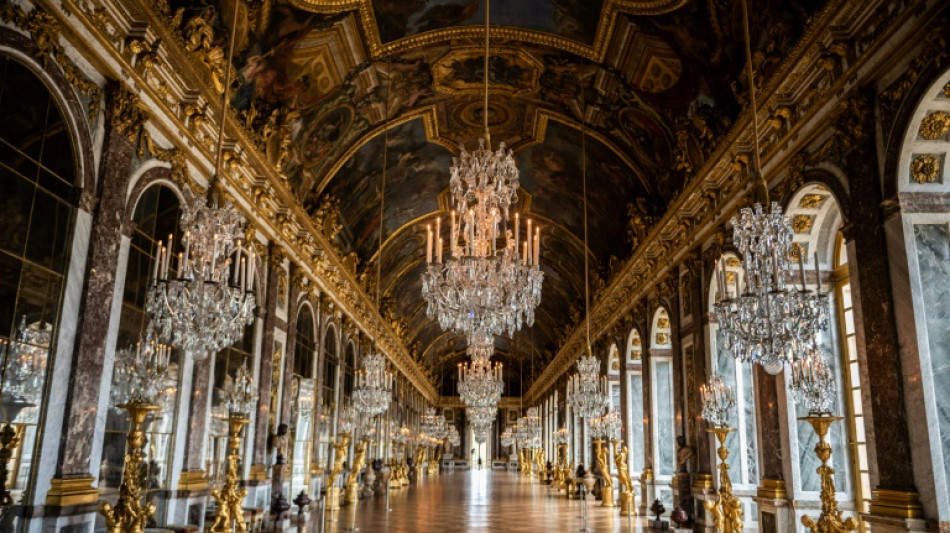
Freud, a 'mad' president and a century of European diplomacy

 Air support kicks in as record Belgian wildfire jumps in size
 Firefighters battle second day of blaze on Greek island
 Strikes kill 12 in Russia and Ukraine

 India's Sindhu backs monkey measures as badminton worlds set to open
 Mass drone attack on Moscow as Russian strikes kill three in Ukraine

 Djokovic feels the heat in Cincinnati defeat, Zverev wins all-nighter
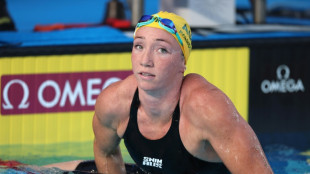 Pallister stuns Ledecky in Pan Pacs 800m free as two world records carry Douglass to gold

 Rampant Bangladesh make history with first-ever Test win in Australia

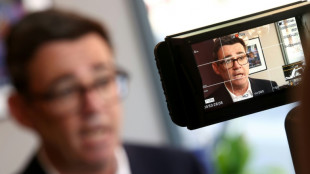 UK's media-savvy PM Burnham shifts messaging to TikTok, podcasts

 Gay badminton star Gilmour urges progress on LGBTQ rights in Asia

 Pallister takes down Ledecky in Pan Pacs 800m freestyle

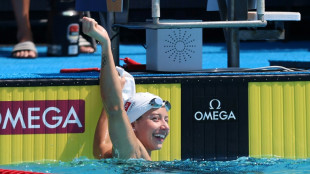 Douglass breaks 50m free world record again to claim Pan Pacs gold
 As Opel turns to Chinese partners, its hometown frets about the future

 Mehidy takes three as Bangladesh close on historic win in Australia

 Hope fades for finding surivivors of Colombia quake as rescued woman dies

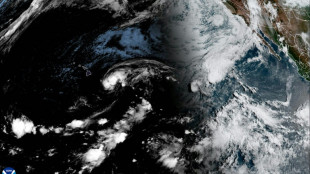 Hurricane Lala dumps heavy rain on Hawaii

 Jaded voters, same old choices: Brazil kicks off election campaign

 'Everyone lives in fear': Yemenis worry about return to all-out war

 Cardinals' Baez bashes record three homers in MLB debut
 Djokovic feels the heat in Cincinnati opening defeat
 Hunt bags third Euro gold, Diaz shines in triple jump

 Depleted Djokovic falls in Cincinnati Masters opener
 Lala, now a hurricane, dumps heavy rain on Hawaii
 American Kate Douglass reclaims 50m freestyle world record
 Kit confusion disrupts Newcastle friendly against Leverkusen

Finding a lost manuscript by Sigmund Freud has caused a French historian to revisit a key moment in European diplomacy 100 years ago that reverberates today as war returns to the continent.
"Le President est-il devenu fou?" (Has the president gone mad?) by Patrick Weil takes a fresh look at US president Woodrow Wilson (1913-21), who helped forge the Treaty of Versailles after World War I and tried to establish lasting peace through the creation of the League of Nations.
Wilson, of course, failed: the treaty's harsh conditions on Germany created resentment that helped fuel the rise of the Nazis.
Nor could he convince his colleagues in Washington to approve the treaty -- it was never ratified by the US, dooming the League of Nations at birth.
Back in the 1930s, Freud, the godfather of psychoanalysis, blamed Wilson's failure on messianic hubris, rooted in his repressed homosexuality and obsession with his father.
His text was not published until the 1960s, long after his death, and was rubbished by US reviewers, with The New Republic calling it either "a mischievous and preposterous joke... or else an awful and unrelenting slander upon a remarkably gifted American president".
But Weil says there may be something to Freud's critique.
- 'Hysteria' -
Whenever things went against Wilson, Weil writes, "he would plunge into hysteria", blaming everyone but himself.
Frequent minor strokes throughout Wilson's life may also have affected his sanity and undermined his ability to conclude the deal.
Certainly, many of his contemporaries, including British leader Winston Churchill and later US president Franklin Roosevelt, considered Wilson to be "crazy", Weil told AFP in an interview.
They kept that quiet, he said, because Wilson's reputation was important in building momentum behind the creation of the United Nations after World War II.
Weil uncovered Freud's original manuscript in an unmarked box in the archives of Yale University.
Freud had co-written his tract with a US diplomat, William Bullitt, and the original shows that some 300 changes were made by Bullitt before it was finally published in the 1960s, cutting many key psychological insights.
Weil uses his finding to help reassess the debate around the Treaty of Versailles -- a story with grim relevance now as the world seeks ways to negotiate with Russia.
"One can't help noticing how the personality of certain leaders plays a role in the dangers faced by the world -- today as much as yesterday," he said.
- 'NATO before the fact' -
France's prime minister in 1919, Georges Clemenceau, is often blamed for pushing too hard to punish Germany, wanting to crush any chance of its resurgence -- a move that spectacularly backfired.
But Weil puts a different spin on events, having dug up documents that show that France's primary aim was to win security guarantees from the US and Britain -- a sort of early form of NATO -- in case of future German aggression.
"It is NATO before the fact, and it is a French request to create it," Weil said.
Wilson's failure to see the importance of a defence pact -- or to convince his colleagues in Washington -- ultimately doomed Europe to more war, he argues.
"It was an obsession of Roosevelt (during World War II) not to commit the same mistakes," said Weil.
"What's important in today's context is that the leaders in 1945 had that experience of 1919. Churchill, Roosevelt -- they were there (at Versailles).
"They had that experience that today's leaders do not."
A.F.Rosado--PC