War disfigures the cities of southern Ukraine

 Philippine student killed in livestreamed school shooting

 More Trump-Kim 'love'? What we know about North Korea
 Major Meta trial begins as lawyers spar over witnesses, damages

 Trump threatens to bomb Oman if it gets in way of Iran deal
 Australian cricketer Warner ordered to use breathalyser vehicle lock
 A Viking longship in 'The Odyssey'? It's a case of history meets Hollywood

 Racist abuse spurred Suzuki as Japan goalkeeper set for Premier League

 Japan lights torch as countdown begins to Asian Games

 Make it rain: Indonesia chases clouds to stem El Nino fires

 All aboard as Asian Games preparations enter 'final stages'

 Lights out, crowds gone: Havana waits for what comes next

 How families in Milei's Argentina sank deep into debt

 Zambia's Hichilema wins re-election with 60% of vote
 Jeanie Buss to fight siblings over sale of 17.8% stake in Lakers: reports

 Brazil's Lula hails new oil find as 'passport to the future'

 Rybakina slogs through double rain delays in Cincinnati win

 Two largest US reservoirs hit record lows amid western drought

 Colombian minister under fire over beach holiday post-quake
 Lamour leaves key FIFA position after criticising Infantino

 Buss family sells 17.8% stake in Lakers to Iger group

 Mangione state murder trial postponed after federal guilty plea

 Trump envoy says Hamas disarmament could begin within 30 days

 US pauses construction of border project in Texas national park

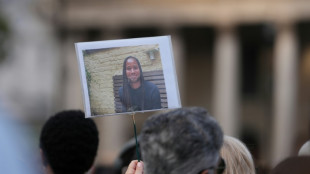 Thousands mourn dead black academic in London vigil

 South Africa Test series a lot tougher than a World Cup says All Blacks coach Rennie
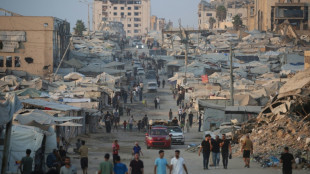
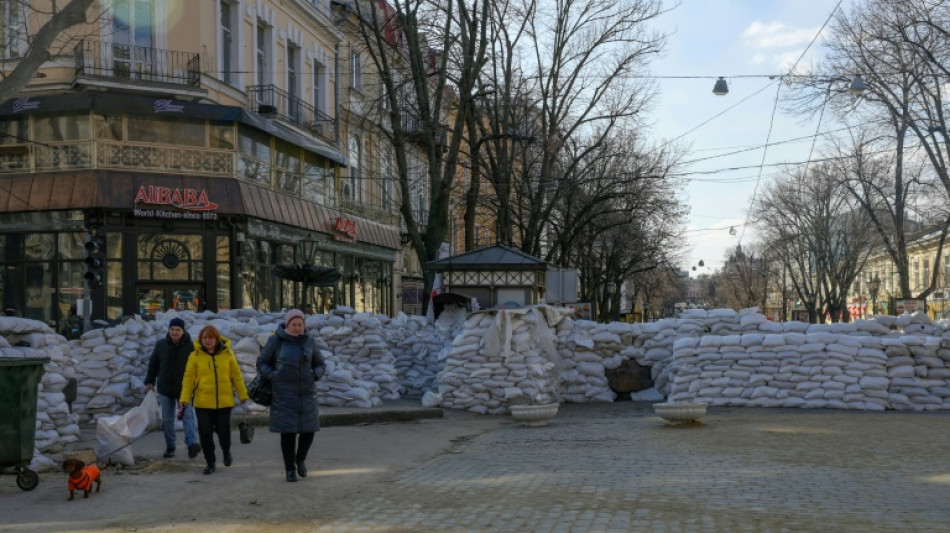
It is here on the charming Deribasovska pedestrian street that Viktor Oliynik has planted his easel to capture in pastel colours the wartime transformation of Odessa, whose architectural gems are now partially hidden behind sandbags.
Meanwhile, the city of Mykolaiv 130 kilometres (80 miles) to the northeast bears some scars from holding back the advance of Russian forces from occupied Crimea to the port city of Odessa.
After five weeks of war, the cities are barely recognisable even to their residents.
Turning his back to some of the Odessa street's emblematic sites, such as the former Bolshaya Moskovskaya hotel, an Art Nouveau jewel also known as the House of Faces for the decorations that adorn its facade, Oliynik attacked his canvas in the soft light of the late afternoon.
"I'm used to painting Odessa," said the artist sporting a three-day stubble and black beret perched on his head.
"But today I'm taking advantage of this situation, I never would have imagined such a scene," taking a second to point with his brush to the obstacles and fortifications along the street bordered by an elegant garden.
"This is how an epoch of chaos gives way to an epoch of equilibrium," he prophesied in a dramatic voice.
- 'Hurtful' transformation -
Further up the street, on the square outside the Transfiguration church, men are engrossed in games of dominos, chess and backgammon, oblivious to the sporadic wails of air raid sirens.
"It's really hurtful" to see the extent of the transformation of one's hometown, said Vladyslav Haidarzhi, 25, who has been volunteering to deliver aid to troops and hospitals in Mykolaiv.
"For example some of my friends who left Odessa on the first day of war and came back after one month were shocked," he told AFP.
"They were shocked to see that many roads are closed with different steel objects in order to make traffic of cars slower," he said.
"They could not believe their eyes."
- Urban deforestation -
Meanwhile, the centre of Mykolaiv is relatively unscathed despite the city being close to the frontlines, with one big exception: a missile strike on Tuesday punched a massive hole in the regional administrative building. It killed 28 people according to the latest count.
Nevertheless the city has been transformed.
For the past several weeks the sound of chainsaws has been heard along the main streets.
Hundreds of trees have been felled and left on the roadside.
With no official explanation forthcoming from the city authorities, speculation swirled as to why the trees were chopped down.
A local florist shared the most popular theories: to reduce pollen, widen the streets for military traffic, or to ensure fallen branches don't knock out electricity lines.
But one of the emergency services workers, Pavel Katsan, who was part of a clearcutting team, said he knew the real reason.
"We're cutting the trees to provide firewood for the Territorial Defence" units which have seen their ranks swell with civilian volunteers since the Russian invasion began on February 24.
"We cut down some in spring to reduce allergies," he confirmed. "But this year is different."
Residents remain stoic and defiant.
For the moment, the sandbag-filling operation on Odessa's beach for use in the city centre has been halted, said one of the volunteers.
"First we win, then we clean our city," Dmytro Kyryk AFP.
"And it will be better than before."
V.Fontes--PC