East Ukrainians twice in flight from Russian offensive

 Pant fastest to 100 sixes as India set Sri Lanka 372 to win first Test
 Russia rebukes Japan ambassador over disputed islands row
 Crude extends gains, most stocks drop as Mideast hopes dim
 Rift deepens as Asia football chief hits back at Qatar in Infantino saga
 India extend lead to 294 in first Sri Lanka Test
 Asian allies stress 'critical cooperation' as Trump slashes Korea drills

 Williams sisters fall at Cincinnati while Zverev advances
 Transylvania's fortified churches face fragile future
 China mourns former premier Zhu Rongji with flags lowered, funeral

 Philippine student killed in rare school shooting
 Arsenal primed for Premier League title defence as rivals face questions
 Zverev advances at Cincinnati while Williams sisters fall
 Copper powers profit rise at mining giant BHP
 Whales spark joy in New York but face threats from boat traffic
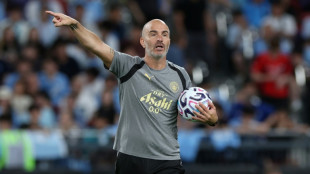 Premier League's new bosses brace for battle

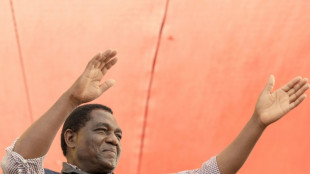 Zambia's Hichilema: 'cattle boy' and two-time president

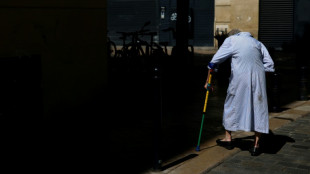 Elderly far more at risk from rising heat than thought: study

 LiberNovo Previews Support Week 2026, Putting Better Ergonomic Support Within Reach

 Paramount demands $1.9 billion surety over states' merger lawsuit
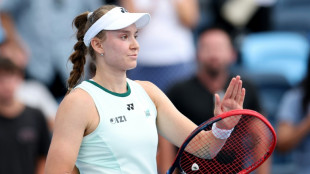
 Latest developments in US-Iran war

 NBA has no evidence of Clippers salary cap cheating: report
 Boehly and Walter consider selling Chelsea stake to Clearlake Capital

 OpenAI to lease massive new AI data center in US, backed by Nvidia

 US stocks fall on spiking bond yields, higher oil prices
 LIV Golf cancels Michigan event, to decide team title at Indy
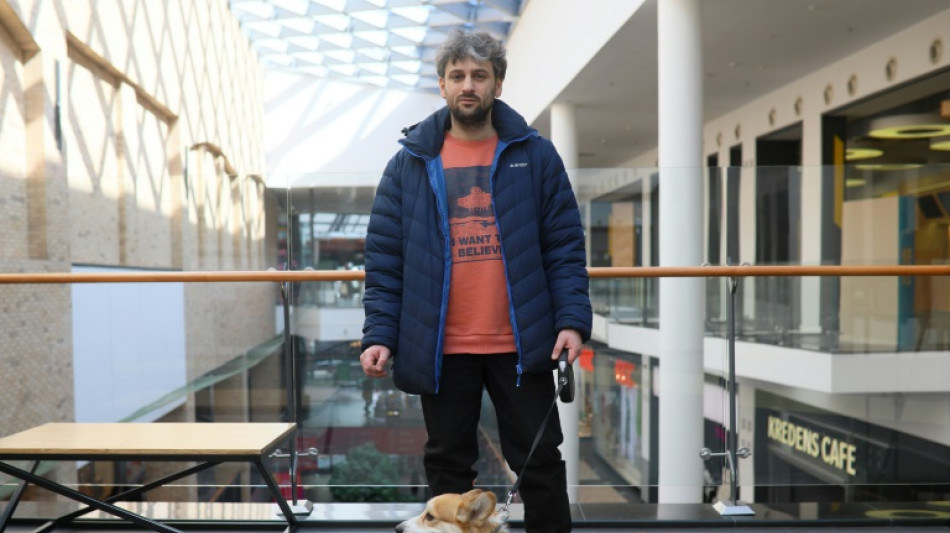
Fledgling film director Eugene Koshin talks about his ordeal like images on a screen -- vivid "flashes" of action that were somehow distant and unreal.
Kateryna Bosiachenko describes it like the end of innocence, her idyllic childhood marred by violence between "brother and brother".
For Milan Zaitsev it "turned the page" as a chapter of his life was snatched away.
All three Ukrainians describe a common experience. They were displaced from their homes in the east by Russia's 2014 military machinations.
Now, after starting new lives further west, they have been forced to flee a second time when President Vladimir Putin commanded a broader invasion on February 24.
They spoke to AFP in the city of Lviv. Just 70 kilometres (45 miles) from the Polish border, they can travel no further west without leaving Ukrainian soil.
- A grim sequel -
Koshin, 34, hails from the city of Donetsk in Ukraine's Donbas industrial heartland.
He was studying in Moscow when Russia-backed separatists launched an insurgency there after a pro-European uprising toppled Kremlin ally President Viktor Yanukovych from office.
On sporadic visits home he witnessed his city transformed. Soldiers in the streets. The rumble of artillery fire. A man menacing him with a rifle as he stood at his window.
"All the events that were happening in 2014, they were like flashes," he told AFP. "For me it was really like editing -- like you're watching some film."
That summer he left Donetsk, eventually settling in Kyiv with his family. "We decided to go somewhere, maybe for a week or two or three," he said. "All that time we invented some explanations."
"For us it was a long, long vacation. I could even say that we are still on that vacation."
Kyiv was where Koshin found footing as a director, recently securing his first commission for a feature film.
He was alerted to the invasion by his father's car keys beeping at 4 am. The alarm was triggered by the first air strikes hammering the city. He says he experienced the invasion in "Dolby surround".
The family swiftly quit the capital. "I try not to reflect because if I'm starting to reflect I have these bad thoughts," he said.
"Even after all these events during all these eight years I hoped that there were some limits."
- End of innocence -
Bosiachenko, 20, talks about her upbringing in the small city of Debaltseve in the Donetsk region with wide-eyed fondness, describing moments spent in nature.
One grandmother kept cows, another goats. Her days were spent swimming in lakes. "It was an amazing town, amazing for childhood," she said.
Every year on May 9 she would sing in the city centre to mark the date World War Two ended. But in 2014 something had changed. Her decision to sing in Ukrainian was potentially inflammatory.
Her uncle joined pro-Russian forces whilst her father was pro-Ukraine.
"It's not ok that brother and brother with different political opinions were ready to kill," Bosiachenko said.
The family quit their home in June 2014, staying away for two months, before moving to the Kharkiv region and settling down.
When war came once more last month she was studying geography in Kharkiv city. "It's two times," she says through tears of disbelief.
She left her second home on February 27, first by car and then by train from Dnipro to Lviv.
"I suffered half of my life because of Russia," she said.
"Now I understand it will be like this all my life."
- Another chapter -
Zaitsev, 31, grew up in the northern Donetsk region and worked as a mining equipment engineer.
He left for Kyiv in May 2014 after separatist gunmen burst into his home to interrogate the family about their pro-Ukrainian leanings.
"I turned the page just 100 percent and I started a new life," he said.
But Zaitsev continued to travel back to the Donbas region, guiding journalists and humanitarian organisations.
"I tried to be useful somehow," he said.
Though he was wracked with burnout, stress and "depression from time to time" he found a "family" among his colleagues, most of whom had also fled the region.
In February Zaitsev "met the war" in the Donbas city of Kramatorsk.
He travelled home to Kyiv and held out for two weeks before leaving for Lviv as Russian troops sought to encircle the capital.
Uprooting for a second time was easier.
He said he had premonitions of duct taping his apartment windows to prevent glass shattering from artillery strikes. "I was ready for this," Zaitsev said.
He left for Lviv with the same belongings in a small backpack he used for his trips back and forth to the Donbas.
"I don't think that I will stay here, but I'm not sure what to do next," Zaitsev said.
"I'm just a person in constant movement."
H.Portela--PC