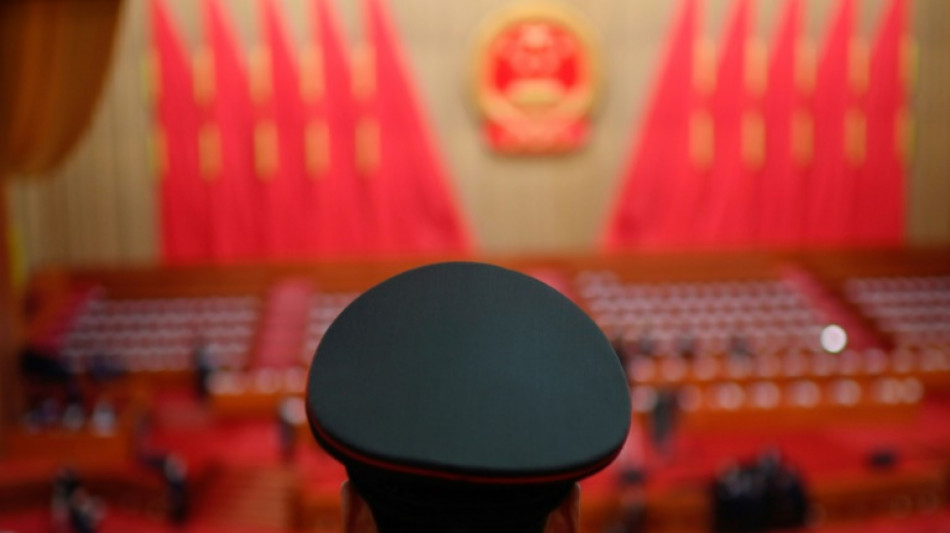
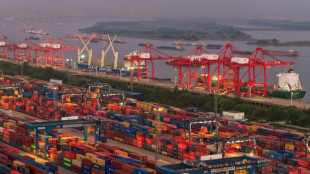
China's leaders set five percent growth goal for 2024 / Photo: Pedro Pardo - AFP

 Thailand begins extradition process against Chinese journalist

 Quarantine, unease and rumours: Russian city grapples with plague scare

 Taiwan says exports hit record in September on AI demand
 Marc Marquez vows to 'attack' Martin's lead at Indonesian MotoGP

 Diplomats, schools in Saudi take safety measures after blasts heard: sources to AFP

 In Beijing, EU trade envoy says deficit with China 'unsustainable'
 Sri Lanka's de Silva quits as Test captain

 Alcaraz feeling 'mentally fresh' ahead of Shanghai return

 Israel drastically reduces British diplomatic presence in Jerusalem
 Stocks fall further as oil surge fans fresh inflation worries

 North Korea demands South show 'utmost respect' to restore relations

 Saudi says three dead in airport attacks claimed by Houthis

 'Mad dream': New showcase for African film opens in London

 All Blacks coach Rennie says Wallabies exit 'part of the game'

 The growing protests against India's poll body - and PM Modi

 Stocks fall further as oil spike fans fresh inflation worries
 Bad COP, worse COP? EU tempers hopes for UN climate summit

 Rookie Henry named in Wallabies midfield to face All Blacks

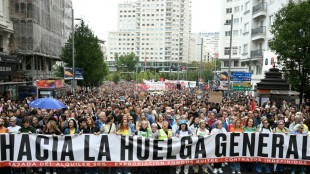 Housing crisis set to dominate Spain's snap election

 Gas, health care, utilities: high costs squeeze US midterm voters

 New Zealand Rugby seeks injunction over PNG Chiefs name
 Samsung expects 780% quarterly operating profit jump on AI boom

 Guardians survive with 9-3 win over White Sox

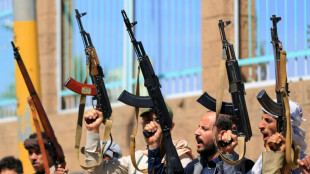 Saudi Arabia says 3 dead at airports after Houthis claim attacks
 Stocks slide as oil sees volatile trading day over Iran war fears

China on Tuesday set a growth target of five percent, in line with last year's GDP but a far cry from the double-digit expansion that for years drove the world's second-largest economy.
A year after the anointing of President Xi Jinping for a historic third term, the goals and budget will follow the opening of a meeting of the National People's Congress (NPC), which began at 9 am (0100 GMT).
The NPC opened with a rendition of China's national anthem, with the country's top leadership and thousands of delegates from around the country in attendance.
The parliament is set to focus on a litany of economic and security challenges during the week-long conclave.
The first order of business will be Premier Li Qiang's work report, at which he officially unveils the GDP goal.
The parliament will also set the military budget, which a work report seen by AFP said would increase by 7.2 percent.
Last year, with the awarding of his latest five-year term, Xi cemented his place as China's most powerful leader since Mao Zedong.
But 12 months later, all focus will be on the dire state of China's economy.
The country continues to grapple with a prolonged property sector crisis, record youth unemployment, and a global slowdown that is hammering demand for Chinese goods.
Beijing has for years been reluctant to confront those pressures head-on with a major bailout, fearful of putting too much strain on fragile state coffers.
Analysts don't see any reason to think that will change soon.
Armed police and security personnel are ubiquitous on Beijing's streets this week as thousands of delegates descend on the capital for the "Two Sessions", a carefully choreographed week-long gathering of the NPC and Chinese People's Political Consultative Conference (CPPCC).
This week's meetings are not expected to see the unveiling of big-ticket bailouts that experts say are needed to get the economy back on track.
Many of its major decisions will have been made weeks before, in closed-door meetings of the Communist Party, far from the international media's cameras.
Nevertheless, the topics that are up for discussion and the tone of the speeches allow for key insights into what's keeping China's rulers up at night.
"The NPC is not obsolete or irrelevant," analyst Nis Grunberg told AFP.
"It is an important platform for the leadership to communicate its key priorities."
- Economy in focus -
The first of the "Two Sessions" has already begun: the CPPCC kicked off on Monday afternoon.
The almost 3,000-member NPC will hold daily sessions until next Monday.
Beijing "will likely err on the side of caution without conceding how large the pressures on the economy are", Diana Choyleva, chief economist at Enodo Economics, told AFP.
And analysts agree that stuck between deep reforms to restart economic growth and efforts to strengthen the state's power, China's policymakers have little room for manoeuvre.
Beijing revised a law dramatically expanding its definition of espionage last year and conducted raids on a string of big-name consulting, research and due diligence firms.
The legislature's top body approved a broad and vaguely worded revision to China's state secrets law in the run-up to the NPC that was "a clear signal of security's importance for this year's governance agenda", Choyleva of Enodo Economics said.
"The government may well double down on the current direction of elevating national security measures on all fronts," Ho-fung Hung, a professor of political economy at Johns Hopkins University, told AFP.
"It will not help the economy, but could help the party-state weather the storm of economic crisis."
H.Silva--PC