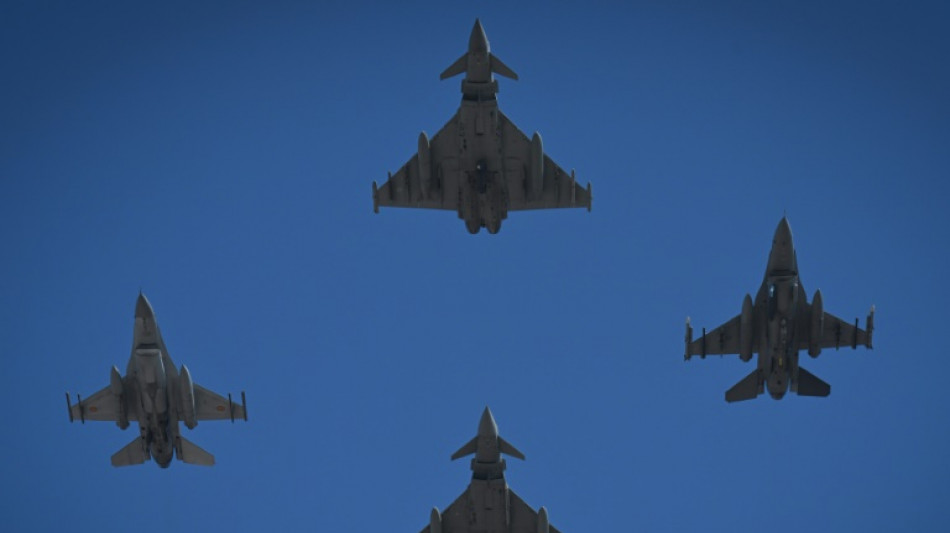
EU proposes vast defence boost as Ukraine war drags on / Photo: Daniel MIHAILESCU - AFP/File

 Thailand begins extradition process against Chinese journalist

 Quarantine, unease and rumours: Russian city grapples with plague scare

 Taiwan says exports hit record in September on AI demand
 Marc Marquez vows to 'attack' Martin's lead at Indonesian MotoGP
 Diplomats, schools in Saudi take safety measures after blasts heard: sources to AFP

 In Beijing, EU trade envoy says deficit with China 'unsustainable'
 Sri Lanka's de Silva quits as Test captain
 Alcaraz feeling 'mentally fresh' ahead of Shanghai return

 Israel drastically reduces British diplomatic presence in Jerusalem

 Stocks fall further as oil surge fans fresh inflation worries

 North Korea demands South show 'utmost respect' to restore relations

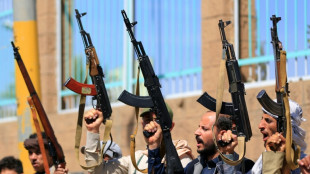 Saudi says three dead in airport attacks claimed by Houthis

 'Mad dream': New showcase for African film opens in London

 All Blacks coach Rennie says Wallabies exit 'part of the game'

 The growing protests against India's poll body - and PM Modi

 Stocks fall further as oil spike fans fresh inflation worries
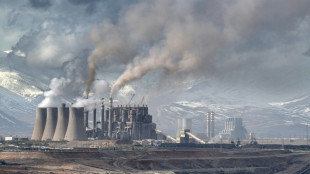 Bad COP, worse COP? EU tempers hopes for UN climate summit

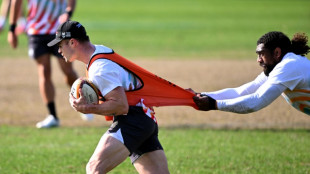 Rookie Henry named in Wallabies midfield to face All Blacks

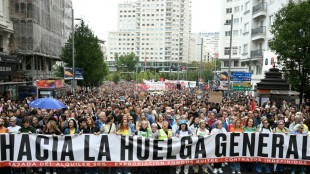 Housing crisis set to dominate Spain's snap election

 Gas, health care, utilities: high costs squeeze US midterm voters

 New Zealand Rugby seeks injunction over PNG Chiefs name
 Samsung expects 780% quarterly operating profit jump on AI boom

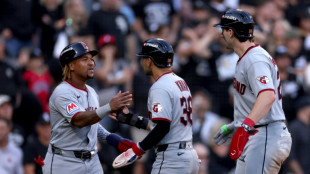 Guardians survive with 9-3 win over White Sox

 Saudi Arabia says 3 dead at airports after Houthis claim attacks
 Stocks slide as oil sees volatile trading day over Iran war fears

EU officials on Tuesday unveiled an ambitious proposal to massively boost weapons production and procurement in the bloc to shift from a reliance on US arms and in reaction to Russia's invasion of Ukraine.
"We must take more responsibility for our own security, while, of course, remaining fully committed to our NATO alliance," said European Commission Vice President Margrethe Vestager.
"We need to get that transatlantic balance right, irrespective of electoral dynamics in the US," she said, adding: "An improved ability to act will make us a stronger ally."
The commission's European Defence Industrial Strategy aims, over the long term, to give incentives to European arms manufacturers to invest more, make their production more agile and -- for the first time -- to collectively catalogue what they have available.
The question of financing the ambitious initiative, though, is problematic for a continent that has trimmed defence investment for decades following the collapse of the Soviet Union.
- Funding questions -
EU internal market commissioner Thierry Breton has spoken of an ultimate need for some 100 billion euros ($110 billion) for the European Union to rival the Pentagon and US defence industry.
To kickstart the project, the commission plans to set aside 1.5 billion euros from the EU's current budget that runs to 2027 -- an amount Vestager acknowledged "is not a lot of money" given the scale of the initiative.
"But it can still work as an incentive, as a bonus... because the real funding for a stronger defence comes from member states and that funding will increase over the years to come," she said.
Some countries, such as France, back an idea of EU bonds to finance a buy-European weapons production base, similar to what was done to finance economic recovery from the Covid pandemic.
But "frugal" countries such as Germany are against that, concerned it will centralise budget power in Brussels and override national sovereignty over defence issues.
The spur for the proposed defence industry strategy was Russia's full-on invasion of Ukraine two years ago.
EU officials say the bloc is now facing a "new security paradigm" with an expansionist Russia which now has a wartime economy.
"To counter the return of high-intensity war on our border, we have decided to kick up a gear," Breton told reporters.
While the EU and EU countries have supported Ukraine financially and with military weapons and equipment, arms production has come up short with the bloc missing a target to give Kyiv a promised one million artillery shells.
Breton said that, helped by an existing EU Act in Support of Ammunition Production, the bloc was now providing Ukraine around 80,000 shells per month.
Vestager said that, since Russia's February 2022 invasion of Ukraine to June last year, the EU's 27 member countries spent more than 100 billion euros on defence buys.
"Almost 80 percent of that was spent outside of the European Union, and the US alone accounted for more than 60 percent of this spending. This is no longer sustainable," she said.
P.L.Madureira--PC