-
 Thailand begins extradition process against Chinese journalist
-
Alex Bodi pushes ahead with expansion: ALIX LASERS showroom planned for Bucharest

-
 Quarantine, unease and rumours: Russian city grapples with plague scare
-
Fossil fuels off COP31 agenda as global output keeps rising

-
 Taiwan says exports hit record in September on AI demand
-
Haze not 'a threat' to Singapore F1 race: organisers
-
 Marc Marquez vows to 'attack' Martin's lead at Indonesian MotoGP
-
COP31 organisers say to seek 'ambitious' action with their text
-
 Diplomats, schools in Saudi take safety measures after blasts heard: sources to AFP
-
Bartunkova thrashes Muchova to reach China Open semi-finals
-
 In Beijing, EU trade envoy says deficit with China 'unsustainable'
-
Drone hits Yandex data centre, in first such attack on Russia
-
 Sri Lanka's de Silva quits as Test captain
-
Oil prices surge and stocks sink on fresh inflation worries
-
 Alcaraz feeling 'mentally fresh' ahead of Shanghai return
-
AI startup Manus raises $500m after Meta acquisition blocked by China

-
 Israel drastically reduces British diplomatic presence in Jerusalem
-
From refuge to repatriations: Malaysia's Myanmar U-turn
-
 Stocks fall further as oil surge fans fresh inflation worries
-
Morikawa says LIV players face 'business decision' after Rahm exit
-
 North Korea demands South show 'utmost respect' to restore relations
-
Tenzing Norgay's son says Himalayas sending climate warning

-
 Saudi says three dead in airport attacks claimed by Houthis
-
On your bike! Bottas opts for two wheels to reach Singapore GP
-
 'Mad dream': New showcase for African film opens in London
-
Alcaraz, Sinner, Osaka commit to Australian Open '1 Point Slam'
-
 All Blacks coach Rennie says Wallabies exit 'part of the game'
-
Dodgers beat Braves to advance in MLB playoffs, Rays oust Yankees
-
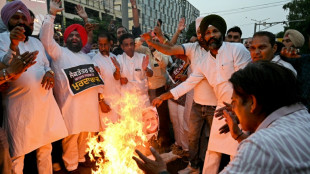 The growing protests against India's poll body - and PM Modi
-
'A sun as black as my lungs': how corruption crucified a polluted Albania city

-
 Stocks fall further as oil spike fans fresh inflation worries
-
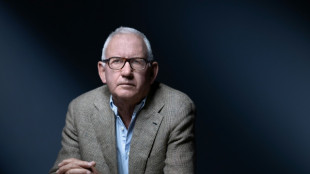
The British historian helping the French rediscover de Gaulle
-
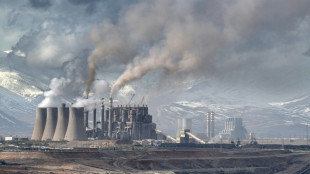 Bad COP, worse COP? EU tempers hopes for UN climate summit
-
Dodgers beat Braves to advance, Guardians survive in MLB playoffs
-
 Rookie Henry named in Wallabies midfield to face All Blacks
-
Latin American, Caribbean women top Nobel literature buzz
-
 Housing crisis set to dominate Spain's snap election
-
US says Fiji-based Chinese official paid bribes for Beijing

-
 Gas, health care, utilities: high costs squeeze US midterm voters
-
After botched US execution, Christa Pike was nearly taken off life support

-
 New Zealand Rugby seeks injunction over PNG Chiefs name
-
Guinea-Bissau junta urges military unit loyal to ex-president to disarm
-
 Samsung expects 780% quarterly operating profit jump on AI boom
-
As species decline, green turtles offer glimmer of hope
-
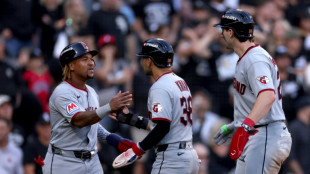 Guardians survive with 9-3 win over White Sox
-
Brothers Scott and Beauden Barrett named to start for All Blacks
-
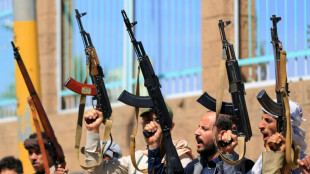 Saudi Arabia says 3 dead at airports after Houthis claim attacks
-
EU trade chief seeks to dial down China tensions
-
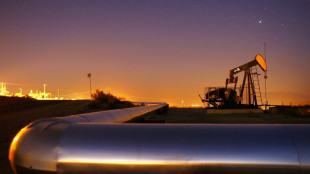 Stocks slide as oil sees volatile trading day over Iran war fears
-
'Never again Bolsonaro': thousands march ahead of Brazil election runoff

EU proposes vast defence boost, spurred by Russian war in Ukraine
EU officials on Tuesday unveiled an ambitious proposal to massively boost weapons production and procurement in the bloc to shift from a reliance on US arms and in reaction to Russia's invasion of Ukraine.
The European Commission says the 27-nation bloc is facing a new "security paradigm" with an expansionist Russia operating a wartime economy as it presses into year three of the conflict with Kyiv.
"To counter the return of high-intensity war on our border, we have decided to kick up a gear," EU internal market commissioner Thierry Breton told reporters in announcing the new initiative.
The European Defence Industrial Strategy aims, over the long term, to give incentives to European arms manufacturers to invest more, make their production more agile and -- for the first time -- to collectively catalogue what they have available.
"We must take more responsibility for our own security, while, of course, remaining fully committed to our NATO alliance," said European Commission Vice President Margrethe Vestager.
"We need to get that transatlantic balance right, irrespective of electoral dynamics in the US," she told reporters, in a nod to Republican White House hopeful Donald Trump casting doubt on the US commitment to its NATO allies should he win reelection.
"An improved ability to act will make us a stronger ally," Vestager said.
The question of financing the ambitious initiative is problematic for a continent that has trimmed defence investment for decades following the collapse of the Soviet Union.
- Funding questions -
Breton has spoken of an ultimate need for some 100 billion euros ($110 billion) for the European Union to rival the Pentagon and US defence industry.
To kickstart the project, the commission plans to set aside 1.5 billion euros from the EU's current budget that runs to 2027 -- an amount Vestager acknowledged "is not a lot of money" given the scale of the initiative.
"But it can still work as an incentive, as a bonus... because the real funding for a stronger defence comes from member states and that funding will increase over the years to come," she said.
Some countries, such as France, back an idea of EU bonds to finance a buy-European weapons production base, similar to what was done to finance economic recovery from the Covid pandemic.
But "frugal" countries such as Germany are against that, concerned it will centralise budget power in Brussels and override national sovereignty over defence issues.
There is also a debate over using money generated from frozen Russian assets in the EU to help fund the initiative, though the bloc's foreign policy chief Josep Borrell said that "is still not decided and there are different views" among member states.
- 'Kick up a gear' -
While the EU and member countries have supported Ukraine financially and with military weapons and equipment, arms production has come up short with the bloc missing a target to give Kyiv a promised one million artillery shells.
Breton said the bloc was now providing Ukraine around 80,000 shells per month.
The EU's 27 member countries spent more than 100 billion euros on defence purchases between Russia's February 2022 invasion of Ukraine and June last year, Vestager said.
"Almost 80 percent of that was spent outside of the European Union, and the US alone accounted for more than 60 percent of this spending. This is no longer sustainable," she said.
The EU's proposed strategy aims to have trade of weapons within the bloc reaching 35 percent of total value of the EU defence market by 2030.
Member states will also be encouraged to procure European weapons to a level of at least 50 percent of their defence budgets by 2030 and 60 percent by 2035.
A defence industrial readiness board would be created to bring together member countries, the commission and the EU's top diplomat, currently Borrell, to coordinate.
One mechanism would be set up for common arms procurement across the bloc, and another to support defence cooperation including through potential tax breaks.
Importantly, Ukraine would be treated as a "quasi member" of the initiative, which would open the way for it to more easily purview and tap arms production and supplies in the EU -- should its war against Russian troops be ongoing then.
M.A.Vaz--PC