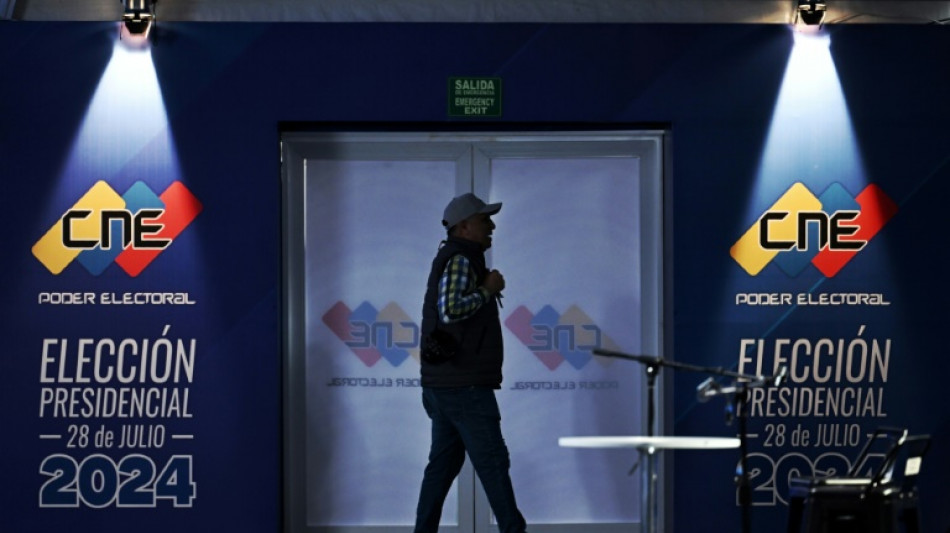
Tense Venezuela votes in shadow of 'bloodbath' warning / Photo: JUAN BARRETO - AFP

 Thailand begins extradition process against Chinese journalist

 Quarantine, unease and rumours: Russian city grapples with plague scare
 Taiwan says exports hit record in September on AI demand
 Marc Marquez vows to 'attack' Martin's lead at Indonesian MotoGP
 Diplomats, schools in Saudi take safety measures after blasts heard: sources to AFP
 In Beijing, EU trade envoy says deficit with China 'unsustainable'
 Sri Lanka's de Silva quits as Test captain

 Alcaraz feeling 'mentally fresh' ahead of Shanghai return
 Israel drastically reduces British diplomatic presence in Jerusalem
 Stocks fall further as oil surge fans fresh inflation worries

 North Korea demands South show 'utmost respect' to restore relations
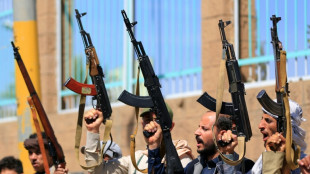 Saudi says three dead in airport attacks claimed by Houthis

 'Mad dream': New showcase for African film opens in London
 All Blacks coach Rennie says Wallabies exit 'part of the game'
 The growing protests against India's poll body - and PM Modi
 Stocks fall further as oil spike fans fresh inflation worries
 Bad COP, worse COP? EU tempers hopes for UN climate summit
 Rookie Henry named in Wallabies midfield to face All Blacks
 Housing crisis set to dominate Spain's snap election
 Gas, health care, utilities: high costs squeeze US midterm voters
 New Zealand Rugby seeks injunction over PNG Chiefs name
 Samsung expects 780% quarterly operating profit jump on AI boom
 Guardians survive with 9-3 win over White Sox
 Saudi Arabia says 3 dead at airports after Houthis claim attacks
 Stocks slide as oil sees volatile trading day over Iran war fears
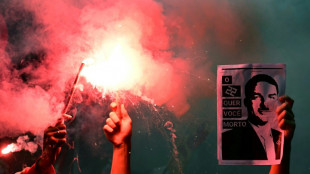
Venezuelans vote Sunday between continuity in President Nicolas Maduro or change in rival Edmundo Gonzalez Urrutia amid high tension following the incumbent's threat of a "bloodbath" if he loses, which polls suggest is likely.
Concerns were further stoked when Caracas blocked several international observers at the last minute, including four ex-presidents who had their plane held up in Panama Friday.
Maduro, 61, is accused of locking up critics and harassing the opposition in a climate of rising authoritarianism.
He is seeking a third six-year term at the helm of the once wealthy petro-state that saw GDP drop 80 percent in a decade, pushing more than seven million of its 30 million citizens to emigrate.
Maduro lags far behind challenger Gonzalez Urrutia in voter intention, according to independent polls, but counts on a loyal electoral machinery, military leadership and state institutions in a system of well-established political patronage.
Relying on its own figures, the regime is also said to be certain of victory.
"They will probably steal the election," 35-year-old opposition voter Marianella told AFP in Caracas, withholding her surname for fear of retribution against her children and small business.
"It's the only way they can win."
Indeed, polls suggest Sunday's vote poses the biggest threat yet to 25 years of "Chavismo," the populist movement founded by Maduro's predecessor and mentor, Hugo Chavez.
But analysts told AFP the president is unlikely to concede defeat, especially in the absence of immunity guarantees, with his government under investigation for human rights abuses by the International Criminal Court.
Days before the vote, Maduro said the outcome would decide whether Venezuela enters a period of "peace or war."
"If they do not want Venezuela to become a bloodbath, a fratricidal civil war produced by the fascists, let us guarantee the greatest success, the greatest electoral victory of our people," he said at a rally.
The comments drew condemnation from leaders including Brazil's Luiz Inacio Lula da Silva, who said: "Maduro has to learn: if you win, you stay. If you lose, you go."
- 'World is watching' -
Gonzalez Urrutia, a 74-year-old former diplomat, is running in the place of wildly popular opposition leader Maria Corina Machado, barred from the race by institutions loyal to Maduro.
Roberta Metsola, president of the European Parliament, spoke to Machado on Saturday, writing on X afterwards: "We are on the side of democracy. The world is watching these elections."
On Friday, a Venezuelan NGO said the regime was holding 305 "political prisoners" and had arrested 135 people with links to the opposition campaign since January.
US National Security Council spokesman John Kirby said Thursday Washington hoped for "peaceful elections" and stressed that "any political repression and violence is unacceptable."
Washington is keen, as is Caracas, for an easing of punitive measures against Venezuela's critical but severely weakened oil sector at a time of great pressure on crude prices with wars in Ukraine and the Middle East.
Venezuela has also been a major source of migration pressure on the southern US border, a situation experts say will only worsen in the event of a post-election political crisis.
The United States has insisted that the lifting of sanctions depends on a fair vote.
- 'Best chance' -
The government in Caracas accuses the opposition of conspiring against Maduro, whose 2018 reelection was rejected as illegitimate by most Western and Latin American countries.
Years of tough sanctions failed to dislodge the president, who enjoys support from Cuba, Russia and China.
Maduro has repeatedly vowed that he won't cede power now even as Venezuelans clamor for change.
Most live on just a few dollars a month, with the health care and education systems in disrepair and biting shortages of electricity and fuel.
The government blames sanctions, but observers point the finger at corruption and mismanagement.
Some 21 million Venezuelans are registered to vote at 30,000 polling stations for 12 hours from 6:00 am (1000 GMT).
The government has deployed tens of thousands of security forces and enforced ramped-up border control and a prohibition on public gatherings and protests.
"While the election in Venezuela will hardly be free or fair, Venezuelans have their best chance in over a decade to elect their government," Human Rights Watch Americas director Juanita Goebertus said this week, urging the international community to "have their (voters') back."
A.Motta--PC