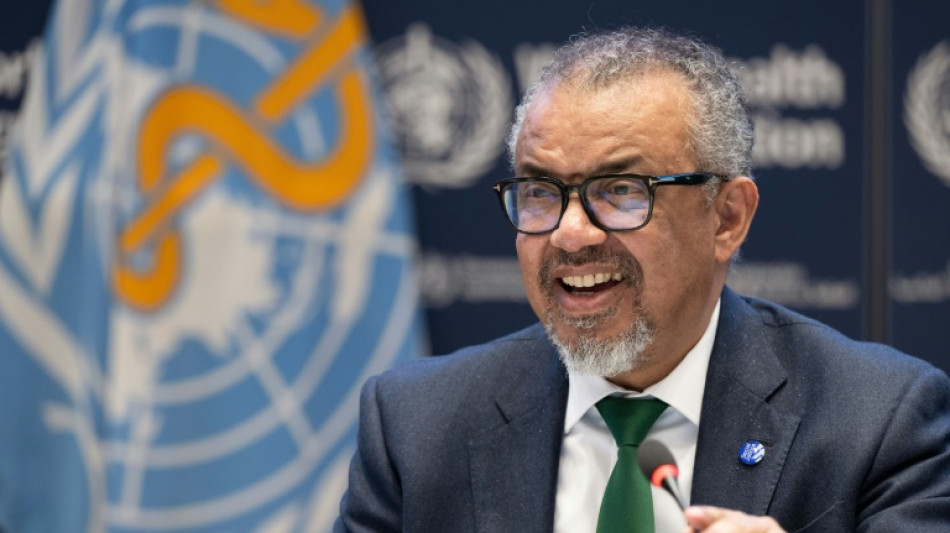
WHO announces 'significant' layoffs amid US funding cuts / Photo: Christopher BLACK - World Health Organization/AFP

 8.3 mn refugees at risk due to 'severe' funding cuts: UN
 Stocks drop and oil rises as Hormuz hopes fade
 OpenAI cancels release of newest model due to safety concerns

 AI bosses head to White House as safety pressure builds

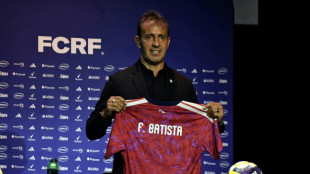 Batista sacked as Costa Rica coach after six months
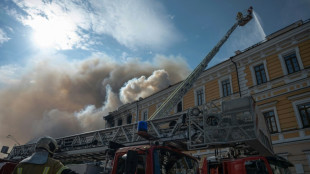
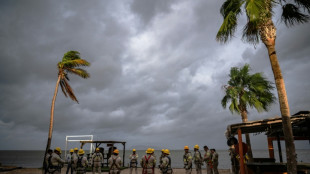 Flooding, power cuts and evacuations as Hurricane Polo slams Mexico

 Dodgers eye three-peat, Red Sox face Yankees as MLB playoffs begin
 Certification of Boeing 737 MAX delayed by software bug
 Celine Dion wows Paris Fashion Week with surprise gig
 AMD buys firm founded by AI 'godmother' Fei-Fei Li
 Italy rebound in Turkey as France win late in Belgium

 Pope says concerns about AI 'should be taken seriously'
 Hurricanes to hoist title banner as NHL season begins
 Justice Alito steps aside from major US climate case

 Willis happy with England exile after retains Top 14 player award
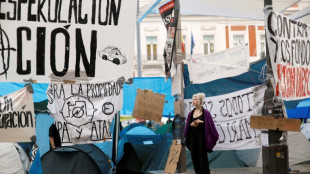
 Spain housing protests keep heat on government as PM seeks new law

 Wissa spoils Zimbabwe homecoming as DR Congo win AFCON qualifier

 UK police release on bail five men held over airbase incident

 Ex-All Black Plummer 'sure' New Zealand will find Super Rugby solution

 Shein sees 1% revenue growth in first half of 2026
 Netherlands regrets Israel retaliation in settlements row
 Moscow seizes Russian assets of German food retailer Metro
 Bulgarian spirits inflamed by new rakia rules

 Documentary turns camera on architect Peter Zumthor
 UK police say releasing on bail five men held over airbase incident
The World Health Organization chief said Tuesday that operations and jobs would be slashed as US funding cuts had left the UN agency with a budget hole of several hundred million dollars.
"The sudden drop in income has left us with a large salary gap and no choice but to reduce the scale of our work and workforce," Tedros Adhanom Ghebreyesus told member states, according to a transcript of his remarks.
The United Nations health agency has been bracing for President Donald Trump's planned full withdrawal of the United States -- by far its largest donor -- next January.
The United States gave WHO $1.3 billion for its 2022-2023 budget, mainly through voluntary contributions for specific projects rather than fixed membership fees.
But Washington never paid its 2024 dues, and is not expected to pay its 2025 dues.
This has left the WHO preparing a new structure, which Tedros presented to staff and member states on Tuesday.
"The refusal of the US to pay its assessed contributions for 2024 and 2025, combined with reductions in official development assistance by some other countries, means we are facing a salary gap for the 2026–27 biennium of between $560 and $650 million," he said.
The lower end of that spectrum "represents about 25 percent of staff costs" currently, he said, stressing though that "that doesn't necessarily mean a 25-percent cut to the number of positions".
He did not say how many jobs would be lost at the WHO, which employ more than 8,000 people around the world.
- 'Very painful' -
But he acknowledged that "we will be saying goodbye to a significant number of colleagues" and vowed to do so "humanely".
Tedros insisted that the most significant impact would likely be felt at the organisation's headquarters in Geneva. "We are starting with reductions in senior management," he said.
"We are reducing the senior leadership team at headquarters from 12 to seven, and the number of departments will be reduced by (more than) half, from 76 to 34," Tedros said.
WHO's regional offices would meanwhile be affected "to varying degrees", he said, adding that some country offices in wealthier countries would likely be closed.
"These are very painful decisions for all of us," Tedros said.
The WHO chief insisted the situation could have been worse.
WHO member states agreed in 2022 to significantly increase membership fees and reduce the portion of WHO's budget covered by less reliable and often earmarked voluntary contributions.
"Without the increase, assessed contributions for the current biennium would have been $746 million," he said, adding that instead, WHO expects to receive $1.07 billion in membership fees for 2026-27, "even without the US contribution".
Nonetheless, WHO needed to reduce its activities and recentre on its core functions, he said, even as he acknowledged that "many countries need our support now more than ever".
The US administration's decision to virtually dismantle the US foreign aid arm, USAID, and freeze nearly all assistance, including to health projects worldwide, had made "very severe" impacts in developing countries especially, Tedros said.
But WHO, he said, would now need to focus on helping countries "transition away from aid dependency to greater self-reliance", he said.
P.Serra--PC