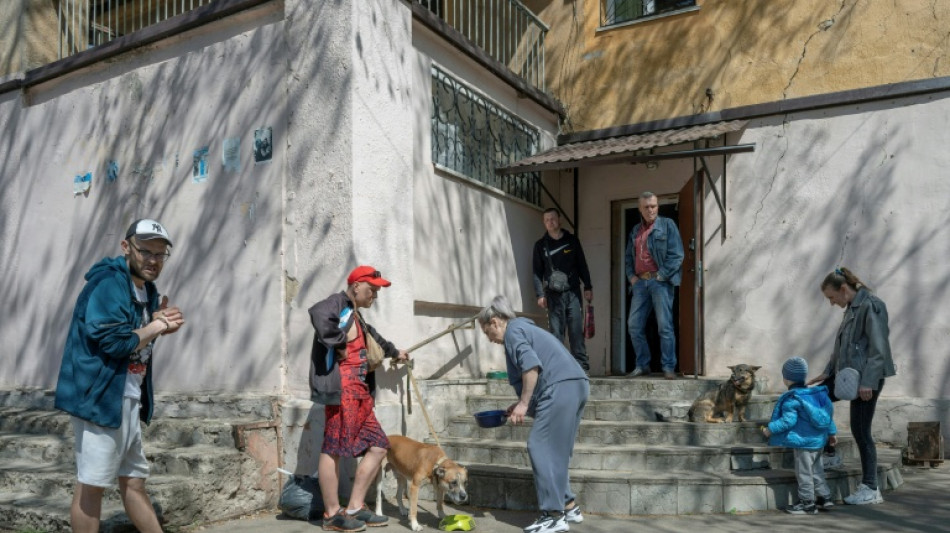
'Accept me': Near Ukraine front, a haven for outcasts / Photo: KSENIIA TOMCHYK - AFP

 Dodgers eye three-peat, Red Sox face Yankees as MLB playoffs begin
 Certification of Boeing 737 MAX delayed by software bug

 Celine Dion wows Paris Fashion Week with surprise gig
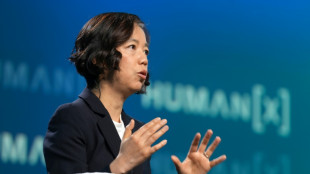 AMD buys firm founded by AI 'godmother' Fei-Fei Li
 Italy rebound in Turkey as France win late in Belgium

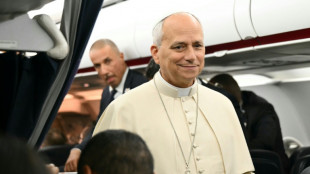 Pope says concerns about AI 'should be taken seriously'

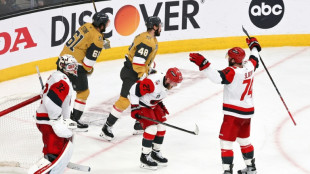 Hurricanes to hoist title banner as NHL season begins

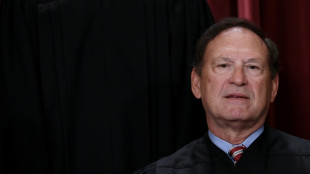 Justice Alito steps aside from major US climate case

 Willis happy with England exile after retains Top 14 player award
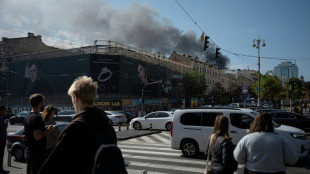
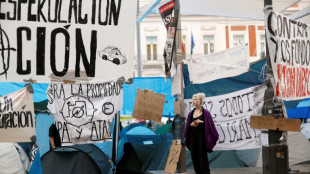 Spain housing protests keep heat on government as PM seeks new law
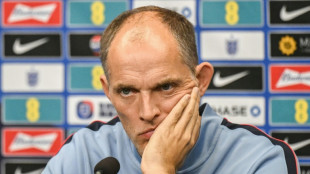
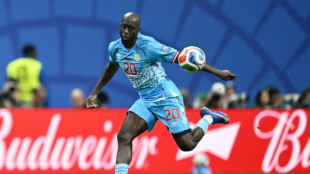 Wissa spoils Zimbabwe homecoming as DR Congo win AFCON qualifier
 UK police release on bail five men held over airbase incident

 Ex-All Black Plummer 'sure' New Zealand will find Super Rugby solution

 Shein sees 1% revenue growth in first half of 2026
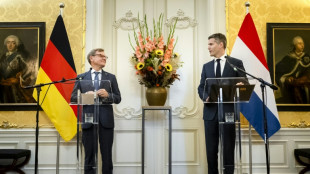 Netherlands regrets Israel retaliation in settlements row
 Moscow seizes Russian assets of German food retailer Metro

 Bulgarian spirits inflamed by new rakia rules

 Documentary turns camera on architect Peter Zumthor
 UK police say releasing on bail five men held over airbase incident
 Trump admin finalizes reversal of US fuel economy standards
 US says no China arms sale plans after envoy cites Trump offer
 Dozens kidnapped in two weekend attacks in northern Nigeria

 Next stop the world: Pathirage wins Asian Games javelin gold

 Aster Launches Perpetual Grid Trading 2.0 with Up to 140,000 $ASTER Liquidity Mining Campaign
 Seoul says North Korean mines 'highly suspected' as cause of DMZ blast

Whenever warm days come to Kramatorsk, near the eastern Ukrainian front, the Svitanok organisation leaves its door wide open, offering advice or a cup of tea to the city's social outcasts.
People living with HIV, those recovering from drug addiction, sex workers -- all are welcome to seek medical guidance and respite from stigma and solace as Russian troops advance toward Kramatorsk.
The refuge they find at Svitanok is vital during the war, when marginalised communities often feel left behind and face heightened insecurity and stigma.
"They support me here, they respect me. I just came to drink some tea. They'll treat me, I know they'll accept me," says Oleg Makaria, who is HIV-positive.
Makaria, who comes to Svitanok most days, hardly reacts to the air raid sirens once again wailing in Kramatorsk, just 20 kilometres (12 miles) from the front.
The 41-year-old jokes that he does not look his age. But he suddenly breaks down thinking about Donetsk, his home city now in Russian hands.
"I understand I can't return to Donetsk anymore. Never in my life. Probably... I'm here alone," he mutters through tears.
Moscow-backed separatists seized parts of the Donetsk region in 2014, a prelude to the Kremlin's full-scale 2022 invasion, which the UNHCR says has displaced nearly 11 million people.
The conflict disrupted treatment -- which needs to be taken daily to control HIV -- to some of the 250,000 Ukrainians estimated by UNAIDS to be living with the infection in 2020.
- 'I didn't break' -
Advances from Russian troops have also threatened drug treatment programmes.
Moscow and its proxies have banned opioid substitution, which replaces dangerous opioids with less harmful substances such as methadone.
Approved by the United Nations and the World Health Organisation, the treatment also reduces HIV transmission as it lowers drug injections.
No one would guess looking at Natalia Zelenina, but the bright social worker sporting a red bob and bright pink lipstick spent five years in Russian custody.
She was carrying legally prescribed drugs for her replacement therapy when she was stopped by Moscow-backed separatists controlling parts of the Donetsk region in 2017.
"I realised how strong I was," the 52-year-old said.
While her colleagues campaigned to get her out, she fought to obtain treatment for her HIV.
"I survived, I endured it all. I went through it all. I didn't break," she said.
After being released to Kyiv-controlled territory in a prisoner exchange, Zelenina returned to Svitanok.
"I knew that I could only recover in a familiar atmosphere," she says.
But even in the protective bubble of Svitanok, where most workers have HIV and a drug dependency, the boom of explosions can be heard in the distance.
One employee told AFP she started consuming "just a little bit" of drugs to alleviate her anxiety –- until her colleagues helped her get clean again.
Iryna Mamalakieva arrives holding her four-year-old son Maksym, who wobbled off at any opportunity to pick dandelions on a patch of grass.
The unemployed 31-year-old former mine operator, diagnosed with HIV in 2019, relies on Svitanok for medical and legal help.
"Some people give up, some hang themselves. I knew people like that: They found out about their diagnosis, and even if they had children, they drank themselves to death and quietly went to hang themselves," she said.
- 'Melancholy in my soul' -
The war has exacerbated stigma towards HIV-positive people and those suffering from drug addictions, counsellor Svitlana Andreieva told AFP.
"The rest of the world that's outside our doors, it tells them that they are nobody, that they're not accepted, they're not respected," she said.
Andreieva herself remembers being kicked out of hospitals and beaten up by the police because she was addicted to drugs and HIV-positive.
Then she learned law, which she shares with visitors who went through similar experiences.
"The next time they don't come with tears," she said. "They say: 'What do I need to do, which law article should I rely on?'"
But Andreieva's patience is often tested.
After an altercation with a regular, she finds a bouquet of lilacs in lieu of apologies in the office.
Hard to win over, she initially shrugs it off.
But Svitanok's workers and beneficiaries face yet another hurdle: cuts in US humanitarian aid.
Svitanok has for now survived Washington's aid freeze, but is scrambling to find alternative sources of funding for some of its many programmes, which partly rely on US money.
The uncertainty "really knocked me out of my stability", Zelenina says.
"There's such a melancholy in my soul, you know? I love my job. I simply can't imagine what I will do tomorrow."
V.F.Barreira--PC