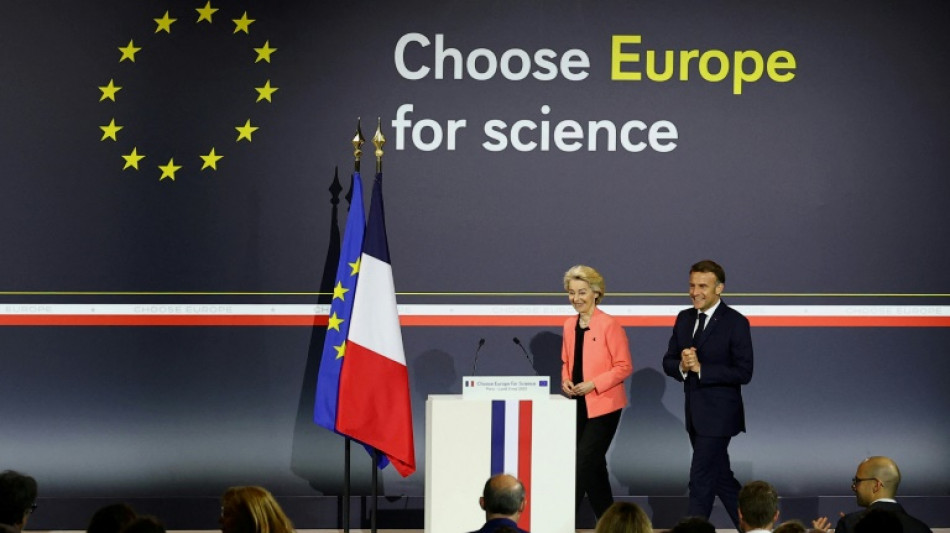
France, EU leaders take aim at Trump in bid to lure US scientists / Photo: Gonzalo Fuentes - POOL/AFP

 Justice Alito steps aside from major US climate case

 Willis happy with England exile after retains Top 14 player award

 Spain housing protests keep heat on government as PM seeks new law

 Wissa spoils Zimbabwe homecoming as DR Congo win AFCON qualifier

 UK police release on bail five men held over airbase incident

 Ex-All Black Plummer 'sure' New Zealand will find Super Rugby solution

 Shein sees 1% revenue growth in first half of 2026

 Netherlands regrets Israel retaliation in settlements row
 Moscow seizes Russian assets of German food retailer Metro
 Bulgarian spirits inflamed by new rakia rules

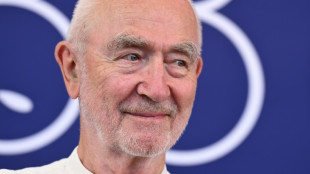 Documentary turns camera on architect Peter Zumthor
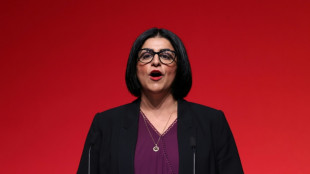
 UK police say releasing on bail five men held over airbase incident
 Trump admin finalizes reversal of US fuel economy standards
 US says no China arms sale plans after envoy cites Trump offer
 Dozens kidnapped in two weekend attacks in northern Nigeria
 Next stop the world: Pathirage wins Asian Games javelin gold

 Aster Launches Perpetual Grid Trading 2.0 with Up to 140,000 $ASTER Liquidity Mining Campaign
 Seoul says North Korean mines 'highly suspected' as cause of DMZ blast

 Russia pummels Kyiv in latest deadly daytime attack
 Wartime Ukraine works to keep its railways on track

 Boy among 3 dead in migrant Channel crossing accident: French authorities

 SGFX Creates a Standout Brand Experience at Forex Expo Dubai 2026
 Pope urges Europe to help combat 'deceit and lies' in international ties
 Injured Buttler to miss England ODI series in Pakistan
 Madrid housing protesters vow to maintain pressure on government
French President Emmanuel Macron and European Commission head Ursula von der Leyen took aim at Donald Trump's policies on science on Monday, as the EU seeks to encourage disgruntled US researchers to relocate to Europe.
Von der Leyen told the gathering at Paris's Sorbonne university that the European Union will launch a new incentives package worth 500 million euros ($567 million) to make the bloc "a magnet for researchers".
"We have to offer the right incentives," she said.
Without mentioning Trump directly, von der Leyen told the "Choose Europe for Science" conference that the role of science was being put in question "in today's world", and condemned such views as "a gigantic miscalculation".
Universities and research facilities in the United States have come under increasing political and financial pressure under Trump, including threats of massive federal funding cuts.
"Nobody could have imagined that this great global democracy whose economic model depends so heavily on free science... was going to commit such an error," Macron said.
- 'Diktat' -
He added: "We refuse a diktat consisting of any government being able to say you cannot research this or that."
US research programmes face closure, tens of thousands of federal workers have been fired and foreign students fear possible deportation for their political views.
The 27-nation EU hopes to offer an alternative for researchers and, by the same token, "defend our strategic interests and promote a universalist vision", an official in Macron's office told AFP ahead of the conference.
European commissioners, scientists, academics and ministers for research from EU member countries are taking part in Monday's conference, as are representatives from non-EU members Norway, Britain and Switzerland.
The French president has already appealed to foreign, notably US, researchers to "choose France".
Last month he unveiled plans for a funding programme to help universities and other research bodies cover the cost of bringing foreign scientists to the country.
- Flood of applicants -
Aix Marseille University in the south of France announced in March it would open its doors to US scientists threatened by cuts.
It says its "Safe Place for Science" scheme has already received a flood of applicants.
Last week, France's flagship scientific research centre, the CNRS, launched another initiative aimed at attracting foreign researchers whose work is threatened.
It is also seeking to tempt back French researchers working abroad, some of whom "don't want to live and raise their children in Trump's United States", according to CNRS President Antoine Petit.
An official in Macron's office said Monday's conference came "at a time when academic freedoms are retreating and under threat in a number of cases".
One obstacle, experts say, is the fact that while EU countries can offer competitive research infrastructure and a high quality of life, research funding and researchers' remuneration both lag far behind US levels.
But CNRS's Petit said last week he hoped that the pay gap would seem less significant once the lower cost of education and health, and more generous social benefits were taken into account.
Macron's office said France and the European Union were targeting researchers in a number of specific sectors, including health, climate, biodiversity, artificial intelligence and space.
The French government could finance up to 50 percent of selected research projects, an official in the presidential office said, while assistance could also be offered in the form of tax incentives.
burs-jh/ah/sbk
P.L.Madureira--PC