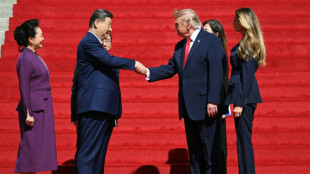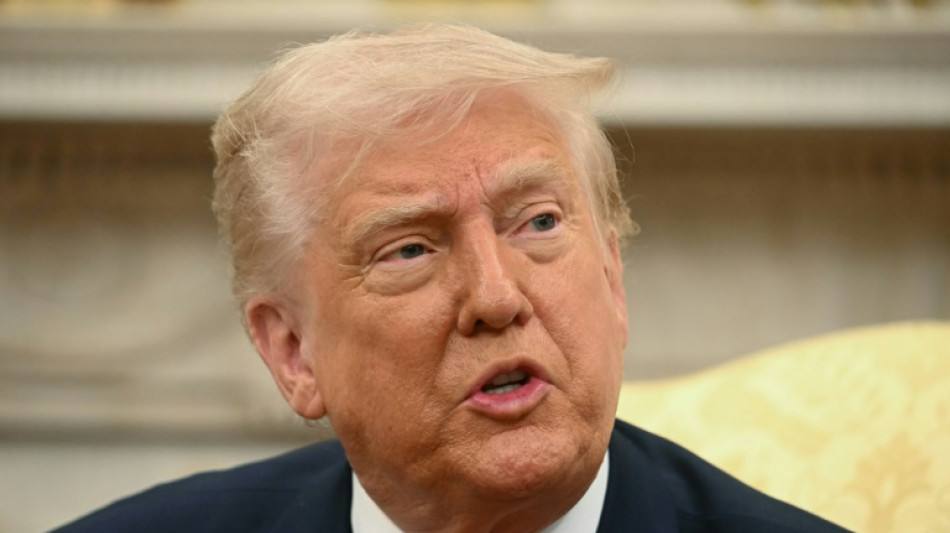
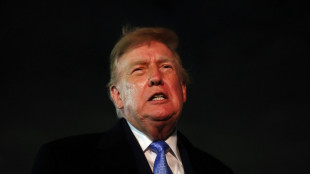
Trump talks tough on China, but early focus elsewhere / Photo: Jim WATSON - AFP

 Justice Alito steps aside from major US climate case
 Willis happy with England exile after retains Top 14 player award

 Spain housing protests keep heat on government as PM seeks new law

 Wissa spoils Zimbabwe homecoming as DR Congo win AFCON qualifier

 UK police release on bail five men held over airbase incident
 Ex-All Black Plummer 'sure' New Zealand will find Super Rugby solution
 Shein sees 1% revenue growth in first half of 2026
 Netherlands regrets Israel retaliation in settlements row
 Moscow seizes Russian assets of German food retailer Metro
 Bulgarian spirits inflamed by new rakia rules

 Documentary turns camera on architect Peter Zumthor
 UK police say releasing on bail five men held over airbase incident
 Trump admin finalizes reversal of US fuel economy standards

 US says no China arms sale plans after envoy cites Trump offer
 Dozens kidnapped in two weekend attacks in northern Nigeria
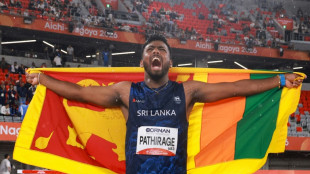 Next stop the world: Pathirage wins Asian Games javelin gold
 Aster Launches Perpetual Grid Trading 2.0 with Up to 140,000 $ASTER Liquidity Mining Campaign
 Seoul says North Korean mines 'highly suspected' as cause of DMZ blast
 Russia pummels Kyiv in latest deadly daytime attack
 Wartime Ukraine works to keep its railways on track

 Boy among 3 dead in migrant Channel crossing accident: French authorities

 SGFX Creates a Standout Brand Experience at Forex Expo Dubai 2026
 Pope urges Europe to help combat 'deceit and lies' in international ties
 Injured Buttler to miss England ODI series in Pakistan
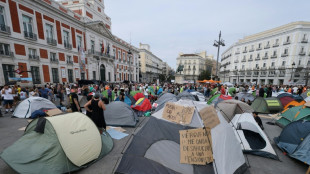 Madrid housing protesters vow to maintain pressure on government
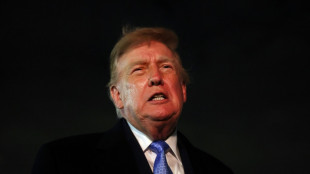
Voicing frustration over the lack of success in ending Russia's invasion of Ukraine, US Secretary of State Marco Rubio called for renewed focus on "our number-one geopolitical foe" -- China.
"Not that a war in Ukraine is not important, but I would say what's happening with China is more important in the long term for the future of the world," Rubio told Fox News host Sean Hannity.
President Donald Trump's inner circle has long spoken of China as the arch-enemy, with some suggesting that ending the Ukraine war will free up resources to counter Beijing -- especially if it seeks to move on Taiwan.
Yet more than 100 days into Trump's term, observers also notice a surprising lack of attention on China. Trump has hit China hard with tariffs, but otherwise, there has been little by way of articulated strategy.
Rubio, who in his Senate confirmation hearing warned that China could affect "virtually everything that matters to us in life" within a decade, has yet to visit East Asia, focusing attention on Trump's priority of deporting mostly Latin American migrants as well as to diplomacy on Ukraine.
"I think that the White House thought that they'd be in a different place with China now than where they are," said Wendy Cutler, a former top US trade negotiator who is now vice president at the Asia Society Policy Institute.
Trump's tariff war "escalated so quickly that it's hard to unwind now," she said.
China, she said, is "playing a longer game" with President Xi Jinping rallying the population by blaming the United States for economic pain.
- Faith in Xi ties -
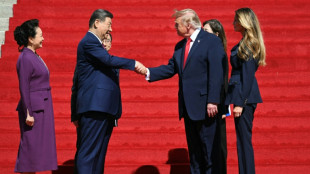
Trump is surrounded by reputed hawks such as Rubio, who is now also interim national security advisor, but Trump himself is transactional and appears "enamored with Xi Jinping," Cutler said.
"He thinks that they get along well, and that if it's leader to leader, they can figure out this relationship and put it back on track," she said.
The United States and China plan their first formal trade talks this week in Switzerland, over a month after Trump unveiled his sweeping levies.
Trump, who has vowed to remake the global economic system, has slapped 145 percent tariffs on products from China, which has responded with 125 duties on imports from the United States.
"Their economy is suffering greatly because they're not doing trade with the US," Trump told reporters Tuesday.
- 'Nuanced'? -
Trump has shown himself to be far more radical than in his first term on a host of issues. But he has shown signs of pragmatism on China, despite heated rhetoric against Beijing on the campaign trail.
David Perdue, a former senator and Trump's pick for ambassador to Beijing, wrote about China during the campaign that "America is at war" -- but in his confirmation hearing said that the US approach should be "nuanced, non-partisan and strategic."
Former president Joe Biden's administration also identified China as the top rival but sought to work together on targeted areas, such as fighting climate change and curbing fentanyl.
Yet the Biden administration also pursued a broader regional strategy of facing down China through alliances.
It began a shift of US forces in southern Japan and northern Philippines -- within proximity of Taiwan -- and pursued coalitions to reject the use of Chinese high-technology.
Trump has derided allies, especially in Europe, as freeloaders, and has hit even US friends with tariffs, although he relented at least temporarily on higher rates.
China has quickly reached out to Japan and South Korea, among the closest US allies, to explore a free-trade deal.
"By undercutting core US alliances and partnerships across Europe and Asia, he is reducing the leverage that the United States can bring to bear vis-a-vis China," said Ali Wyne, who follows China for the International Crisis Group.
He also questioned how the tariff war fit into a considered strategy on China, which now has an incentive to double down on achieving greater self-sufficiency and has been able to project itself as "a more stabilizing geopolitical force than the world's preeminent power."
"Despite his alleged friendship with Xi and his stated desire for the United States and China to collaborate more robustly, he has created a trade impasse from which neither leader has an easy face-saving off-ramp," Wyne said.
A.Santos--PC