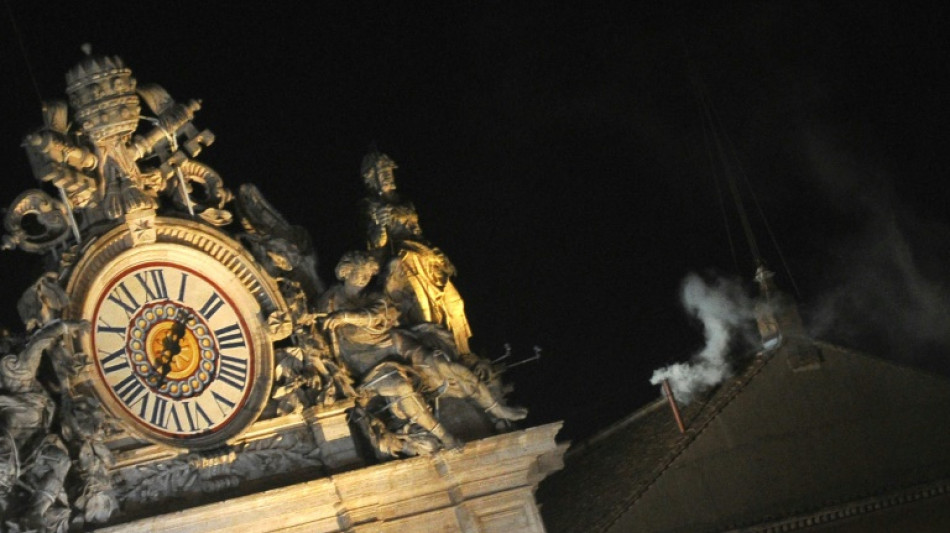
White smoke: signalling a new pope down the ages / Photo: Tiziana FABI, Tiziana FABI - AFP

 Justice Alito steps aside from major US climate case

 Willis happy with England exile after retains Top 14 player award
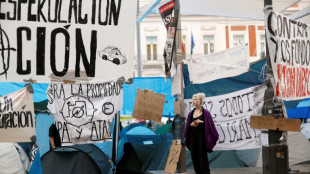 Spain housing protests keep heat on government as PM seeks new law

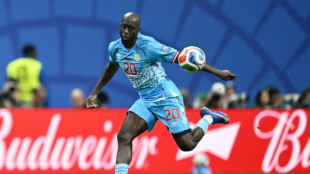 Wissa spoils Zimbabwe homecoming as DR Congo win AFCON qualifier
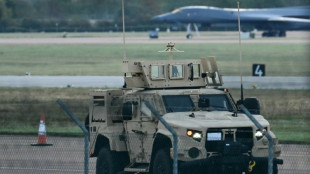 UK police release on bail five men held over airbase incident

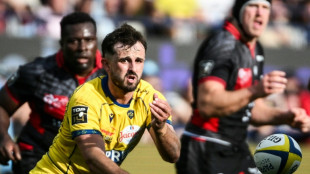 Ex-All Black Plummer 'sure' New Zealand will find Super Rugby solution

 Shein sees 1% revenue growth in first half of 2026
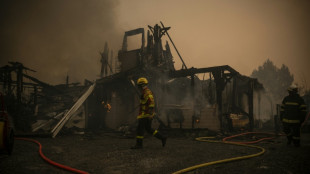
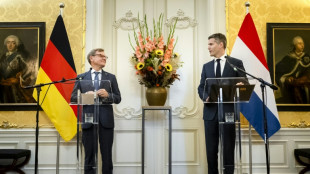 Netherlands regrets Israel retaliation in settlements row
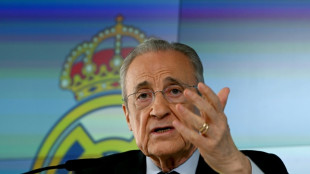
 Moscow seizes Russian assets of German food retailer Metro
 Bulgarian spirits inflamed by new rakia rules

 Documentary turns camera on architect Peter Zumthor

 UK police say releasing on bail five men held over airbase incident
 Trump admin finalizes reversal of US fuel economy standards
 US says no China arms sale plans after envoy cites Trump offer

 Dozens kidnapped in two weekend attacks in northern Nigeria
 Next stop the world: Pathirage wins Asian Games javelin gold

 Aster Launches Perpetual Grid Trading 2.0 with Up to 140,000 $ASTER Liquidity Mining Campaign
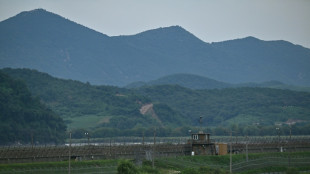 Seoul says North Korean mines 'highly suspected' as cause of DMZ blast
 Russia pummels Kyiv in latest deadly daytime attack

 Wartime Ukraine works to keep its railways on track

 Boy among 3 dead in migrant Channel crossing accident: French authorities
 SGFX Creates a Standout Brand Experience at Forex Expo Dubai 2026
 Pope urges Europe to help combat 'deceit and lies' in international ties

 Injured Buttler to miss England ODI series in Pakistan
 Madrid housing protesters vow to maintain pressure on government
When Catholic cardinals vote in the conclave, they then burn their ballots, sending up black smoke to signal no decision or white smoke to show they have chosen a new pope.
The centuries-old tradition of using smoke has changed over time -- as has the technology used.
- Gunshot -
All conclaves bar one have taken place in Rome since the 15th century, and the tradition of burning the cardinals' paper ballots dates back to then.
It was initially an effort to prevent vote tampering but came over time to be used as a signal, although for centuries it merely meant the vote was not successful.
In the 1823 conclave in the Quirinale Palace -- then the papal residence -- it was agreed that the guard outside would fire blanks to announce the election of a pope, according to Javier Martinez-Brocal and Jose de Jesus Aguilar's book "Conclave: The Rules for Electing the Next Pope".
The first time white smoke was used to signal the election of a pope was at the 1914 conclave in the frescoed Sistine Chapel at the Vatican.
- Stoves, old and new -
The cast iron stove in which the cardinals burn their ballots was first used at the conclave of March 1939.
It is around one metre (3.2 feet) tall and the years and months of the conclaves in which it has been used are engraved on the cover.
There is a lower door for lighting it, with a manual valve for adjusting the draught, and an upper door to put in the documents for burning.
Since 2005, the Vatican has added a second, new stove, connected to a small flue which feeds into the same chimney. In it, chemicals are burned for several minutes to colour the smoke.
- Black or white -
Chemicals have been used to colour the smoke since 1958 but the newer stove -- used for the first time during the election of Benedict XVI -- has a fan and makes the smoke more visible.
A mix of potassium perchlorate, sulphur and anthracene -- found in coal tar -- is used to turn the smoke black, while potassium chlorate, lactose and pine rosin is used to make it white.
The newer stove is activated electronically but the Vatican says it has been tested and it is prepared for last-minute technical difficulties.
"One of our expert technicians, locked in the conclave, will remain for the entire duration of the voting in a small technical room near the Sistine Chapel with the stove's remote control," Silvio Screpanti, Vatican City's deputy director of infrastructure, said in an interview ahead of the conclave.
He or she will be "ready to intervene promptly if necessary, so that no unforeseen event hinders the famous and long-awaited white smoke", he told the Vatican City State website.
- Bells -
Since 2005, to rule out any ambiguity should the white smoke look grey, the bells of St Peter's Basilica also toll to tell the world the Church has a new pope.
F.Carias--PC