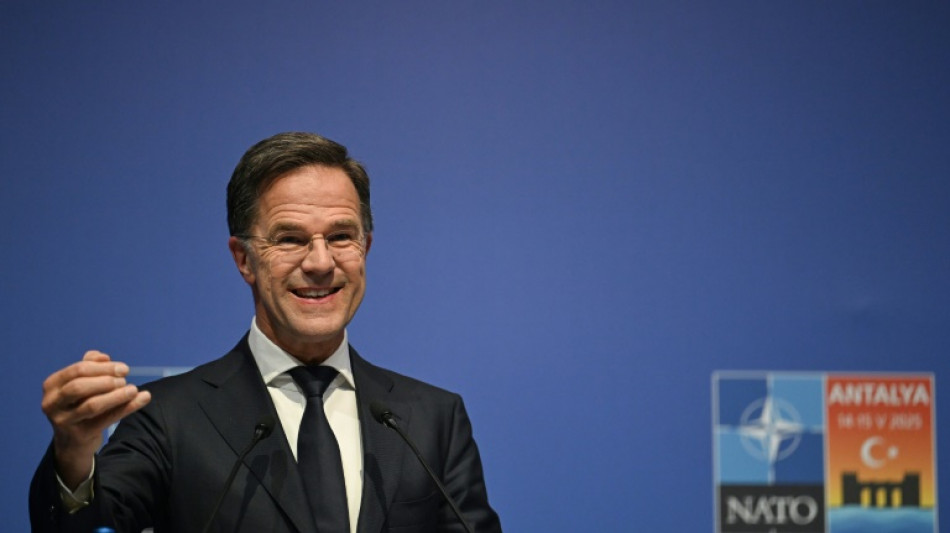
NATO on track to strike spending deal to please Trump / Photo: Ozan KOSE - AFP

 SpaceX puts Starship megarocket in orbit for first time
 Iran denies link to suspected bomb plot at UK airbase used by US
 Ex-boss Mancini says City charges 'not my concern'
 Berlin Marathon winner Assefa finished race with torn Achilles

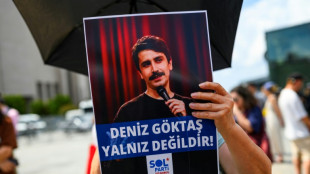
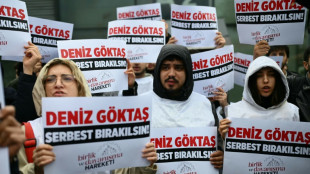 Comedian convicted for Erdogan 'insult' but freed pending appeal

 French prosecutors seek two-year sentence for ex-minister Dati in graft case
 Eala makes fast start as weather and transport woes hit Asian Games
 Hurricane Polo approaches Mexico, threatens severe damage
 Energy markets rally after Trump rejects Iran truce offer
 Japanese convenience store enlists Lady Gaga to bolster recruitment
 Seoul summons Ukraine envoy in row over North Korean POWs

 Ireland 'raised awareness worldwide' in Israel game: Hallgrimsson

 Colombian police capture wife, daughter of Ecuador drug lord
 More Asian Games woes as bus takes Pakistan team to wrong venue
 Radio frequencies vital to Earth observation must be protected: UN
 Comedian on trial for insulting Erdogan in standup show

 Women's Fashion Week kicks off in Paris
 Pope arrives in French border city to speak on united Europe

 The wildfires choking Indonesia, sparking regional haze

 PU Prime Deepens Argentina Presence Through FX Expo Buenos Aires 2026

 Nothing to seal here: NZ police help stranded pup home

 White House releases list of products US, China could tax less
 'Pseudo-journalism': Partisan 'news' sites target US midterms

 'Currently impossible': North Korea defections in freefall
 Erasmus sizes up 'improved' Wallabies ahead of 2027 World Cup
NATO appears headed for a compromise deal at a summit next month to satisfy US President Donald Trump's demand to spend five percent of GDP on defence, as heavyweights Germany and France got on board Thursday.
To make the volatile US leader happy, NATO chief Mark Rutte has floated a proposal for members of the 32-country alliance to commit to 3.5 percent of GDP on direct military spending by 2032, and an additional 1.5 percent on broader security-related expenditure.
That would hand Trump the headline figure he is demanding, while giving enough wiggle room to European allies that are struggling just to reach NATO's current spending target of two percent of GDP.
German Foreign Minister Johann Wadephul gave a major push to the plan at a meeting with his NATO counterparts in Turkey by saying Berlin was willing to "follow" Trump's call.
Wadephul said Rutte's suggestion would mean reaching "the five percent that President Trump demanded, which he considers necessary".
"And we follow him there," he said.
Fellow European big-hitter France's Foreign Minister Jean-Noel Barrot also gave a thumbs-up to outlines of the deal.
"The 3.5 target is the right amount for core defence spending," Barrot told journalists in Turkey.
The support from Germany and France will make it more difficult for other European allies and Canada to say no to the spending deal at the June NATO summit in The Hague.
The overall plan already has the backing of the United States.
- 'Quite confident' -
Rutte said he was "quite confident" for an agreement given that there was a widespread understanding of the need to do more in the face of Western estimates that Russia needs only three to five years to rebuild its forces.
The NATO chief declined to give details of the discussions, with six weeks of fine-tuning still to go before the summit.
But he said broader spending, such as on infrastructure like bridges needed to move military hardware around, had to "be taken into account", and that there needed to be a "credible path" set out for each NATO country to hit the figures.
Diplomats say Rutte's plan, which has not been made public, envisions ratcheting up direct defence spending by 0.2 percentage points each year over the next seven years until countries hit the 3.5 target.
The other 1.5 percent of more loosely defined spending could include a wide range of areas encompassing infrastructure, cyber defence, border controls and even support for Ukraine.
Trump has rattled European allies worried about the menace from Russia by threatening not to protect countries that, in his eyes, do not spend enough.
In a bid to avoid upsetting Washington, there was no sign of public dissent at the meeting in Turkey.
Italian Foreign Minister Antonio Tajani announced Italy had this week hit NATO's two-percent spending target.
"This is the first step. Then it's possible to do more, it's possible to increase the money for defence," he said.
He insisted Rome is keen to talk more broadly "about security, because security is not only weapons".
European allies have ramped up their defence spending since Russia's 2022 invasion of Ukraine, but only in the face of Trump are stragglers such as Italy, Spain, Belgium and Canada reaching two percent this year.
None of NATO's 32 countries, including the United States, currently spend five percent of GDP on defence.
Eastern members most worried about Moscow, such as the Baltic states and Poland, have already said they are willing to go beyond that level on direct military expenditures.
J.V.Jacinto--PC