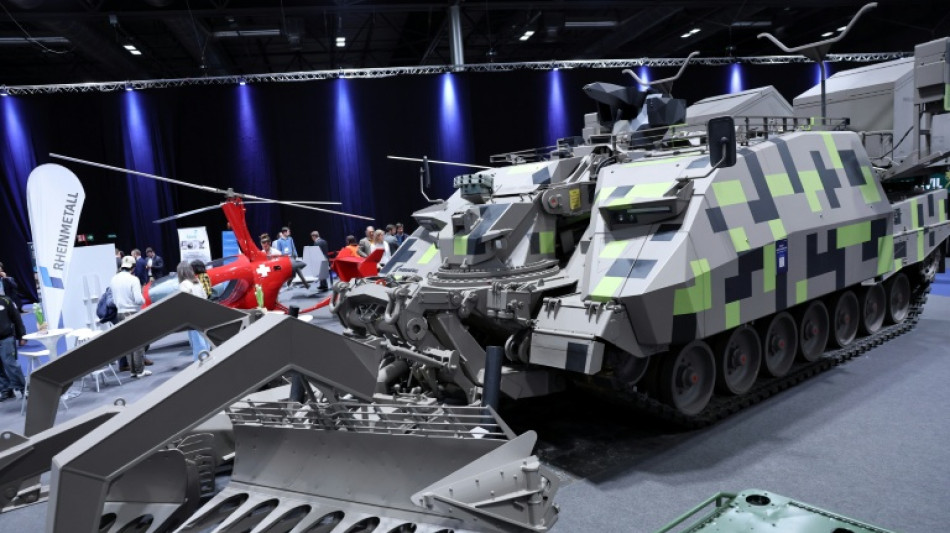
In changing times, young Germans gun for defence sector jobs / Photo: Thomas COEX - AFP/File

 Oil prices spike after Trump rejects Iran truce offer
 Taylor Swift sets new record at MTV VMAs
 Seoul seeks apology after Ukraine reveals transfer of North Korean POWs
 Messi on target again but Miami downed by Columbus

 In Washington's political cauldron, a fight over foie gras
 Flavio Bolsonaro: political heir in his father's shadow

 Ravens grab last-second win in Rio as Commanders stop Seahawks
 USA rallies to capture 11th consecutive Presidents Cup
 Phillies clinch, Astros wrap up division on final day of MLB season

 Commanders hand champion Seahawks their first loss

 Dupont scores twice to send Toulouse top of Top 14

 Ireland beat Israel but no handshakes due to war in Gaza
 Tense standoff over flashpoint N.Ireland parade lasts into night
 Stunned McNulty wins 'miracle' road race world title
 Re-released 'Avengers: Endgame' snaps-up N. America box office lead

 American McNulty wins shock road race world title
 Serbia's President Aleksandar Vucic announces resignation
 Tuchel urges Bellingham to play with 'rage'
 Russian strikes on Ukraine kill 8

 Bavuma, Miller hit centuries as South Africa clinch series
 Spain bring in Le Normand for injured Garcia
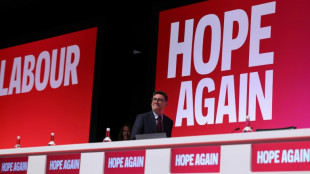 UK Labour party meets buoyed by Burnham but seeking concrete plans
 Nor'easter lashes US east with punishing rain and wind
 UK police arrest five on suspicion of preparing 'terrorist act' near air base
 Washington denounces Iran's truce proposal as 'cynical'
In a country with strong pacifist traditions due to its dark World War II history, German student Mika Scheid had never considered working in the arms industry -- until Russia invaded Ukraine.
That was a "personal turning point," said the 25-year-old studying at the prominent Karlsruhe Institute of Technology, who was spurred into becoming an armed forces reservist and now wants to work for a military equipment manufacturer.
"People are beginning to understand that the Bundeswehr (the German armed forces) is now clearly focused on defending the country" and NATO, said the engineering student during a job fair organised by the institute in western Germany.
He was among young Germans at the event expressing interest in the defence sector, a sharp break from the past amid growing hostility from Russia as well as concerns about US security commitments to Europe under President Donald Trump.
For the first time ever this year, German arms manufacturers -- which are some of the world's biggest but had in the past kept a relatively low profile -- were among exhibitors at the fair as they hunt for staff to meet surging demand.
There were some signs of unease, with Germany's biggest weapons maker Rheinmetall pulling out after a handful of students voiced anger at the presence of arms manufacturers.
Still, there is a sense the long-running stigma surrounding the sector has eased since the outbreak of the Ukraine war.
And the opportunities in the industry may be welcome at a time that Germany's economy is mired in a downturn.
The European defence sector employs about 600,000 people and is expected to grow strongly, including in Germany where new Chancellor Friedrich Merz plans to greatly ramp up military spending.
- Shifting attitudes -
"The political discourse we have had since 2022 has led Germans to change their way of seeing things," said Eva Brueckner, a consultant from the headhunting firm Heinrich and Coll, which helps defence companies find staff.
Since Russia's full-scale invasion of Ukraine over three years ago, candidates have expressed fewer ethical and moral concerns about defence sector jobs, she said.
Another student at the fair, Nico Haenelt, was enquiring about an internship at the stand of industrial giant Thyssenkrupp's submarine-making unit.
While the 19-year-old says his parents had quite a pacifist worldview, recent geopolitical upheavals have shaped his own outlook.
"If the world were more peaceful, I would probably also look in other areas," said Haenelt, who studies mechatronics, which mixes elements of engineering and computer science.
To attract talent, defence companies are offering perks ranging from paying for relocation costs to gym memberships, according to accounts given to AFP.
Diehl, whose products include ammunition and missiles, even offers scholarships to young people to fund their studies in the hope they will subsequently apply for jobs with the company.
- 'Conservative' sector -
With the German economy struggling, some hope the improving fortunes of the defence sector could provide a boost.
There are already signs that arms makers might throw a lifeline to some troubled companies.
Rheinmetall, whose profits have soared since the start of the Ukraine war, last year struck a deal to hire workers from Continental as the ailing auto supplier cuts thousands of jobs.
Still, beyond the traditional reluctance of young Germans to work in the defence sector due to the country's past, there are other challenges in recruiting for the industry.
"The sector is very conservative, and people who don't come from this background may have difficulty integrating," said the headhunter, Brueckner.
And not all the students at the job fair were rushing to find jobs in the arms industry.
Niklas, a computer science student who only gave his first name, said his priority was to find a job with "meaning", such as in the fields of health or sustainable development.
As for the arms industry? "Never", he insisted.
Ferreira--PC