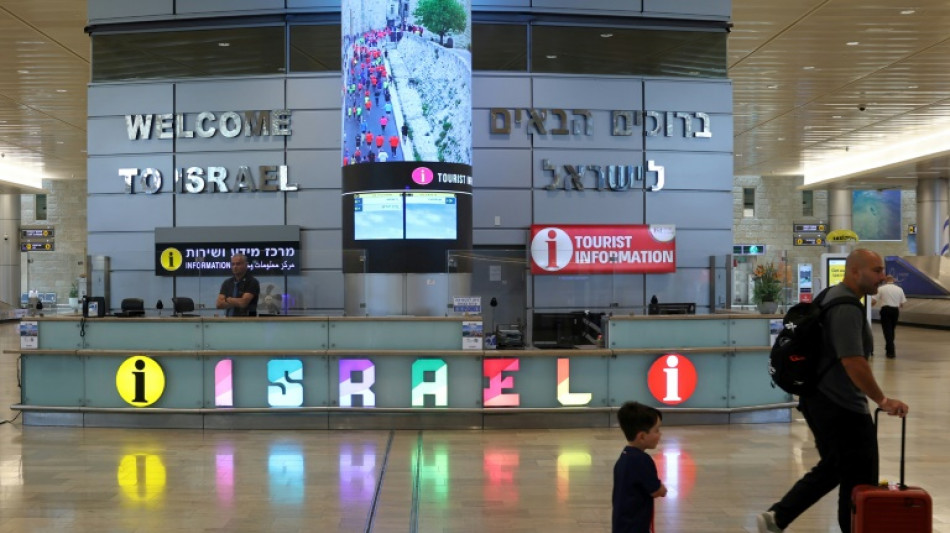
Trump insists Iran nuclear programme set back 'decades' / Photo: Jack GUEZ - AFP

 Alex Bodi and Prof. Dr Dieter Lazik sign a contract for ALPHA WHEY and BODI Energy Drink

 Swiss reject plan to toughen neutrality: projection
 UK police call in bomb disposal team near air force base

 Bangkok floods send thousands into shelters after days of rain

 Assefa just misses women's world record at Berlin Marathon

 Dramatic winners Zimbabwe to end five-year exile by tackling DR Congo
 Pope to meet victims of clerical sex abuse on France trip
 How young is too young as child prodigies win big at Asian Games

 UK Labour party meets buoyed by Burnham but eager for concrete plans

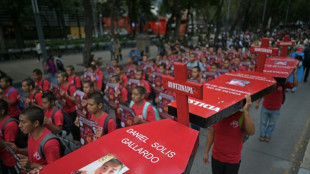 Thousands protest ahead of Mexican president's report on missing students
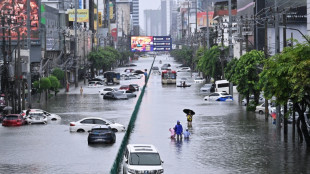 Bangkok floods force thousands into shelters

 AI startup urges optimism from Europe despite safety fears

 'Godlike, invincible': Japan hails 11-year-old Games history-maker

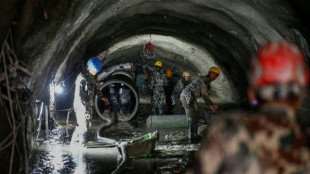 Nepal's hydropower ambitions face climate reality check

 Power cuts, rubble: millions come home to find Sudan's capital unlivable

 Internationals keep Presidents Cup lead with late fightbacks

 Tuchel to 'keep pushing' England to reach Spain's level

 Alcaraz saves match points to keep Europe ahead in Laver Cup
 Spain success driven by hunger to improve, says De La Fuente

 Lyon collapse at Stade Francais to suffer first Top 14 loss
 Oyarzabal and Spain sink England again as Modric shines for Croatia

 Housing protesters camp in central Madrid after mass demonstration

 Louise Trotter expands her palette at Bottega Veneta
 Pope prays at Lourdes after huge Paris mass

 USA trims International lead after Presidents Cup four-balls

President Donald Trump insisted Wednesday that US strikes led to the "total obliteration" of Iran's nuclear capabilities and set the country's atomic programme back "decades", while Israel said it was still early to fully assess the damage.
Over a 12-day conflict, Israel pounded Iranian nuclear and military sites while Iran launched waves of missiles at its foe during their deadliest-ever confrontation.
The United States joined the fray in support of its ally, hitting two nuclear facilities with massive bunker-buster bombs over the weekend, while a guided missile from a submarine struck a third.
But leaked US intelligence cast doubt on the damage caused by American strikes, saying they had set back Tehran's nuclear programme by just a few months.
"They're not going to be building bombs for a long time," said Trump, adding that the strikes had set back the programme by "decades" and that the Iran-Israel ceasefire that he declared was going "very well".
Earlier, Israel's military said it was "still early" to assess the damage caused to Iran's nuclear programme.
"I believe we have delivered a significant hit to the nuclear programme, and I can also say that we have delayed it by several years," said Israeli military spokesman Brigadier General Effie Defrin.
The head of Israel's military, Eyal Zamir, on Tuesday said Israel and the United States had set back Iran's nuclear programme "by years".
But US media on Tuesday cited people familiar with the Defense Intelligence Agency intelligence report as saying the American strikes did not fully eliminate Iran's centrifuges or enriched uranium stockpiles.
The strikes sealed off entrances to some facilities without destroying underground buildings, according to the report.
Israel had said its bombing campaign, which began on June 13, was aimed at preventing Iran from acquiring a nuclear weapon, an ambition Tehran has consistently denied.
Israeli Prime Minister Benjamin Netanyahu, in an address to the nation after the ceasefire, announced that "we have thwarted Iran's nuclear project".
"And if anyone in Iran tries to rebuild it, we will act with the same determination, with the same intensity, to foil any attempt," he said.
- 'Legitimate rights' -
Iranian lawmakers on Wednesday voted in favour of suspending cooperation with the United Nations' nuclear watchdog, according to state TV.
"The International Atomic Energy Agency, which refused to even marginally condemn the attack on Iran's nuclear facilities, put its international credibility up for auction," parliament speaker Mohammad Bagher Ghalibaf said, according to the broadcaster.
The decision to suspend cooperation with the IAEA still requires the approval of the Guardian Council, a body empowered to vet legislation.
Iranian President Masoud Pezeshkian said Tuesday his country was willing to return to negotiations over its nuclear programme, but that it would continue to "assert its legitimate rights" to the peaceful use of atomic energy.
In an interview with the Al Araby Al Jadeed news outlet, Iranian Foreign Minister Abbas Araghchi said attacks on Iran's nuclear facilities would have "serious and profound repercussions" on the country's future.
He said Iran remained committed to the Non-Proliferation Treaty but that it had failed "protect us or our nuclear programme", adding that Iran's approach towards the non-proliferation regime "will undergo changes", without elaborating.
- Shadow war -
While Iran and Israel have been locked in a shadow war for decades, their 12-day conflict was by far the most destructive confrontation between them.
Israeli strikes hit nuclear and military targets -- killing scientists and senior military figures -- as well as residential areas, prompting waves of Iranian missile fire on Israel.
The war culminated in US strikes on underground Iranian nuclear sites using bunker-busting bombs -- which Israel lacks -- followed by an Iranian reprisal targeting a US military facility in Qatar, the largest in the Middle East.
Trump shrugged off that response as "weak", thanking Tehran for giving advance notice and announcing the contours of the ceasefire just hours later.
Some Israelis welcomed the truce.
"Finally, we can sleep peacefully. We feel better, less worried, for the kids, for the family. And I hope it stays that way. That's the most important," Yossi Bin, a 45-year-old engineer in Tel Aviv, told AFP.
In Iran, people remained uncertain whether the peace would hold.
Amir, 28, fled from Tehran to the Caspian Sea coast and told AFP by phone, "I really don't know... about the ceasefire but honestly, I don't think things will return to normal."
Israeli strikes on Iran killed at least 610 civilians and wounded more than 4,700, according to the health ministry.
Iran's attacks on Israel killed 28 people, according to official figures and rescuers.
burs-ser/dv
C.Cassis--PC