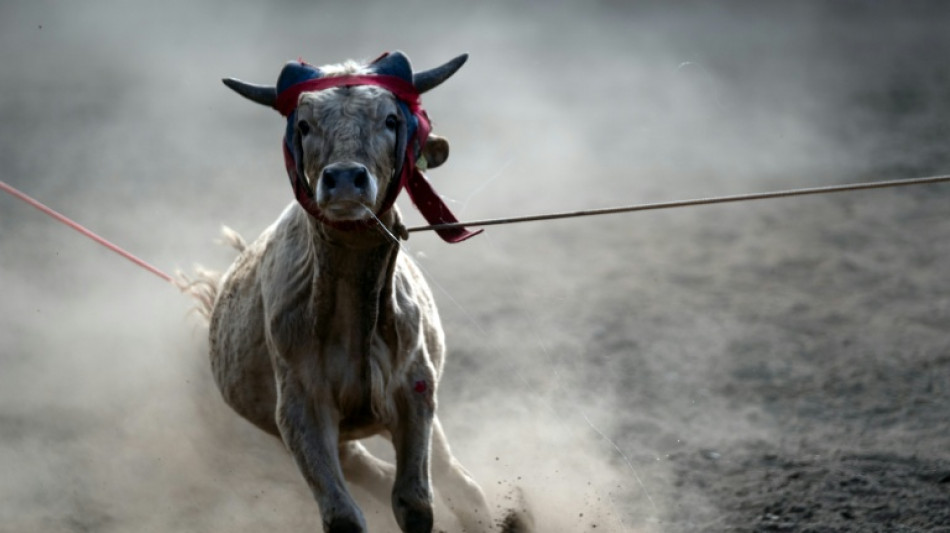
Mexico barred from sending cattle to US over flesh-eating pest / Photo: Guillermo Arias - AFP/File

 IFFI Opening Film 'Fatherland' Addresses Global Divisions Through Post-War Lens

 Texas Sports Betting Status: No Legal Options Amid Legislative Push for 2027 Referendum

 Geri Halliwell-Horner Embraces Queen Camilla at Commonwealth Writing Competition

 Meta Quest 3 and 3S Gain Access to Over 150 3D Movies

The US Secretary of Agriculture has announced ports will be closed to the livestock trade at the southern border after Mexican cattle tested positive for the flesh-eating New World screwworm (NWS).
"The United States has promised to be vigilant -- and after detecting this new NWS case, we are pausing the planned port reopening's to further quarantine and target this deadly pest in Mexico," Secretary Brooke Rollins said in a statement on Wednesday.
President Donald Trump's administration on May 11 announced a halt on imports of live cattle, horses and bison over the southern border because of an outbreak of the screwworm fly, whose flesh-eating larvae can kill cattle.
Mexico resumed cattle exports to the United States on Monday after mitigation efforts, following Washington's announcement that it was gradually lifting the nearly two-month pause.
At the time, officials said cattle exports had resumed thanks to efforts by both countries in battling the parasitic pest.
Rollins's statement on Wednesday said further efforts were necessary in specific regions.
"We must see additional progress combatting NWS in Veracruz and other nearby Mexican states in order to reopen livestock ports along the Southern border," the official said.
Mexico exported just over one million head of cattle to the United States in 2024, according to official estimates. The trade was halted briefly that year for the same reason.
The cattle standoff comes amid heightened tensions between the two neighbors over the Trump administration's hardline immigration policy and trade tariffs.
F.Cardoso--PC

