US funding cuts could reverse decades of gains in AIDS fight: UN
/ Photo: Phill Magakoe - AFP/File

 AI startup urges optimism from Europe despite safety fears

 'Godlike, invincible': Japan hails 11-year-old Games history-maker

 Nepal's hydropower ambitions face climate reality check

 Power cuts, rubble: millions come home to find Sudan's capital unlivable

 Internationals keep Presidents Cup lead with late fightbacks

 Tuchel to 'keep pushing' England to reach Spain's level

 Alcaraz saves match points to keep Europe ahead in Laver Cup
 Spain success driven by hunger to improve, says De La Fuente

 Lyon collapse at Stade Francais to suffer first Top 14 loss
 Oyarzabal and Spain sink England again as Modric shines for Croatia

 Housing protesters camp in central Madrid after mass demonstration

 Louise Trotter expands her palette at Bottega Veneta

 Pope prays at Lourdes after huge Paris mass

 USA trims International lead after Presidents Cup four-balls

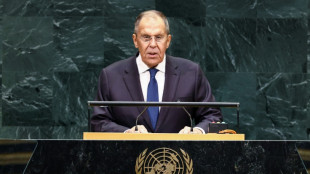 Russia accuses Europe of blocking Ukraine talks, as strikes drag on

 'He said hello': Families pray with pope on Paris avenue

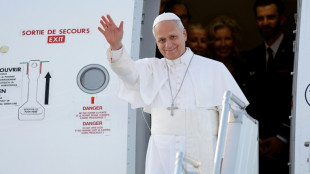 Pope celebrates giant Paris mass, flies to Lourdes

 Thousands march in Madrid over eviction of 87-year-old woman
 England women back to winning ways with last-gasp defeat of New Zealand

 Trump rejects Iran proposal for deal to reopen Hormuz

 England's Cox says injured Buttler leaves 'big shoes to fill'
 Ruthless Perpignan upset sloppy Bordeaux-Begles
 Deadly abbey attack feeds anti-Ukrainian sentiment in Poland
 Antonelli says he drove 'safety-first' on his worst weekend of season

 Fernandez fights back to reach Singapore Open final

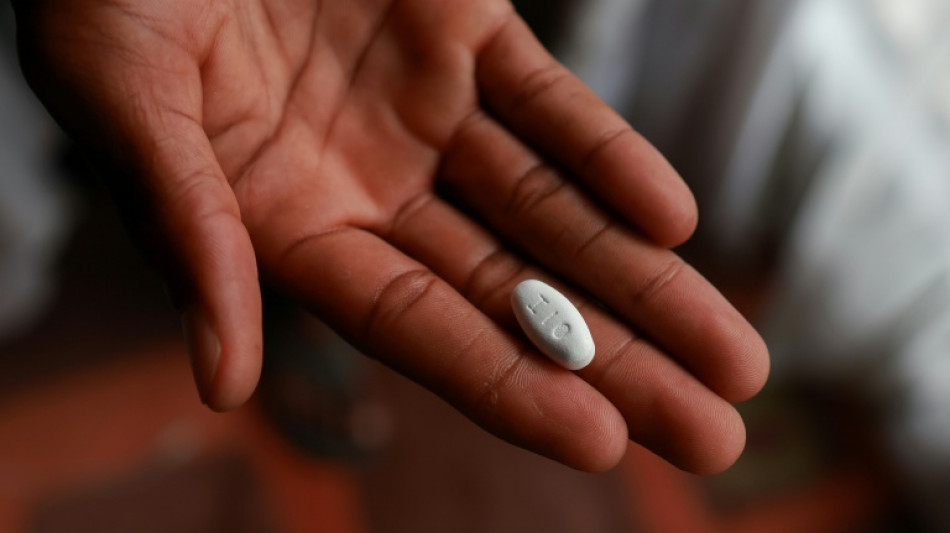
The halt to US foreign aid is a "ticking time bomb" that could reverse decades of hard-fought gains in the fight against AIDS, the United Nations warned Thursday.
Around 31.6 million people were on antiretroviral drugs in 2024 and deaths from AIDS-related illnesses had more than halved since 2010 to 630,000 that year, the UNAIDS agency said in a new report.
But now infections were likely to shoot up as funding cuts have shuttered prevention and treatment programmes, it said.
The United States has been the world's biggest donor of humanitarian assistance but President Donald Trump's abrupt slashing of international aid in February sent the global humanitarian community scrambling to keep life-saving operations afloat.
"We are proud of the achievements, but worried about this sudden disruption reversing the gains we have made," UNAIDS executive director Winnie Byanyima told AFP ahead of the report's launch in Johannesburg.
The agency in April warned that a permanent discontinuation of PEPFAR, the massive US effort to fight HIV/AIDS, would lead to more than six million new infections and an additional 4.2 million AIDS-related deaths in the next four years.
This would bring the pandemic back to levels not seen since the early 2000s.
"This is not just a funding gap – it's a ticking time bomb" whose effects are already felt worldwide, Byanyima said in a press release.
Over 60 percent of all women-led HIV organisations surveyed by UNAIDS had lost funding or had to suspend services, the report said.
In a striking example, the number of people receiving pre-exposure prophylaxis (PrEP) drugs to prevent transmission in Nigeria fell by over 85 percent in the first few months of 2025.
The "story of how the world has come together" to fight HIV/AIDS is "one of the most important stories of progress in global health," Byanyima told AFP.
"But that great story has been disrupted massively" by Trump's "unprecedented" and "cruel" move, she said.
"Priorities can shift, but you do not take away life-saving support from people just like that," she said.
- Key medical research affected -
Crucial medical research on prevention and treatment have also shut down, including many in South Africa which has one of the highest HIV rates in the world and has become a leader in global research.
"Developing countries themselves contribute very much towards the research on HIV and AIDS, and that research serves the whole world," Byaniyma said.
In 25 out of 60 low- and middle-income countries surveyed by UNAIDS, governments had found ways to compensate part of the funding shortfall with domestic resources.
"We have to move towards nationally-owned and financed responses," Byaniyma said, calling for debt relief and the reform of international financial institutions to "free up the fiscal space for developing countries to pay for their own response".
Still, the global HIV response built from grassroots activism was "resilient by its very nature", she told AFP.
"We moved from people dying every single day to now a point where it is really like a chronic illness," she said.
"There is no question that the investment has been worth it, and continues to be worth it. It saves lives."
V.Dantas--PC