Trapped under Israeli bombardment, Gazans fear the 'new border' / Photo: Bashar Taleb - AFP

 ILO financial crisis takes centre stage in leadership race

 Stocks dip, oil soars despite Trump hailing "productive" Iran talks

 China's Xi to get rare airport welcome from Trump

 Turkey reassures investors over investment fund crisis
 Saka says England still have 'scar' from World Cup semi-final loss

 アレックス・ボディ氏とシュテファン・ハウプト教授、ルーマニアの伝説的な美術コレクションをめぐり提携に合意

 亞歷克斯·博迪與史蒂芬·豪普特教授就羅馬尼亞傳奇藝術收藏達成合作協議

 Алекс Боди и проф. д-р Стефан Хаупт договорились о сотрудничестве в рамках легендарной коллекции произведений искусства в Румынии

 French foreign minister says Palestinians 'must' hold polls

 Fresh Russian strikes on Ukraine's infrastructure kill seven

 Eriksen to return to Denmark after parting ways with Wolfsburg

 Brad Pitt says working with dog co-star was 'really moving'

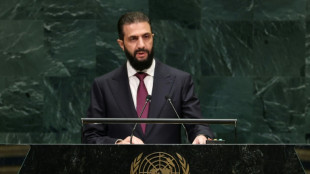 Golan will remain Syrian, vows President al-Sharaa at UN

 Blueberry Strengthens MENA Presence with CMA Category 5 License and Dubai Office Launch
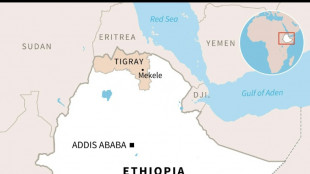
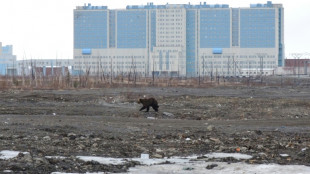 Russia probes bear attacks, as official says town under 'siege'

 Robertson tells Spurs to 'forget' past woes

 Italy police find 3 million euros stashed in mobster's house

 Renard versus Queiroz in AFCON qualifying blockbuster

 Former Mexico boss Aguirre returns to Spain with Valencia

 China swimmer, 13, seals Games hat-trick as North Korea win first gold

 China's Xi heads to US for talks with Trump: state media
 Azerbaijan pardons Frenchman after EU lifts sanctions on oligarchs

 Hadjar extends Red Bull contract for 2027 F1 season
 Black Sea drone attacks spell terror for Turkish sailors

 Canada judge to decide prison term for suicide poison seller

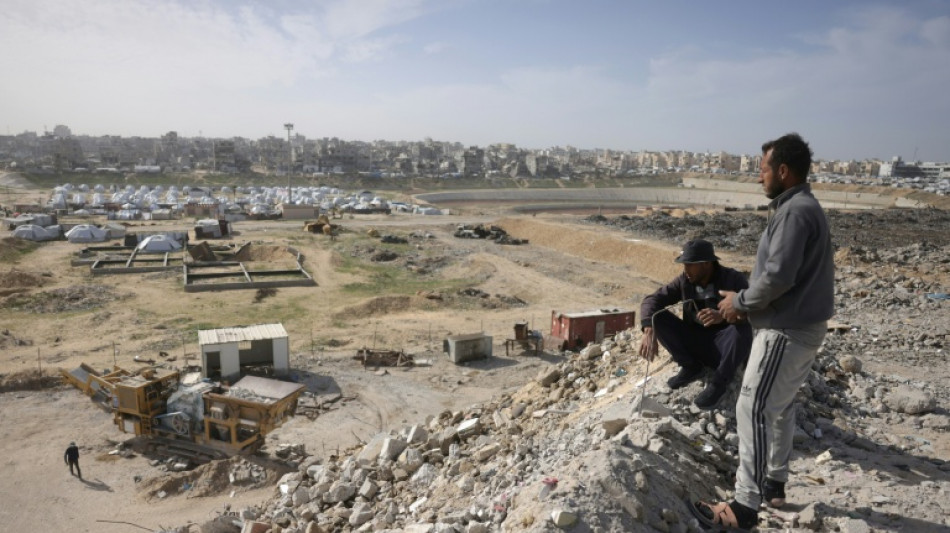
When her children, trembling with fear, ask where the family can go to escape Israel's continued bombardment in southern Gaza's Khan Yunis area, Umm Ahmed has no answer.
In her small, devastated village near Khan Yunis city, recent Israeli strikes shattered the tenuous sense of peace delivered by a ceasefire that has largely held since October 10.
Residents say the attacks have targeted neighbourhoods east of the so-called Israeli-controlled Yellow Line -- a demarcation established under the truce between Israel and Hamas.
More than two years after a devastating war, tens of thousands of Gazans still live in tents or damaged homes in these areas, where the Israeli army maintains control and operates checkpoints.
Now, many fear being forced from their homes, compelled to move west of the Yellow Line.
"We don't sleep at night because of fear. The bombardments in the east are relentless," said Umm Ahmed, 40.
"My children tremble at every explosion and ask me, 'Where can we go?' And I have no answer."
Her home in Bani Suheila has been completely destroyed, yet the family has stayed, pitching a tent beside the ruins.
"Staying close to our destroyed home is easier than facing the unknown," Umm Ahmed said.
Crossing the Yellow Line to Al-Mawasi, west of Khan Yunis, is not an option for them.
There, makeshift camps stretch as far as the eye can see, housing tens of thousands of Palestinians who fled the fighting.
"There is no place left for anyone there, and not enough food or water," Umm Ahmed said, as Gaza remains trapped in a catastrophic humanitarian crisis.
- 'We will not leave' -
The war in Gaza began on October 7, 2023, following an unprecedented attack by Hamas on Israel that resulted in the deaths of 1,221 people, according to an AFP tally based on official Israeli figures.
Since the war began, more than 70,000 people have been killed in Gaza, according to the territory's health ministry. The vast majority of the territory's more than two million residents have been displaced, many multiple times.
A fragile ceasefire has been in place since October 10, though both sides regularly accuse each other of violations.
Under the truce, Israeli forces withdrew to positions east of the Yellow Line.
Earlier this month, Israeli army chief Lieutenant General Eyal Zamir described the Yellow Line as the "new border" with Israel.
"The Yellow Line is a new border line -- serving as a forward defensive line for our communities and a line of operational activity," he said to reserve soldiers in Gaza.
For Palestinian officials, the line is seen as a tool for permanent displacement.
"The objective is to frighten residents, expel them from their areas, and force them west," said Alaa al-Batta, mayor of Khan Yunis, denouncing the bombardments as "violations of the ceasefire agreement".
The Israeli military did not respond to AFP but has regularly reported strikes near the Yellow Line on what it described as suspected militants.
Mahmud Baraka, 45, from Khuzaa, east of Khan Yunis, described constant artillery fire and home demolitions in the area.
"It feels like we are still living in a war zone," he said.
"Explosions happen as if they are right next to us. The objective of the occupation is clear: to intimidate us and drive us out, so the region is emptied."
For now, residents feel trapped between bombardment and displacement, uncertain how long they can endure.
Despite the danger, Abdel Hamid, 70, refuses to leave his home located north of Khan Yunis, where he lives with his five children.
"We will not leave... this is our land," he said.
"Moving would not be a solution, but yet another tragedy."
bur-az-tgg-jd-glp/jsa
X.Brito--PC