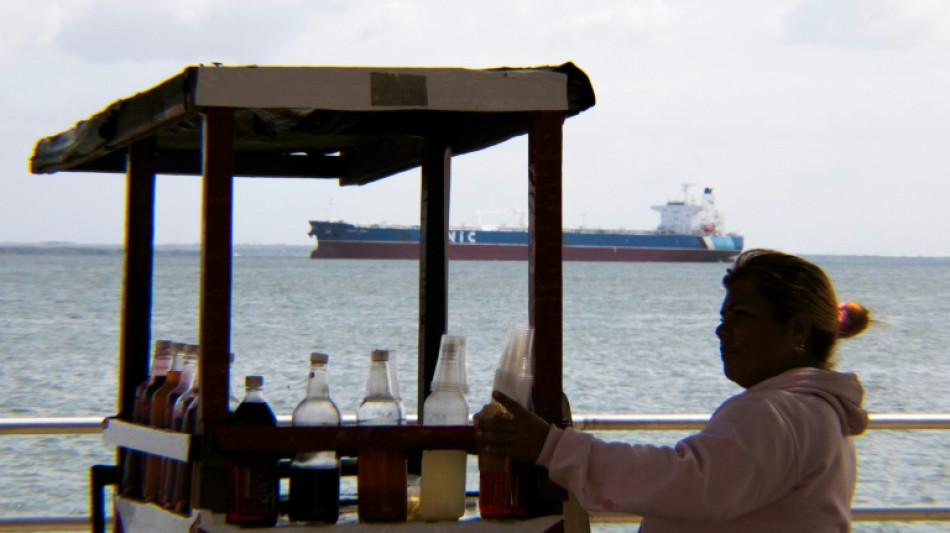
Maduro's fall raises Venezuelans' hopes for economic bounty / Photo: Margioni BERMÚDEZ - AFP

 Google data centre sparks protests in Austria

 Shin Ohashi: Junk food-loving teen and Japan's next big swimming hope

 Stocks rise on AI buzz, drop in oil prices

 China's robot dancers limber up for America's Got Talent final

 Despite military might, Saudi struggles to crush the Houthis
 Trump to tout deals, defend Iran war in UN speech
 Sri Lanka to issue verdict in landmark Easter attack trial
 Macron says talks with Trump on Red Sea, Ukraine 'constructive'

 Green policies just good politics, says UK minister
 Bardot auction in Paris fetches nearly one million euros
 No timeline on Daniels injury return, says Commanders coach

 British Columbia sues OpenAI in US court over Canada school shooting

 French star Batum retires after 18-year NBA career
 Zidane leads first France training session
 Man shot by ICE agent in Texas detained with bullet inside him: lawyer
 California declares state of emergency ahead of El Nino

 South Africa arrests three more suspects, after nine women murdered
 Carse needs time away from England, says captain Brook

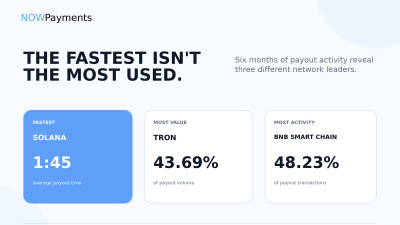 NOWPayments Releases Cross-Chain Payout Data Revealing Key Performance Benchmarks Across TRON, BNB Chain, and Solana

 British Museum bans photos of Bayeux Tapestry as crowds linger
 COP31 host says AI climate footprint to be a summit priority

 Berlin's far-left vote winners reject anti-semitism charges

 Mancini eager for 'new adventure' on Italy return

 Mbappe says having Zidane as France coach 'like a film'
 Palmer, Rice out of England Nations League squad
After the US raid that deposed Nicolas Maduro as Venezuela's leader, citizens hope the ensuing talks on selling its oil to the United States may improve their dire economic fortunes.
US forces shocked many when they bombed Caracas in the night and seized Maduro -- but analysts agree that the raid has radically changed the country's outlook and economic expectations.
Maduro's successor, interim leader Delcy Rodriguez, has insisted Venezuela is not "subordinate" to Washington after it seized him, but she has pledged to cooperate with it on oil.
Maduro's government had resorted to cryptocurrencies to boost foreign exchange flows amid a lack of investment, while runaway inflation wiped out people's already meager wages.
"I don't really understand those agreements signed by Trump and Delcy, but I hope they help improve the economy," said Marieta Ochoa, a 47-year-old teacher.
"Hopefully salaries go up -- this inflation is unbearable."
- Oil negotiations -
Until Friday, January 2, relations between the two countries were at their lowest: US sanctions and seizures of tankers were squeezing Venezuela's shaky oil industry.
The country had been selling oil to allies such as China and Russia at discounts of up to 50 percent, with low production and export levels.
"Now, rapprochement between Washington and Caracas could mean easing sanctions, restoring oil exports and reviving cash flows," said Alejandro Grisanti, director of consultancy Ecoanalitica.
State oil company PDVSA has said it is negotiating crude sales with Washington under schemes similar to those applying to firms such as Chevron -- the only US company currently exempted from sanctions on dealing in Venezuelan crude.
Trump signed an order to safeguard Venezuelan oil revenue held in US Treasury accounts from the courts and debtors, and has urged US oil firms to invest in Venezuela and restore its creaky oil infrastructure.
Analysts say interim president Rodriguez could attract investment if she signals openness and flexibility.
"The country urgently needs a growing and stable cash flow, and oil can provide it immediately," said independent economist Carlos Torrealba Rangel.
- Economy 'reactivating' -
Growth prospects are strong since oil accounts for 87 percent of Venezuela's foreign currency earnings.
Asdrubal Oliveros, an independent economist, forecast "a 30-percent expansion -- double the rate of the past two years."
"Increased oil income from higher output and reduced discounts will boost cash flows and help a currency market that is practically dry," he said.
Traders said economic activity was timidly looking up after the US airstrikes on Saturday, January 3, that led to the capture of Maduro and his wife, Cilia Flores.
"Little by little, the economy is reactivating," said Carmen Alvarez, who represents informal traders in western Caracas.
"People are buying again, dollar payments are stabilizing after rampant speculation above the official rate. Food sales are being prioritized."
Uncertainty and lack of confidence in exchange policy drove prices higher during the week, as the parallel dollar surged over 50 percent to about 800 bolivars.
Oliveros said the government was virtually out of foreign currency.
"There were practically no dollar revenues, and even crypto inflows had stalled."
But by the weekend, the unofficial dollar fell to 530 bolivars, possibly driven by optimism over the oil deal, analysts said.
- Inflation warning -
They warned however that Venezuela's economy remained fragile.
They stressed that the short term would be marked by uncertainty, requiring close monitoring of key variables such as exchange rates and inflation.
"Venezuela is on the brink of hyperinflation. The only way to avert it is through a constitutional, peaceful political transition to reorganize the economy," said Jose Guerra, an economist and former head of the country's central bank.
Oxford University visiting professor Jose Manuel Puente said easing sanctions would improve expectations and attract US and global investment.
But he warned that recovery wouldn't be easy.
"In the end, all this will unfold under a scenario where the country is effectively under US tutelage," he said.
He said the oil industry needs $100 billion annually to restart, and progress depends on negotiations.
"The year 2026 began with an unprecedented shift in Venezuela's policy that will reshape economic dynamics," said Oliveros.
"Politics and economics have never been so intertwined."
H.Portela--PC