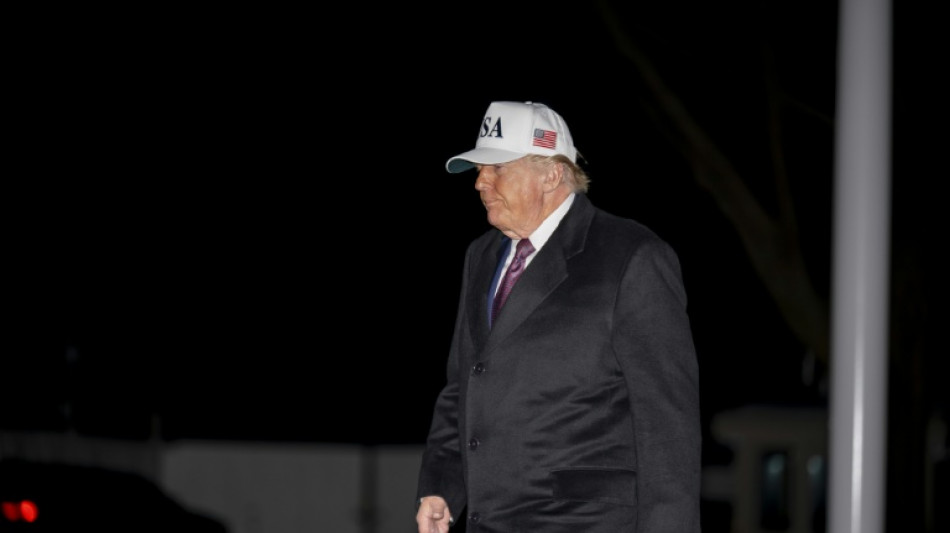
Trump has options on Iran, but first must define goal / Photo: ROBERTO SCHMIDT - AFP

 Google data centre sparks protests in Austria
 Shin Ohashi: Junk food-loving teen and Japan's next big swimming hope

 Stocks rise on AI buzz, drop in oil prices
 China's robot dancers limber up for America's Got Talent final
 Despite military might, Saudi struggles to crush the Houthis
 Trump to tout deals, defend Iran war in UN speech
 Sri Lanka to issue verdict in landmark Easter attack trial
 Macron says talks with Trump on Red Sea, Ukraine 'constructive'
 Green policies just good politics, says UK minister
 Bardot auction in Paris fetches nearly one million euros
 No timeline on Daniels injury return, says Commanders coach
 British Columbia sues OpenAI in US court over Canada school shooting

 French star Batum retires after 18-year NBA career
 Zidane leads first France training session
 Man shot by ICE agent in Texas detained with bullet inside him: lawyer
 California declares state of emergency ahead of El Nino
 South Africa arrests three more suspects, after nine women murdered
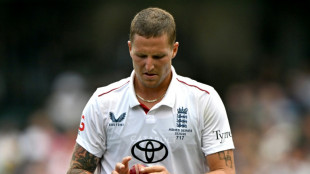 Carse needs time away from England, says captain Brook

 NOWPayments Releases Cross-Chain Payout Data Revealing Key Performance Benchmarks Across TRON, BNB Chain, and Solana
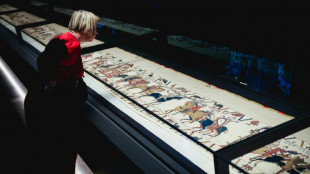 British Museum bans photos of Bayeux Tapestry as crowds linger
 COP31 host says AI climate footprint to be a summit priority

 Berlin's far-left vote winners reject anti-semitism charges

 Mancini eager for 'new adventure' on Italy return
 Mbappe says having Zidane as France coach 'like a film'
 Palmer, Rice out of England Nations League squad
US President Donald Trump has options to intervene in protest-hit Iran that range from low to high risk, but choosing his course depends on him deciding his ultimate goal.
It has been 10 days since Trump said the United States was "locked and loaded" and ready to "come to the rescue" if Iran's clerical state kills demonstrators who have taken to the streets in major numbers.
Since then, Trump has kept threatening a military option, even as hundreds of people have died, according to rights groups.
Iran has been a sworn foe of the United States since the 1979 Islamic revolution toppled the pro-Western shah. The downfall of the Islamic republic in power since then would transform the Middle East.
But Trump has previously lashed out against "regime change" as a goal, especially pointing to lessons from US involvement in Iraq, a smaller country.
Trump on Monday exercised economic leverage, announcing 25 percent tariffs on Iran's trading partners, and he has spoken of ways to forcibly restore internet access shut by Tehran.
The two governments have also revealed that they have been in communication, coordinated by Trump's friend and roving envoy Steve Witkoff.
- Momentum on streets -
In a message likely designed to galvanize Trump, Reza Pahlavi, the US-exiled son of the late shah, has publicly encouraged Trump not to be like Democratic predecessor Barack Obama, who hesitated at supporting 2009 protests for fear of co-opting a homegrown movement.
Some experts say that Obama's fears nearly a generation ago may no longer be as relevant, with demonstrations having spread well beyond educated, urban circles that always opposed the religious state.
Ray Takeyh, a senior fellow at the Council on Foreign Relations who wrote a book about the fall of the late shah, said that Trump could target forces including the elite Revolutionary Guards that have taken the lead in repressing the protests.
Intervention could ease Iranians' fears and "affect the fence-sitters in thinking about joining the protests or not," Takeyh said.
Sanam Vakil, director of the Middle East and North Africa program at the Chatham House think tank, agreed that intervention by Trump could bring momentum on the streets.
But she said: "It could equally play further into the hands of a regime that is paranoid and this would build further unity and propel them to crack down further."
- How much action needed? -
Trump in June ordered strikes on Iranian nuclear sites in support of an Israeli campaign.
While Trump had previously spoken of a diplomatic resolution, the attack was in line with his inclination, as seen again recently in Venezuela, for one-off military operations he quickly claims as successes.
Vali Nasr, a professor at Johns Hopkins School of Advanced International Studies, noted 130 to 150 Iranian cities have seen protests.
"Trying to hit security forces in all of these, or even major cities of Iran, is more than just a few airstrikes," Nasr said.
As Trump likely "doesn't want to get his hands dirty, a performative strike may be more where he wants to go," Nasr said.
Behnam Ben Taleblu, a research fellow at the Foundation for Defense of Democracies, said the risk from intervention was less that Iranians rally around the flag than that they become afraid to go out.
"The challenge of the strikes is how to make sure they don't lead to the disbursement of protesters rather than the amplification of protests, if the strikes go off the rails -- if targeting is poor, if intelligence is poor," he said.
He said the impact would also be high if Trump finally decides not to strike.
Inaction would "play into the regime's narrative of painting America as not able to actually come through," Ben Taleblu said.
Pahlavi and a number of Republican hawks have voiced opposition to diplomacy, warning it would only give the Islamic republic a lifeline.
But Mohammad Ali Shabani, editor of the Amwaj.media site that closely follows Iran, believed many Iranians would welcome a deal that eases sanctions and "lifts the shadow of war."
"I think this would supersede any kind of short-term survival for the Islamic republic because the way things are structured, I think most Iranians at this point accept that the Islamic republic is not going to be there forever."
L.Mesquita--PC