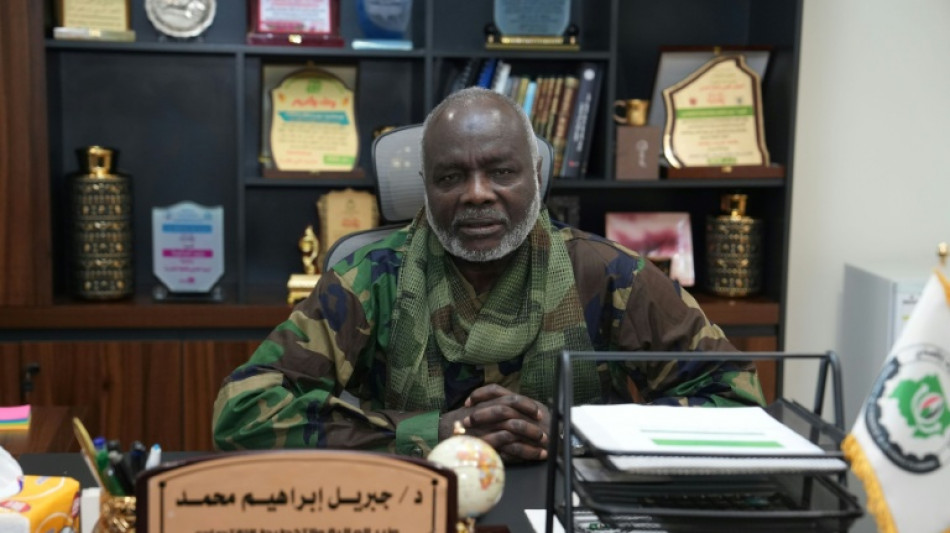
Sudan 'lost all sources of revenue' in the war: finance minister to AFP / Photo: STRINGER - AFP

 Google data centre sparks protests in Austria

 Shin Ohashi: Junk food-loving teen and Japan's next big swimming hope
 Stocks rise on AI buzz, drop in oil prices
 China's robot dancers limber up for America's Got Talent final

 Despite military might, Saudi struggles to crush the Houthis
 Trump to tout deals, defend Iran war in UN speech
 Sri Lanka to issue verdict in landmark Easter attack trial
 Macron says talks with Trump on Red Sea, Ukraine 'constructive'

 Green policies just good politics, says UK minister
 Bardot auction in Paris fetches nearly one million euros
 No timeline on Daniels injury return, says Commanders coach

 British Columbia sues OpenAI in US court over Canada school shooting

 French star Batum retires after 18-year NBA career
 Zidane leads first France training session
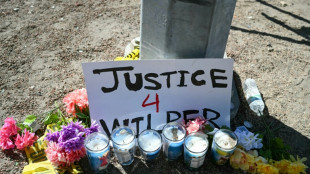 Man shot by ICE agent in Texas detained with bullet inside him: lawyer
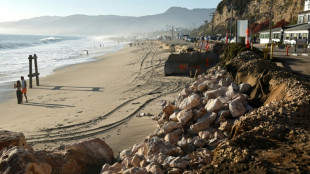 California declares state of emergency ahead of El Nino
 South Africa arrests three more suspects, after nine women murdered
 Carse needs time away from England, says captain Brook

 NOWPayments Releases Cross-Chain Payout Data Revealing Key Performance Benchmarks Across TRON, BNB Chain, and Solana

 British Museum bans photos of Bayeux Tapestry as crowds linger
 COP31 host says AI climate footprint to be a summit priority

 Berlin's far-left vote winners reject anti-semitism charges

 Mancini eager for 'new adventure' on Italy return

 Mbappe says having Zidane as France coach 'like a film'
 Palmer, Rice out of England Nations League squad
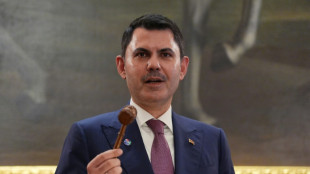
Widespread destruction, massive military spending and plummeting oil and gold revenues have left Sudan's economy in "very difficult times", army-aligned finance minister Gibril Ibrahim said, nearly three years into the army's war with rival paramilitary forces.
In an interview with AFP from his office in Port Sudan, Ibrahim said the government is eyeing deals for Red Sea ports and private investment to help rebuild infrastructure.
This week, Sudan's prime minister announced the government's official return to Khartoum, recaptured last year, but Ibrahim's ministry is among those yet to fully return.
Dressed in combat uniform, the former rebel leader said Sudan, already one of the world's poorest countries before the war, "lost all sources of state revenue in the beginning of the war", when the Rapid Support Forces overtook the capital Khartoum and its surroundings.
"Most of the industry, most of the big companies and all of the economic activity was concentrated in the centre," he said, saying the heartland had accounted for some 80 percent of state revenue.
Ibrahim's ex-rebel group the Justice and Equality Movement once battled Khartoum's government but it has fought on the army's side as part of the Joint Forces coalition of armed groups.
- Smuggling -
Sudan, rich in oil, gold deposits and arable land, is currently suffering the world's largest humanitarian crisis, with over half of its population in need of aid to survive.
Gold production is rising year-on-year, but "unfortunately, much of it has been smuggled... across borders, through different countries, and going to the Gulf, mainly to the United Arab Emirates", he said.
Of the 70 tonnes produced in 2025, only "20 tonnes have been exported through official channels".
In 2024, Sudan produced 64 tonnes of gold, bringing in only $1.57 billion to the state's depleted coffers, with much of the revenue spilling out via smuggling networks.
Agricultural exports have fallen 43 percent, with much of the country's productive gum arabic, sesame and peanut-growing regions in paramilitary hands, in the western Darfur and southern Kordofan regions.
Sudan's livestock industry, also based predominantly in Darfur, has lost 55 percent of its exports, he said.
Since the RSF captured the army's last holdout position in Darfur in October, the war's worst fighting has shifted east to the oil-rich Kordofan region.
While both sides scramble for control of the territory, the country's oil revenues have dropped by more than 50 percent -- its most productive refinery, Al-Jaili near Khartoum, severely damaged.
- 'Reconstruction' -
Determined to defeat the RSF, authorities allocated 40 percent of last year's budget to the war effort, up from 36 percent in 2024, according to Ibrahim, who did not specify amounts.
Yet the cost of reconstruction in areas regained by the army is immense: in December 2024, the government estimated it would need $200 billion to rebuild.
Authorities are currently eyeing public-private partnership, with firms that "are ready to spend money" including on infrastructure, Ibrahim said.
Sudan's long Red Sea coast has over the years drawn the interest of foreign actors eager for a base on the vital waterway, through which around 12 percent of global trade passes.
"We will see which partner is the best to build a port," the minister said, listing both Saudi Arabia and Qatar as "the main applicants".
An early-stage project for an Emirati economic zone had been agreed in principle, he said "and then the war erupted, and the UAE has been part of it".
"So I don't think that project is going anywhere," Ibrahim said, referring to widespread accusations of Abu Dhabi backing the RSF, which the UAE denies.
The Russians, for their part, had also wanted "a small port where they can have supplies", he said, adding that "they didn't go ahead with that yet".
As the war rages on, Sudan shoulders a massive public debt bill, which in 2023 reached 253 percent of GDP, before falling slightly to 221 percent in 2025, according to figures reported by the International Monetary Fund.
Sudan has known only triple-digit annual inflation for years. Figures for 2025 stood at 151 percent -- down from a 2021 peak of 358.
The currency has also collapsed, going from trading before the war at 570 Sudanese pounds against the dollar, to 3500 in 2026, according to the black market rate.
Ibrahim, 71, first joined the government in 2021 as part of a short-lived transitional administration. He retained his position through a military coup later that year.
He is among several Sudanese officials sanctioned by Washington in its attempt to "limit Islamist influence within Sudan and curtail Iran's regional activities".
V.Fontes--PC