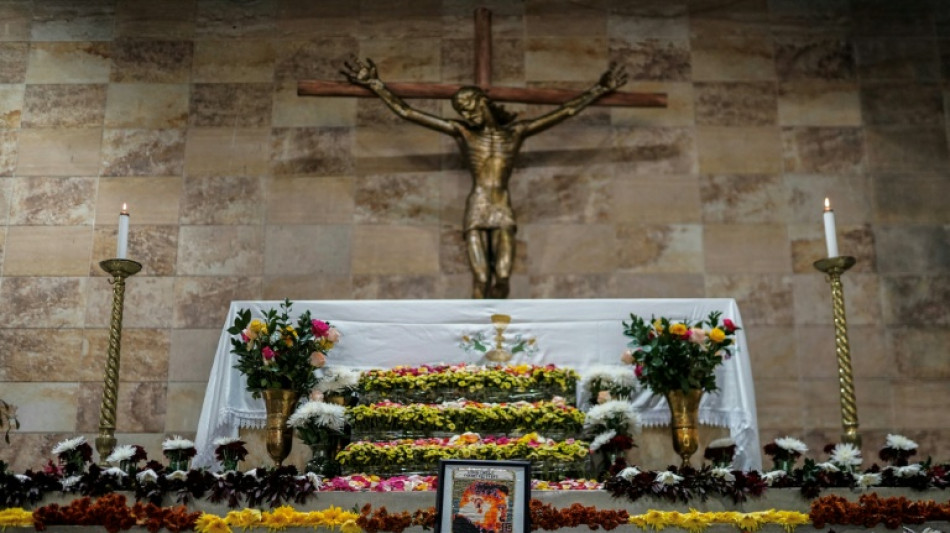
Remains of Colombian priest-turned-guerrilla identified six decades later / Photo: Sergio Yate - AFP

 Britain considers 2027 state visit for Ukraine’s Zelensky
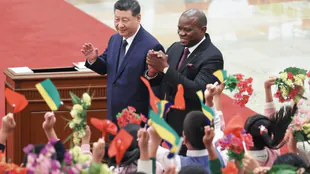 China and Gabon Elevate Ties to 'Shared Future' Amid State Visit

 World Golf Awards 2026 to be Hosted at Egypt’s Madinaty Golf Club

 12 Billion Gallons of Raw Sewage Discharged into Chicago River Despite Deep Tunnel Infrastructure

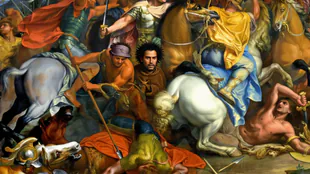 Edmund Richardson Wins Baillie Gifford Prize for 'Alexander' Biography

Colombian forensic experts have identified the remains of a priest-turned-guerrilla fighter killed in battle more than six decades ago, officials said Monday.
Camilo Torres had abandoned the clergy to fight with Colombia's National Liberation Army (ELN) guerrillas in 1965, only to fall in combat with the military the following year.
He became an emblem of "liberation theology" -- a leftist movement centered on uplifting the poor and challenging traditional structures of power.
The testimony of a soldier more than 20 years ago suggested Torres's body had been exhumed from its initial burial place and transferred to a cemetery in the city of Bucaramanga, according to the Search Unit for Disappeared Persons (UBPD).
The unit was created after the 2016 peace agreement that led to the disarmament of the FARC guerrilla army -- until then Colombia's biggest.
The remains were tracked down and after two years of forensic examination, have now been officially identified, the UBPD said on Monday.
"It shows that the search can yield results even... after 60 years," the unit's director Luz Janeth Forero said in a video.
The ELN was founded on July 4, 1964, by trade unionists, rural people and leftist students -- many of them sympathizers of the then-nascent Cuban Revolution -- to take up arms against right-wing paramilitary groups.
Today, it is financed mainly through drug trafficking and other illegal activities and fights bloody battles against rivals for the same income sources.
G.Machado--PC