Guatemalan security forces deploy to gang-plagued capital / Photo: JOHAN ORDONEZ - AFP

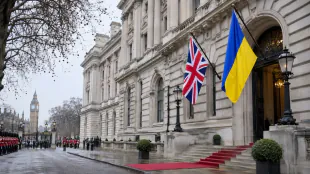 Britain considers 2027 state visit for Ukraine’s Zelensky

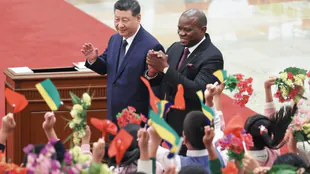 China and Gabon Elevate Ties to 'Shared Future' Amid State Visit

 World Golf Awards 2026 to be Hosted at Egypt’s Madinaty Golf Club
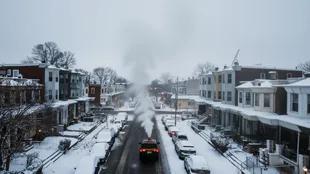
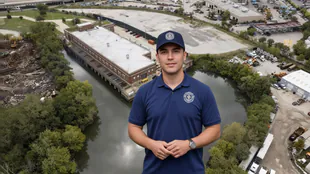 12 Billion Gallons of Raw Sewage Discharged into Chicago River Despite Deep Tunnel Infrastructure

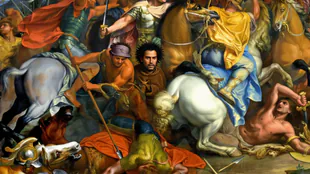 Edmund Richardson Wins Baillie Gifford Prize for 'Alexander' Biography

Heavily armed Guatemalan troops and military police deployed to the country's capital Tuesday, challenging street gangs blamed for killing 11 officers and sparking a major security crisis.
President Bernardo Arevala ordered the "Plan Sentinel" operation to break the stranglehold of Barrio 18 and MS‑13 gangs on urban areas.
Gangs were blamed for a series of January attacks that left 11 officers dead, rocked the government, and prompted a month-long state of emergency, which has now ended.
Troops rode on armored personnel carriers mounted with heavy-caliber machine guns, ready to sweep through northern neighborhoods long controlled by gangs.
It was not immediately clear how many troops were involved.
Arevalo wants to prove to Guatemalans that his center-left government is just as capable of tackling violence and extortion as regional right-wing leaders -- and without the rights abuses.
Speaking to troops, Arevalo said operations would widen to areas of Guatemala Department, where the capital city is located.
Defense Minister Henry Saenz said forces will carry out "high‑impact operations" in areas where crime is most entrenched, driven by Barrio 18 and MS‑13, both labelled "terrorist" groups by Guatemala and the United States.
Arevalo said the one month state of emergency delivered "resounding" results, including a 50 percent drop in homicides and a 33 percent fall in extortion compared with the same period last year.
The state of emergency followed coordinated killings by Barrio 18 after authorities sought to retake three prisons under the gang's control.
Members seized hostages to demand better conditions or transfers to lower‑security jails.
Arevalo has also blamed the violence on what he calls a plot by criminals and politicians seeking to destabilise his government as he pushes reforms to Guatemala's corruption‑hit justice system.
A.Aguiar--PC