Hungry, wounded, orphaned: South Sudan's children trapped in new conflict / Photo: Luis TATO - AFP

 Putin's party set to retain power after Russia vote hit by cyberattacks, drones
 Germany's Merz under pressure after bruising state election losses

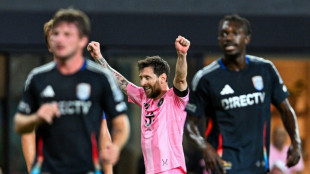 Messi, Miami frustrated in 2-2 draw with San Diego

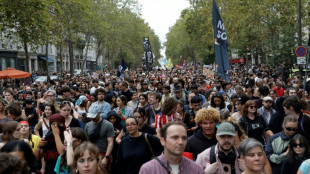 Thousands march in France against 'licence to kill' draft law

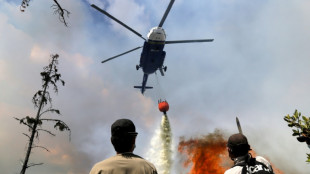 Forest fire threatens tourist town in Colombian Andes

 Torres on target again as PSG beat 10-man Marseille in Ligue 1

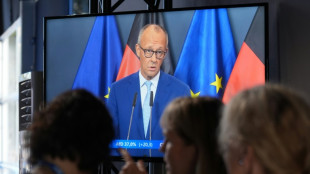 Germany's Merz vows to stay course despite new election defeats

 Carrick demands Man Utd response after 'pathetic' jibes

 Liverpool boss Iraola urges Isak to raise his level
 Evenepoel wins record 4th straight world time-trial title
 France's Macron, Canada's Carney announce closer ties
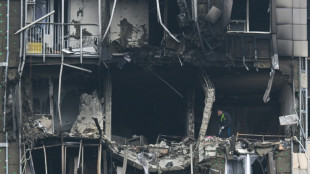
 Carrick defends troubled Man Utd after Fulham escape

 Horror movie 'Resident Evil' tops N. American box office

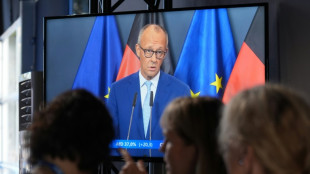 Germany's Merz vows to stay course despite new vote losses
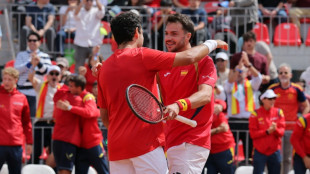
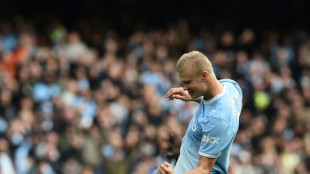 Man City outgun Sunderland despite Brobbey hat-trick, Man Utd rescue Fulham draw

 Mourinho blames ref committee for Real Madrid derby defeat
 Maresca craves a 1-0 win after eight-goal Man City thriller
 Atletico Madrid beat Real Madrid in tense derby clash
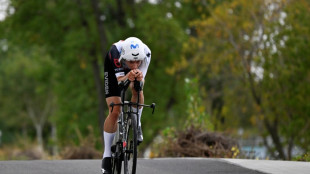 Reusser retains world time-trial title

 Man City outgun Sunderland despite Brobbey hat-trick, Liverpool win at Bournemouth

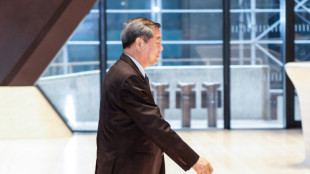 Top US, Chinese economic officials meet ahead of Trump-Xi summit
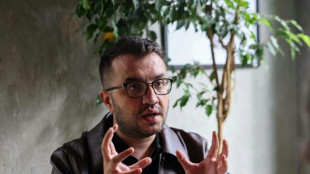 Erdogan's LGBTQ crackdown 'first step of election campaign': activist
 Mass drone barrage on Moscow kills two

 82-year-old dies after beach fight in Greece over sun lounger
 US warns of rapid escalation in Mideast war
An 18-month-old boy lies motionless on a dirty hospital bed deep in the conflict zone of South Sudan, a bullet wound in his leg -- another newly orphaned victim in the world's newest country.
"When they arrived, they started shooting everyone in the area -- elder, child, and mother," Nyayual, his grandmother, told AFP at the hospital in the opposition-held town of Akobo, eastern Jonglei State.
The bullet that hit the little boy also killed his mother -- Nyayual's daughter. AFP is using only her first name for fear of reprisals.
She says it was government forces that attacked their village.
"We ran away... they were still shooting at us," she said. "This failed government has no way to resolve things."
South Sudan gained independence in 2011 but soon descended into civil war between two rival generals, Salva Kiir and Riek Machar.
A 2018 power-sharing deal brought relative peace, with Kiir as president and Machar his deputy, but the agreement has unravelled over the past year.
Fighting in Jonglei state between the army under Kiir and forces loyal to Machar has displaced some 280,000 people since December, according to the United Nations.
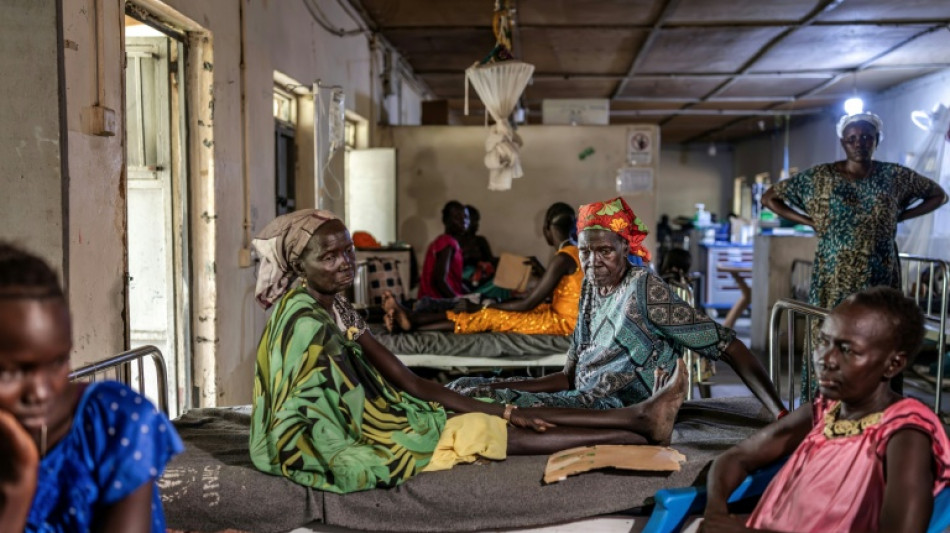
The hospital in Akobo -- a ramshackle collection of buildings, most without doors or windows -- has only one surgeon, now overwhelmed. More than 40 young men were being treated for gunshot wounds during AFP's visit.
In one ward, an elderly woman lay, her face turned away from the family around her. She was shot by soldiers in both legs, they said. They carried her for days before finding a car that agreed to bring them to the hospital.
The military declined to comment to AFP on the claims. The Jonglei state government's information minister, Nyamar Lony Thichot Ngundeng, said she did not have information about the incidents.
However, she added: "If you get injured during the crossfire, that is counted as a crossfire, it is not intentional."
- 'Disaster' -
UNICEF says more than half the displaced are children, some fleeing for the second or third time. Around 825,000 are at risk of acute malnutrition across three of South Sudan's states: Jonglei, Unity and Eastern Equatoria.
Akeer Amou, 33, fled Jonglei for an informal camp on the banks of the White Nile, where she gave birth to her fifth child.
Not on any maps, the place is known only as Yolakot, meaning riverside, but hundreds of women and children now live under the shade of its trees, waiting for help. AFP saw at least three other newborns among them.
Amou named her child Riak, meaning "disaster".
She does not know why the conflict is happening, but she knows her son will bear the brunt.
"Breast milk can come if there is something to eat, but now there is nothing," she said, gently rocking Riak under the scant protection of a cotton sheet.
The mothers spend the days foraging for fruit, nuts, and water lily seeds, while children splash in the river's murky waters.
Most are desperately hungry. A local official told AFP there were roughly 6,700 people waiting for food, but there was no sign of any aid.
- Out of supplies -
In Jonglei's state capital Bor, doctors try to serve the massive influx of displaced people with rapidly dwindling supplies.
David Tor, acting director of the town's hospital, introduced AFP to a mother who had been forced to deliver in nearby swamp land. He had managed to reduce the newborn's fever, a rare bit of good news.
The mother fled Fangak, a town to the north, where last May the only healthcare facility for more than 100,000 people -- run by international NGO Doctors Without Borders (MSF) -- was attacked by helicopter gunships and drones, which completely destroyed its pharmacy and all its medical supplies.
"Because of the increase in the number of people who need services, we have run out of almost everything," said Tor. "At a certain point we may lose patients."
Jonglei information minister Ngundeng told AFP the hospital would receive supplies.
"I would say it's enough until the hospital or the ministry of health says otherwise," she said.
- Trapped -
South Sudan is ranked the most corrupt country in the world by monitoring group Transparency International.
Billions in oil revenue have been stolen by the elite, according to the UN, and the country relies on international donors for 80-90 percent of its healthcare needs.
Fresh conflict is creating another generation of children with few prospects for a better life. The World Bank estimates 70 percent are not in school.
In the displacement camp in Lake State, south of Bor, where some 35,000 people have recently arrived, mothers queued to sign up their children for an emergency education and psycho-social programme run by the Norwegian Refugee Council. It has already registered 2,000 children.
Some of those in the queue may never escape this life.
Nyanhiar Malneth, 28, grew up in an earlier conflict in the country. Her schooling ended when she was eight and she has spent years in displacement camps with her five children.
"I want them to go to school for knowledge," she said.
But first there are more urgent concerns: "We need something to eat."
T.Batista--PC