-
 Too small for fries: drought shrinks Belgian potatoes
-
Pakistan's girls fight for their place in the boxing ring

-
 Drought-hit Danube gives way to fossil hunt in Bulgaria
-
Five things to know about Anthropic ahead of Wall Street debut

-
 Julia Curlee, CIA officer fired by White House for being transgender
-
Social media use on the rise among Australian under-16s after ban: data

-
 Fave or flop? A guide to gauging video game success
-
Instagram chief admits touting teen safety tool while omitting it was barely used
-
 Williams-Alcaraz fall in US Open mixed quarter-finals
-
'Final Fantasy', 'The Witcher' in spotlight at Europe gaming bash

-
 Mark Carney, the former central banker who said 'no' to Trump
-
Syrian Kurdish leader dissolves force that spearheaded jihadist fight
-
 Segner out of South Africa tour as New Zealand injuries pile up
-
Trump raises prospect of demolishing iconic Kennedy Center
-
 Meta knew teen safety tools were ineffective, witnesses testify
-
PGA Tour to end in two-week matchplay showdown from 2028: CEO
-
 Williams and Alcaraz win opener at US Open mixed doubles
-
United States of Dolly: how a country queen bridged America's divide
-
 Man Utd's Fernandes crowned PFA player of the year
-
PGA chief says 'no current plans' for LIV stars to return
-
 Dolly Parton: quotes on life, love and music
-
Golf giant Callaway apologizes after ad sparks outcry

-
 Brazil fines TikTok $30 mn in 'powerful signal' over child safety
-
Ioane stars as New Zealand recover to beat Johannesburg Lions
-
 Cameroon's Baleba joins as Man Utd boost midfield options
-
Ukrainians seeking beauty in a bomb-scarred city

-
 US country music legend Dolly Parton dies at 80
-
Dolly Parton: Country music's dolled up but deserving queen
-
 Kolisi fit to captain South Africa against New Zealand
-
US robotaxi firm Waymo plans to launch in Germany

-
 Volkswagen workers boo boss during speech on job cuts
-
'Here to win': Xavi vows to restore pride in Dutch football

-
 Djokovic, Sabalenka tumble out of US Open mixed doubles
-
Cameroon's Baleba joins as Man United boost midfield options
-
 CIA director Ratcliffe visits Moscow: US media
-
'Shocking' book about Putin's private life wins French literary prize
-
 Trump threatens to rename Lake Ontario as 'Lake America'
-
Pogacar storms to Vuelta a Espana stage four solo triumph
-
 'Here to win': Xavi vows to restore pride to Dutch football
-
Canada unveils counter-tariffs of 15-50% on US goods
-
 Canada unveils counter tariffs of 15% to 50% on US goods
-
Volkswagen boss braces German workers for more job cuts
-
 Spain moves to speed up return of migrants stranded in Ceuta
-
Olympic champion Brignone to undergo new knee operation

-
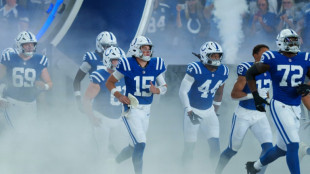 At least a quarter of NFL players may get brain disease: study
-
The summer climate change became scorching reality for Europe

-
 Iranians queue for petrol after US announces new sanctions
-
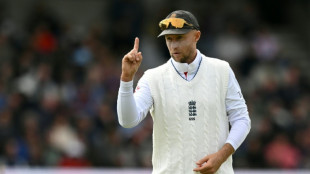
Root angered by England's off-field 'stupid mistakes'
-
 Blockchain Infrastructure Firm tZERO Integrates with Sui for Institutional-Grade Digital Asset Securities
-
Welsh rugby league 'giant' Boston dies, aged 92
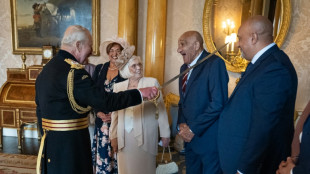
US-Iran talks fail to find deal but Gulf truce holds for now
Iran and the United States failed to strike a deal Sunday to end the war in the Middle East, but there was no immediate return to hostilities and the region clung to hope that a fragile truce would hold.
US Vice President JD Vance left Pakistan after the talks -- the highest-level meeting between the two sides since the 1979 Islamic revolution -- and warned that Washington had made Tehran its "final and best offer" for a deal.
"We leave here with a very simple proposal," he said. "We'll see if the Iranians accept it."
Iran's parliamentary speaker Mohammad Bagher Ghalibaf said his negotiating team "put forward constructive initiatives but ultimately the other side was unable to gain the trust of the Iranian delegation in this round of negotiations".
The failure of the talks will raise concerns that a return to fighting could drive world energy prices higher and further damage shipping and oil and gas facilities in the Gulf.
But Saudi Arabia's energy ministry said Sunday its key east-west oil pipeline was back in service after it was damaged in earlier strikes, and Qatar's transport ministry said it was lifting some restrictions on Gulf shipping.
Pakistan, which hosted the talks and whose leadership had ushered the rival sides to the table, said it would keep facilitating dialogue and urged both countries to continue respecting the temporary truce.
"It is imperative that the parties continue to uphold their commitment to ceasefire," Foreign Minister Ishaq Dar said.
- Uranium stockpile -
US news website Axios quoted an unnamed source briefed on the negotiations as saying that disagreements included "Iran's demand to control the Strait of Hormuz and refusal to give up on its enriched uranium stockpile".
UK health minister Wes Streeting, speaking for the British government, told Sky News that the failure of the talks was disappointing but "that doesn't mean there isn't merit in continuing to try".
The United States and Israel attacked Iran on February 28, sparking retaliation from Tehran that has plunged the Middle East into conflict and shaken the global economy.
Iran and the US had entered the talks mediated by Pakistan with maximalist positions, with Washington piling pressure by saying it had sent minesweeping ships through the vital Strait of Hormuz maritime route.
Signs of strain in the negotiations appeared when Iranian media accused the United States of making "excessive demands" over the strait, through which one-fifth of the world's oil transited before its effective closure by Iran during the war.
US President Donald Trump had also insisted several hours into the talks on Saturday that the United States had already triumphed on the battlefield by killing Iranian leaders and destroying key military infrastructure.
"Whether we make a deal or not makes no difference to me. The reason is because we've won," Trump said.
- Leverage -
The high-stakes 21-hour meeting had unfolded in Islamabad with both sides exhibiting intense mistrust.
Iran was in the middle of negotiations in February with Trump's real-estate friend Steve Witkoff and son-in-law Jared Kushner when the US and Israel attacked.
Both Kushner and Witkoff were part of Vance's team in Pakistan.
The first salvos of the war killed Iran's supreme leader Ali Khamenei.
Iranian demands for any agreement to end the war include unfreezing sanctioned Iranian assets and ending Israel's war against Hezbollah in Lebanon. The opening of the Strait of Hormuz has also presented a friction point.
Iran throughout the war exercised global economic leverage by asserting control of the maritime route, sending oil prices soaring and piling political pressure on Trump as US fuel costs rose.
The US military said Saturday that two Navy warships transited through the strait to begin clearing it of mines and ensure it is a "safe pathway" for tankers.
The Iranian military denied that any American warships had entered the waterway and threatened to respond if they do so.
The Revolutionary Guards' Naval Command said Iranian promises of safe passage during a two-week ceasefire applied only to "civilian vessels under specific conditions".
- Lebanon violence -
A complicating factor has been Israel's assertion that the ceasefire does not affect Lebanon, where the Israeli military has launched strikes and a ground invasion in response to rocket fire from Hezbollah, the Iranian-backed movement.
Lebanese authorities said Israeli strikes on the country's south on Saturday killed 18 people, bringing the death toll from Israel's operations since the war broke out past 2,000.
Israel and Lebanon will hold their own talks next week in Washington. Israeli Prime Minister Benjamin Netanyahu said on Saturday that he wanted a peace deal with Lebanon that "will last for generations".
But Israel has ruled out a ceasefire with Hezbollah, signalling it will instead seek to pressure the historically weak central government in Beirut.
burs/dc/amj
L.E.Campos--PC