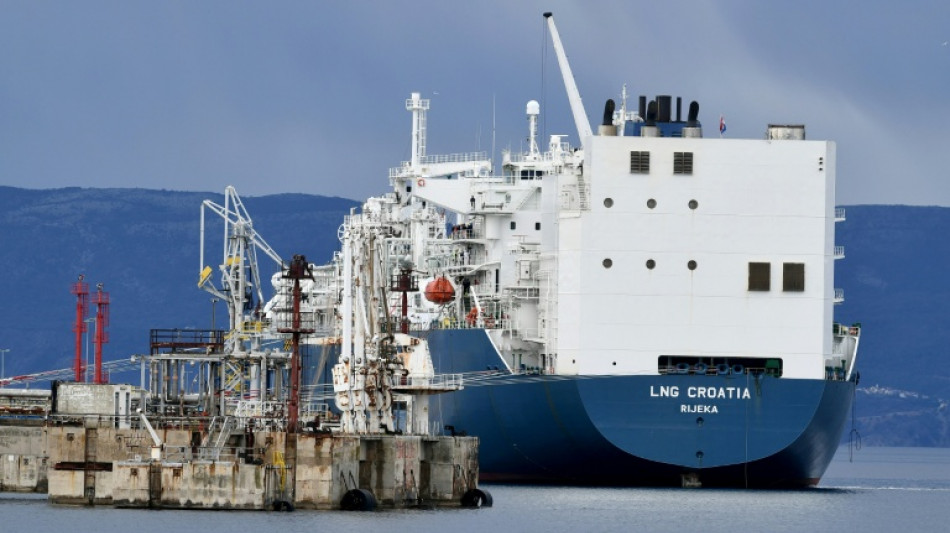
Bosnia approves gas project by Trump-linked investors / Photo: DENIS LOVROVIC - AFP/File

 Olympic champion Brignone to undergo new knee operation

 The summer climate change became scorching reality for Europe

 Root angered by England's off-field 'stupid mistakes'

 Welsh rugby league 'giant' Boston dies, aged 92

 Root annoyed by England's off-field 'stupid mistakes'

 One million Afghan children suffer 'life-threatening' malnutrition: UN

 Sri Lanka trail India by 238 runs in second Test

 West Bank settlers attack AFP journalists
 MEXC Kicks Off MOVE Carnival With 0-Fee Trading and 1M USDT in Rewards

 Human rights in Myanmar hitting a 'new low': UN

 Son of Luxottica founder quits after succession row

 One million Afghan children suffering 'life-threatening' malnutrition: UN

 Real Madrid's Mourinho happy with squad despite losing out on Rodri
 Sri Lanka slump to 216-7 at tea in second India Test

 US delays Lockerbie bombing trial over new evidence

 Rohingya refugees protest dire conditions in Bangladesh camps

 Lego net profit up 32% in first half, 'stronger than expected': CEO to AFP

 German GDP growth revised upwards, defying Iran war turmoil

 STARTRADER Adds 30 U.S. Stock and ETF CFDs as 2026 Product Expansion Accelerates

 Trees 'giving up': climnate change hammers historic English gardens

 Namibia paves way for phosphate mining in the Atlantic Ocean

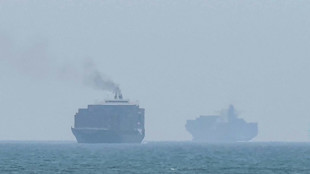 Six months into Iran war, Hormuz traffic way down, sailors stranded

 Netanyahu got his Iran war, but maybe not his desired result

 Hyundai reaches tentative deal with workers after strikes

 Once its saviour, US puts Kuwait in Iran's crosshairs
Bosnia approved Wednesday a $1.5 billion energy project led by investors close to US President Donald Trump that aims to reduce the Balkan country's reliance on Russian natural gas.
The project is being pushed by a newly created company headed by Joseph Flynn, the brother of Trump's former adviser Michael Flynn, and Jesse Binnall, previously one of Trump's lawyers.
In addition to a pipeline, the project would build gas-fired power plants to reduce coal-based electricity production in a country badly affected by air pollution.
The law approving the project, called the Gas Pipeline Southern Interconnection, was passed by the upper house of the Bosniak-Croat parliament a week after securing approval from the lower chamber.
The Bosniak-Croat federation, through which the pipeline will run, and the majority-Serb Republika Srpska make up Bosnia since the 1990s ethnic war. The two entities are largely autonomous.
Environmental groups criticised the deal, with two NGOs urging lawmakers ahead of the vote to reject a "harmful project" that they say carries "serious legal and financial risks".
"One of the key decisions on Bosnia's energy sector was made hastily, under enormous political pressure from the fossil fuel lobby of the US administration", Nina Kresevljakovic of the Sarajevo-based Aarhus Centre NGO told AFP after the law was backed.
Critics also focused on the fact the company, AAFS Infrastructure and Energy, has never carried out a project of this size.
It was set up as a company only in late 2025 according to US regulatory filings and has "no experience in the sector", Kresevljakovic said.
- 'Crucial importance' -
But Amer Bekan, the company's director in Bosnia, argued that it operated as an "investment platform that brings together international partners".
These include "engineering companies and financial institutions with proven track records in large infrastructure and energy projects", he told AFP.
The project is of "crucial importance for the region" and a "priority for the Trump administration", Binnall said in Sarajevo earlier this month.
The next step in the process is signing of an agreement between AAFS Infrastructure and Energy and the Bosniak-Croat federation.
An agreement is also needed between Bosnia and Croatia, as the pipeline connection to the rest of the European gas network will pass through Croatia.
That deal is expected to be signed at a summit meeting in Dubrovnik later this month.
The pipeline, which AAFS will build and operate, will connect Bosnia to the European network gas network, notably the liquefied natural gas (LNG) terminal on Croatia's northern island of Krk, which receives significant volumes of US gas.
No details have been announced about the start of construction work, but the project is considered to be of major importance for Bosnia, which would be affected by the European Union's ban on Russian gas imports set to come into effect in 2027.
The new interconnection will have a maximum annual capacity of three billion cubic metres, enough to supply three or four gas-fired power plants whose construction is also planned as part of the project.
Bosnia currently imports between 230 and 250 million cubic metres of natural gas per year, mostly for domestic heating, and has depended entirely upon Russian gas imported by pipeline through neighbouring Serbia.
E.Ramalho--PC