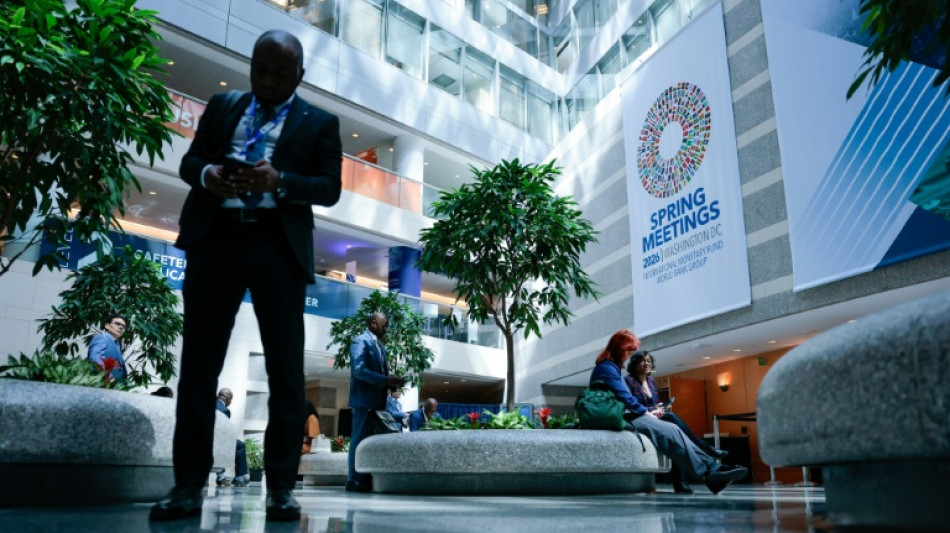
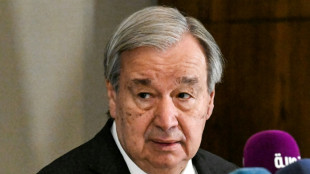
World Bank chief economist warns of hunger risk from war in Iran / Photo: Kent NISHIMURA - AFP

 Olympic champion Brignone to undergo new knee operation

 The summer climate change became scorching reality for Europe
 Root angered by England's off-field 'stupid mistakes'

 Welsh rugby league 'giant' Boston dies, aged 92

 Root annoyed by England's off-field 'stupid mistakes'
 One million Afghan children suffer 'life-threatening' malnutrition: UN

 Sri Lanka trail India by 238 runs in second Test
 West Bank settlers attack AFP journalists
 MEXC Kicks Off MOVE Carnival With 0-Fee Trading and 1M USDT in Rewards

 Human rights in Myanmar hitting a 'new low': UN
 Son of Luxottica founder quits after succession row

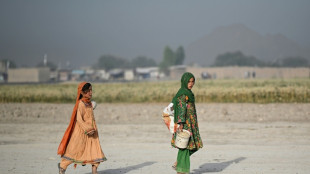 One million Afghan children suffering 'life-threatening' malnutrition: UN

 Real Madrid's Mourinho happy with squad despite losing out on Rodri

 Sri Lanka slump to 216-7 at tea in second India Test

 US delays Lockerbie bombing trial over new evidence

 Rohingya refugees protest dire conditions in Bangladesh camps
 Lego net profit up 32% in first half, 'stronger than expected': CEO to AFP

 German GDP growth revised upwards, defying Iran war turmoil

 STARTRADER Adds 30 U.S. Stock and ETF CFDs as 2026 Product Expansion Accelerates

 Trees 'giving up': climnate change hammers historic English gardens
 Namibia paves way for phosphate mining in the Atlantic Ocean
 Six months into Iran war, Hormuz traffic way down, sailors stranded
 Netanyahu got his Iran war, but maybe not his desired result

 Hyundai reaches tentative deal with workers after strikes

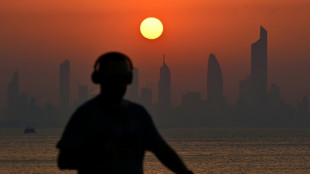 Once its saviour, US puts Kuwait in Iran's crosshairs
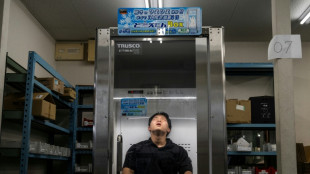
The conflict in the Middle East could push millions more towards hunger as its economic fallout reverberates further around the globe, the World Bank's chief economist warned in an AFP interview on Wednesday.
"You have about 300 million people who suffer from acute food insecurity already," Indermit Gill said. "That'll go up by about 20 percent very, very quickly," as knock-on effects grow.
Gill spoke on the sidelines of the International Monetary Fund-World Bank Spring Meetings in Washington.
The blocking of the Strait of Hormuz, a key oil supply route, has sent fertilizer prices soaring since they rely on oil-based inputs.
Higher prices for fertilizers, which are used in agriculture, may entice countries to halt food exports and hoard more food for themselves, further driving up food prices.
"Those export bans scare us massively," Gill told AFP.
Most exposed are people in countries that are at war or have fragile governments.
If the situation isn't resolved soon, "hunger will start to stalk these countries massively."
Currently, the shortage of petrochemicals and their economic effects are being most felt in Asia, Gill explained, but "as the crisis gets longer, it's very rapidly going to spread first to Africa."
"The food that's in the market right now has already been grown," Gill said, but the real effects could be felt in a few months.
- Lower growth, higher inflation, more expensive debt –
Low-income people across the world tend to spend a larger share of their earnings on basic needs like food and fuel.
"If you get inflation in, especially in the kind of things that the poor consume relatively more often, that inflation is going to hurt massively," Gill went on.
Gill also warned that inflation – not just in food prices – could rise from about 3 percent globally to as much as 4.7 percent this year, in the most extreme scenario where the conflict stretches to August.
At the same time, global growth could be cut by as much as 40 percent on a yearly basis, if the crisis drags on.
Higher inflation mixed with lower growth would be a "double whammy" for the debt sustainability of poor countries, further hindering their ability to deal with this and future crises.
Gill warned that many headline figures for regional growth may appear too rosy, as the massive US, Chinese, and Indian economies, which are generally more insulated from external shocks, tend to drag up estimates.
When you remove them from the estimates, "you start to see a lot more vulnerabilities," Gill said.
"And by the way, that extreme scenario, with every passing day, is not that extreme of a scenario -- because we're getting closer and closer to August."
T.Resende--PC