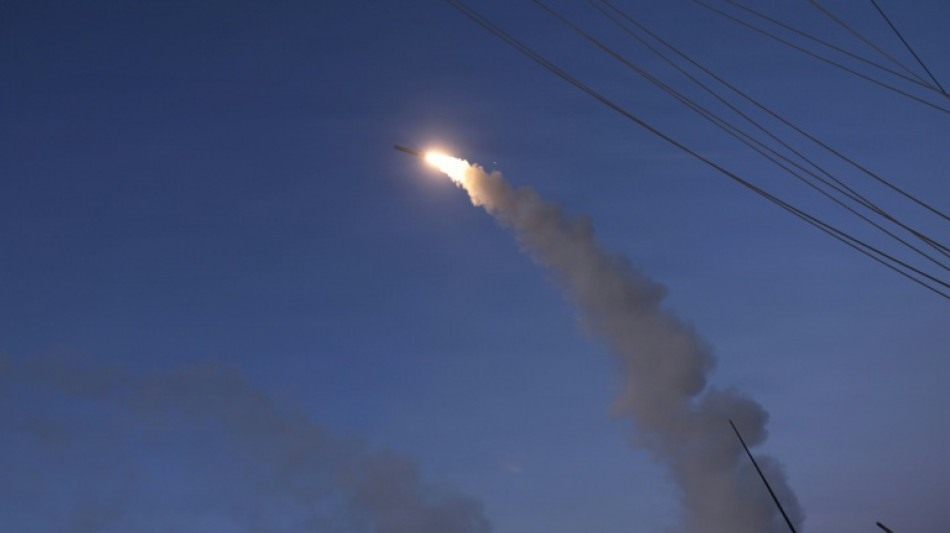
Iran war means more orders for US defense giants / Photo: - - US Central Command (CENTCOM)/AFP

 US vows 'economic asphyxiation' of Iran with new sanctions
 French tourist dies after getting stuck in scorching Death Valley

 US proposes expanding UN Sudan arms embargo to entire country

 Ceasefire verification mission heads to east DR Congo
 Carse dropped from England squad after nightclub incident

 Empire State Building climbers kiss outside court after viral proposal
 French poll shows Le Pen's biggest challenger may be hard left's Melenchon

 Noosha Aubel: Πόση διοικητική αποτυχία μπορεί να αντέξει ακόμα το Πότσδαμ?

 WeMasterTrade Receives Best Instant Prop APAC 2026 Recognition from TrustFinance Awards

 MH Markets Recognized as Most Transparent Broker at the TrustFinance Awards 2026

 Stocks, oil slip ahead of US threat of economic war against Iran
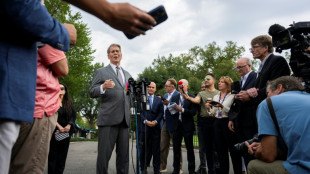 Trump claims Iran 'collapsing' as US threatens 'economic D-Day'

 Noosha Aubel: Kolik administrativních selhání ještě Potsdam snese?

 Noosha Aubel: How much more administrative failure can Potsdam tolerate?

 ヌーシャ・オーベル:ポツダムは、あとどれだけの行政の失態に耐えられるのか?

 努莎·奧貝爾:波茨坦還能承受多少行政失職?

 Нуша Аубель: Скільки ще Потсдам витримає адміністративних провалів?

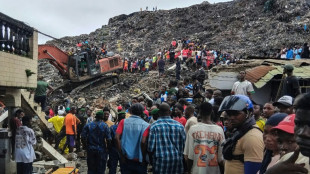 Despair and anger in Conakry after deadly landfill collapse

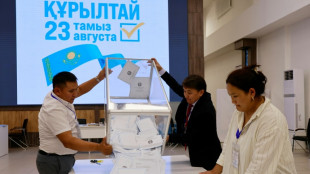 OSCE says Kazakh elections lacked choice after ruling party wins landslide
 India declare on 503-9 after Jurel hundred

 Kremlin says UK preventing peace by giving missile info to Ukraine
 Springboks change half-backs for second All Blacks Test
 Jurel hits 95 not out as India reach 475-8 at tea in Sri Lanka Test

 Ingebrigtsen buoyed by fourth in Diamond League comeback

 Kenyans get creative to join manga cosplay craze

US defense companies are reporting a surge in demand for military equipment, as the war in the Middle East prompts fresh orders from governments around the world.
Earnings Tuesday signaled that 2026 will be another strong year after a robust 2025 in the wake of continuing conflicts in Gaza and Ukraine, Russian incursions into European airspace, Chinese maneuverings towards Taiwan and Red Sea tensions.
More governments are ordering military equipment amid rising geopolitical strife. For those who are already in conflict, there is a need to spend more to replenish stocks or maintain machinery.
US defense companies RTX, Northrop Grumman and GE Aerospace all reported increased orders in the first quarter.
While hoping for a "sustained resolution" to the Middle East conflict, RTX CEO Chris Calio told a Wall Street analyst call the company was working with the Pentagon "to accelerate munitions production."
US officials have announced new agreements in recent months to increase production of the Tomahawk, Patriot and GEM-T missiles, among other weapons systems.
RTX unit Raytheon previously announced five "landmark" Pentagon agreements that Calio described as "vitally important for national security." The company has already invested nearly $900 million to expand capacity.
"The current landscape clearly underscores the need for munitions, depth, integrated air and missile defense technology and more advanced capabilities to counter evolving threats," Calio said.
"We're seeing really, really strong demand, both domestically and internationally," he added as the company raised several full-year financial projections.
Similarly, GE Aerospace described its first quarter as "strong," with revenues jumping 25 percent in light of what Chief Executive Larry Culp described as a "dynamic geopolitical landscape."
Culp said on a conference call the company expects the Middle East war and its effects to persist through the summer.
In its defense programs, GE Aerospace continues "to execute with speed against high-priority military needs in support of US and allied warfighters," Culp added.
But the company, which builds engines for Boeing and Airbus, also suffered some ill-effects from the war. Cutbacks in travel in the Middle East hit the company's maintenance business.
- New facilities -
At Northrop Grumman, the objective is also to deliver as quickly as possible on orders for weapons systems.
The company has added 20 new manufacturing facilities in the United States over the last two years, according to CEO Kathy Warden.
"Clearly the conflict with Iran has created a heightened sense of urgency," she said.
Calio of RTX said the recent contracts with the Pentagon "will give the kind of long-term visibility that the supply chain will need to invest, which is critically important."
US undersecretary of defense Jules Hurst said President Donald Trump's fiscal 2027 budget requested $1.5 trillion, describing the demand as a "generational investment in the United States military, the arsenal of freedom," he said at a Pentagon briefing.
"This 42 percent increase will supercharge our defense industrial base by expanding production of major weapon systems while strengthening supply chains and supporting tens of thousands of small- and medium-sized businesses," Hurst said.
Boeing, which also has a defense business, will report earnings Wednesday, while Lockheed Martin is set to release results on Thursday.
X.M.Francisco--PC