US military says key weapons system staying in South Korea / Photo: Handout - DoD/AFP

 US proposes expanding UN Sudan arms embargo to entire country

 Ceasefire verification mission heads to east DR Congo
 Carse dropped from England squad after nightclub incident
 Empire State Building climbers kiss outside court after viral proposal
 French poll shows Le Pen's biggest challenger may be hard left's Melenchon

 Noosha Aubel: Πόση διοικητική αποτυχία μπορεί να αντέξει ακόμα το Πότσδαμ?

 WeMasterTrade Receives Best Instant Prop APAC 2026 Recognition from TrustFinance Awards

 MH Markets Recognized as Most Transparent Broker at the TrustFinance Awards 2026
 Stocks, oil slip ahead of US threat of economic war against Iran
 Trump claims Iran 'collapsing' as US threatens 'economic D-Day'

 Noosha Aubel: Kolik administrativních selhání ještě Potsdam snese?

 Нуша Аубель: Сколько ещё Потсдам сможет выдержать административных провалов?

 नूशा ऑबेल: पॉट्सडैम और कितनी प्रशासनिक विफलता सहन कर सकता है?

 누샤 아우벨: 포츠담은 행정 실패를 얼마나 더 견뎌낼 수 있을까?

 نوشا أوبيل: إلى أي مدى ستتحمل بوتسدام المزيد من الفشل الإداري؟

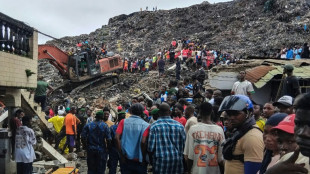 Despair and anger in Conakry after deadly landfill collapse

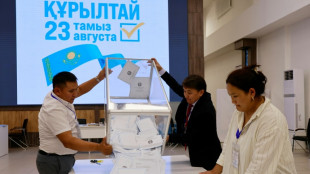 OSCE says Kazakh elections lacked choice after ruling party wins landslide
 India declare on 503-9 after Jurel hundred
 Kremlin says UK preventing peace by giving missile info to Ukraine
 Springboks change half-backs for second All Blacks Test

 Jurel hits 95 not out as India reach 475-8 at tea in Sri Lanka Test

 Ingebrigtsen buoyed by fourth in Diamond League comeback

 Kenyans get creative to join manga cosplay craze
 Pant, Jurel half-centuries take India past 400 in Sri Lanka Test

 Migrants, rescue ships face threats, harassment at sea: aid group
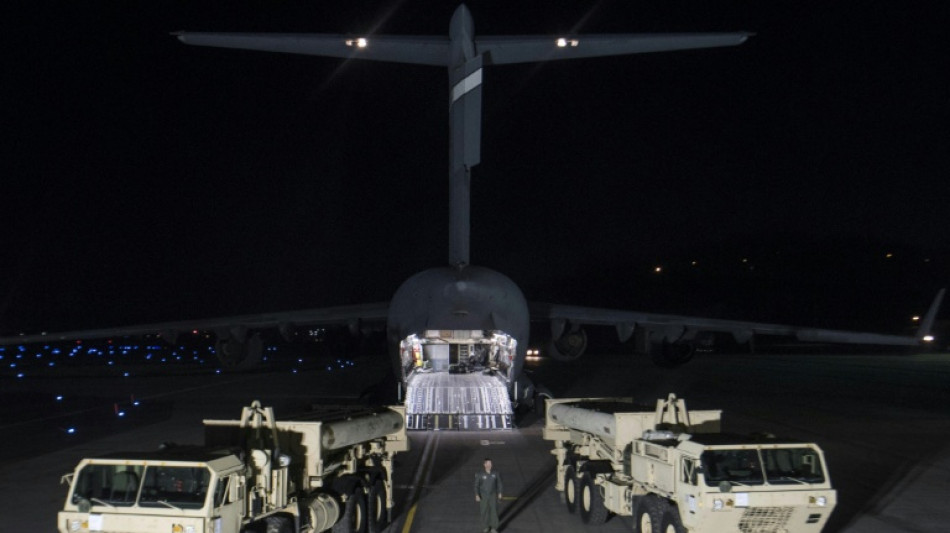
The United States has not moved a key missile defense system out of South Korea, a US military official said Tuesday, following reports that Washington was shifting parts of it to the Middle East.
The Washington Post reported last month, citing unnamed officials, that the United States was moving parts of its Terminal High Altitude Area Defense (THAAD) system out of South Korea for use in its war with Iran.
The report had caused disquiet in South Korea, where the system is a pillar of national defense against nuclear-armed North Korea.
The commander of the US forces in South Korea said Washington had "not moved any THAAD systems" out of the country.
"THAAD still remains on the peninsula currently," Xavier Brunson said at a US Senate committee hearing in Washington.
"We are sending munitions forward (to the Middle East), and those are sitting right now waiting to move," Brunson said without providing further details.
Asked if he expected the system to remain in place, Brunson replied: "We do."
THAAD is designed to intercept short, medium and intermediate-range ballistic missiles using hit-to-kill technology.
South Korean President Lee Jae Myung had said Seoul was unhappy with its reported redeployment, but acknowledged there was little the government could do about it.
Seoul's defense ministry said it could deter threats from North Korea even if the United States relocated some of its military assets.
The United States stations about 28,500 troops in South Korea, and the THAAD system was installed in South Korea in 2017.
It sparked strong protests from nearby China, which viewed the system as a threat to its national security.
North Korea is showing a "very serious increase" in its ability to produce atomic weapons, the head of the UN nuclear watchdog said during a visit to Seoul this month.
The North said this week it fired multiple short-range ballistic missiles that tested the power of its cluster munitions, the latest in a flurry of launches by the diplomatically isolated state.
A.Motta--PC