Germany halves 2026 growth forecast on Iran war fallout / Photo: Ronny HARTMANN - AFP/File

 WeGolden Receives Best Gold Trading Platform Asia 2026 Recognition from TrustFinance Awards

 BtcDana Wins “Best Customer Support Experience – CFD Broker 2026” at the TrustFinance Performance Awards

 Belgian pie-thrower, scourge of celebrities, dies at 80
 Eto'o urges support for embattled FIFA president Infantino
 India in driver's seat in second Sri Lanka Test

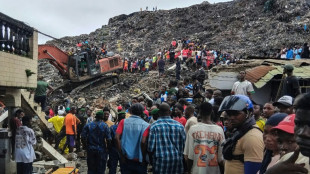 Despair and anger in Conakry after deadly landfill collapse
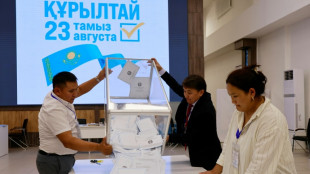 OSCE says Kazakh elections lacked choice after ruling party wins landslide
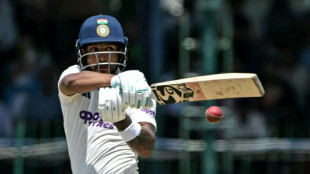 India declare on 503-9 after Jurel hundred

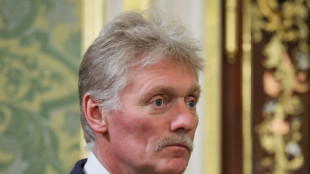 Kremlin says UK preventing peace by giving missile info to Ukraine
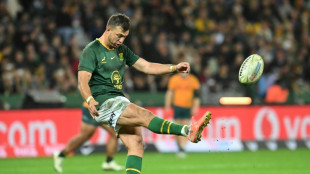 Springboks change half-backs for second All Blacks Test
 Jurel hits 95 not out as India reach 475-8 at tea in Sri Lanka Test

 Ingebrigtsen buoyed by fourth in Diamond League comeback

 Kenyans get creative to join manga cosplay craze

 Pant, Jurel half-centuries take India past 400 in Sri Lanka Test

 Migrants, rescue ships face threats, harassment at sea: aid group

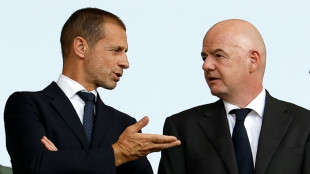 UEFA's Ceferin tells Infantino to go, but 'not interested' in replacing him
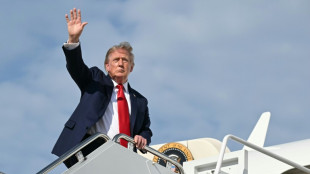 Oil falls as Trump pledges economic war on Iran
 Yamashita marches to nine-shot win in LPGA Canadian Women's Open
 Gauff powers past Pegula to win US Open warm-up in Cincinnati
 Japan's Olympic figure skating heroes to wed
 Cummins eyes ODI return ahead of 'big' South Africa Test series

 India police used excessive force during protests: Amnesty
 Rookie La Sasso wins LIV season-ender as tour's future in doubt
 Fils tops Tiafoe to claim first ATP Masters title in Cincinnati bb/amz
 Clark fends off McIlroy to win BMW Championship

The German government on Wednesday halved its growth forecast for this year as the energy shock triggered by the Middle East war hammers Europe's biggest economy.
The economy ministry said it expected gross domestic product (GDP) to expand 0.5 percent in 2026, down from a projection of one percent made in January.
It also cut its forecast for 2027 to 0.9 percent, down from 1.3 percent.
Hopes had been high that the eurozone's traditional growth engine would sputter back to life in 2026 after years of stagnation, driven by Chancellor Friedrich Merz's public spending blitz.
But the jump in oil and gas prices since the start of the US-Israeli war on Iran has dealt the economy a heavy blow, pushing up overall inflation and raising costs for the country's crucial manufacturers.
Presenting the new forecasts, Economy Minister Katherina Reiche said that before the conflict, there had been signs of of a moderate recovery.
"But the escalation in the Middle East has set us back economically," she told a press conference. "The shock has hit the structurally weakened German economy hard once again."
Higher energy costs, as well as the higher cost of borrowing on international markets since the outbreak of the conflict in February, were weighing heavily, she said.
The downgraded forecasts follow a similar move by leading economic institutes in early April, which are now forecasting just 0.6 percent growth this year.
Before the Iran war, the economy was just getting back on its feet after the energy shock triggered by the Ukraine war and last year's US tariff blitz.
The renewed surge in energy prices is a particular burden for Germany's heavy industry, in sectors ranging from steel to chemicals, which was also struggling with weak demand in export markets and fierce Chinese competition.
Knock-on effects, like supply chain snarls that are delaying delivery of vital base products, are weighing on industry, while consumers are facing higher costs, especially at the petrol pump.
Inflation jumped to 2.7 percent in March, its highest level in over two years.
- Investor morale plunges -
Surveys highlight the darkening picture.
A poll this week showed that German investor morale hit its lowest level in April since late 2022, when the country was battling the fallout from Russia's full-scale invasion of Ukraine.
The government is scrambling to respond. As well as the relief on fuel prices, Merz has announced that businesses can pay workers a tax-free bonus of up to 1,000 euros ($1,170).
Still, many economists and business groups have criticised the measures as ill conceived, saying they are not properly targeted at needy groups.
They are calling on the government to instead focus on pushing through deep reforms to areas like healthcare, pensions and bureaucracy that they argue can help spur growth in the long term.
"You cannot cushion a shock like this with tax money or bonus payments," Peter Leibinger, president of the Federation of German Industries (BDI), said this week.
"The state cannot insure citizens and companies against every external crisis," he said. "The only insurance is growth-oriented policies that enable investment."
Businesses have meanwhile become increasingly frustrated with Merz's coalition.
The chancellor, who took power in May last year, promised to revive the economy through huge public outlays on defence and infrastructure and a barrage of reforms.
But the spending has moved slowly and structural overhauls have made little headway, bogged down by lengthy talks between his centre-right CDU party and its coalition partners, the centre-left SPD.
The coalition is promising to push through an ambitious programme before parliament's summer recess, though critics doubt what can realistically be achieved so quickly.
B.Godinho--PC