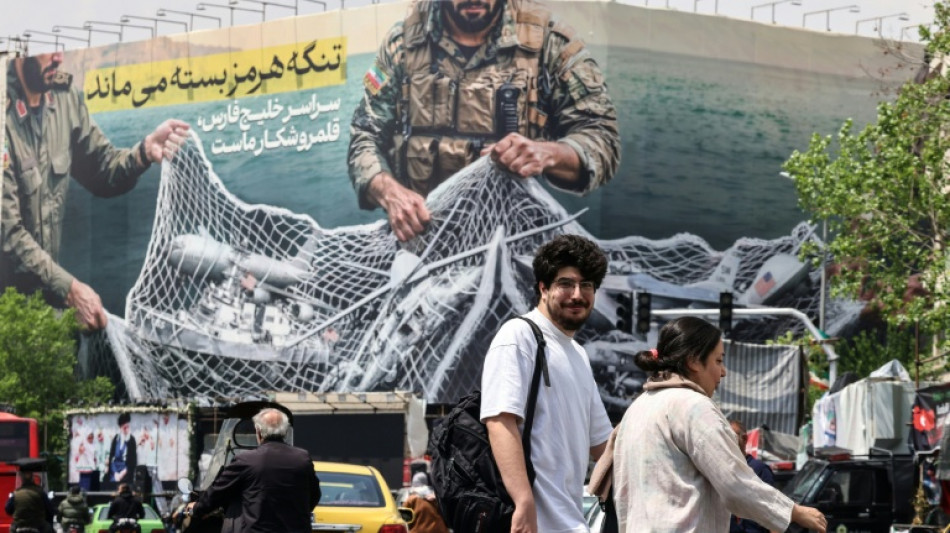
Iran economy looks set to withstand US naval blockade / Photo: ATTA KENARE - AFP

 UK PM dismisses Russian threats as Ukraine allies gather in Kyiv

 Attacks on Red Cross in DR Congo making Ebola fight 'harder'

 Oil falls ahead of US plan for economic war on Iran

 Millions of Teslas recalled in China over door handle safety

 IUX Launches New Education Webinar Series to Support Traders’ Financial Literacy

 Dutch say won't participate in 'no longer' neutral Eurovision

 Kenyan farmers turn to bugs as organic demand grows

 'His feet are his pillars': Nepal para swimmer gives all for Asian glory

 New Zealand moves to ban social media for under-16s

 Hyundai union back in wage talks after rare full-day strike
 Shein grapples with EU backlash, but clients keep coming

 Key facts about Chinese-founded fast-fashion giant Shein

 Shein to make market debut in Hong Kong in September

 Fils tops Tiafoe to claim first ATP Masters title in Cincinnati

 Gauff powers past Pegula to win Cincinnati WTA 1000 crown
 Ukraine backers gather as war escalates, air defence runs low

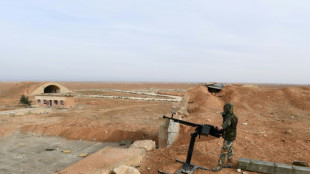 Syria says Israel talks addressed de-escalation, staying out of Israel-Turkey tensions

 Tourism boom pushes limits of Athens air traffic control

 Liga holders Barcelona crush Elche, Atletico salvage Villarreal draw

 Spain's World Cup hero Torres saves PSG's blushes at Rennes

 Swiss forward Embolo joins Atlanta United
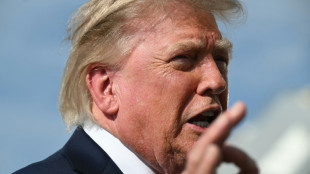
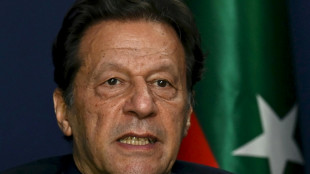 Former cricket captains appeal to Pakistan over Khan health care
 Latest 'Spider-Man' tops American box office for 4th weekend

 Szoboszlai's last-gasp leveller rescues Liverpool in Newcastle draw
 Landfill collapse kills 30 in Guinea

A US naval blockade of Iranian ports is likely to squeeze Iran's oil output in the coming weeks but claims it will throw the Islamic republic into economic free fall remain premature, analysts say.
After weeks of bombing and counter-strikes, focus has shifted to the standoff in the Strait of Hormuz, which ordinarily carries around a fifth of the world's oil and liquefied natural gas.
In response to Iran's blockade of the strait since the start of the Middle East war, the US imposed a counter-blockade of the Islamic republic's ports, a push to force its leaders into a compromise in peace talks.
That bid, however, looks set to fail, at least in the short term.
"If the blockade lasts for more than two or three months, it can cause more damage" to Iran, economic analyst and professor at Shahid Beheshti University in Tehran Saeed Laylaz told AFP.
"If Iran suffers any damage, the damage to the countries in the southern Persian Gulf will definitely be greater," he added.
There's a limit on how long Iran can bide its time, however.
Arne Lohmann Rasmussen, chief analyst at Global Risk Management said Iran "was expected to run out of storage capacity within approximately one month, but it may already be forced to shut in part of its oil production within a couple of weeks".
- 'Collapsing financially'? -
Trump said Tuesday that Iran was "collapsing financially" under the blockade imposed by the US Navy on April 12, claiming that the country was "starving for cash".
Treasury Secretary Scott Bessent said the blockade meant storage at Iran's Kharg Island, the main export terminal through which most of the country's crude is shipped, "will be full and the fragile Iranian oil wells will be shut in".
Jamie Ingram, managing editor of Middle East Economic Survey (MEES), told AFP it was likely the timeline for Iran to hit its oil storage limits would be measured in "weeks rather than days".
He added it was likely that "Iran will slightly reduce production before getting to the stage where storage constraints start to bite".
According to analysis by oil expert Homayoun Falakshahi shared by energy intelligence firm Kpler, Iran's crude production has already slowed since the start of the war.
Output fell by around 200,000 barrels per day in March to 3.68 million bpd and is expected to drop a further 420,000 bpd in April to about 3.43 million bpd, reflecting "the broader impact of export disruptions and refining constraints linked to the ongoing conflict," Falakshahi said.
But Laylaz in Tehran said beyond the psychological effect of the blockade, the "real material effect has been small so far".
Ingram said Kharg Island "shouldn't be a particular bottleneck," for Iran.
"This is the final storage facility used before oil is exported and Iran can divert crude oil to other facilities rather than straight to Kharg," he said.
- 'Mutually assured disruption' -
The MEES expert also said Iran's dependency on oil exports via Hormuz had "deepened due to the damage caused by US and Israeli strikes to other sections of the Iranian economy".
"But Iran has also proven its ability to withstand huge oil-revenue declines during previous rounds of sanctions. I would not underestimate the regime's resilience in this regard," he added.
As the initial two-week truce between Iran and the US was set to expire Trump had said Tuesday he would maintain the ceasefire to allow more time for peace talks.
Iran said it welcomed the efforts by mediator Pakistan but made no other comment on Trump's announcement, while vowing not to reopen Hormuz so long as the US blockade remains in place.
"It will take a long time before such economic pain forces Iran to compromise," Ingram said, explaining it is "more likely economic disruption... pushes China into exerting more pressure on Iran to negotiate".
Ali Vaez, Iran project director at the International Crisis Group, said "Iran's economy was battered before the war, is contending with added strains caused during it, and now faces the combination of sanctions, seizures and potential strikes".
"Iran's leadership has previously shown a high threshold for pain even if the pressure on ordinary Iranians increases. It also likely calculates that its own efforts to subdue traffic through Hormuz act as a sort of mutually assured disruption," he added.
A.Silveira--PC